 to Favorites
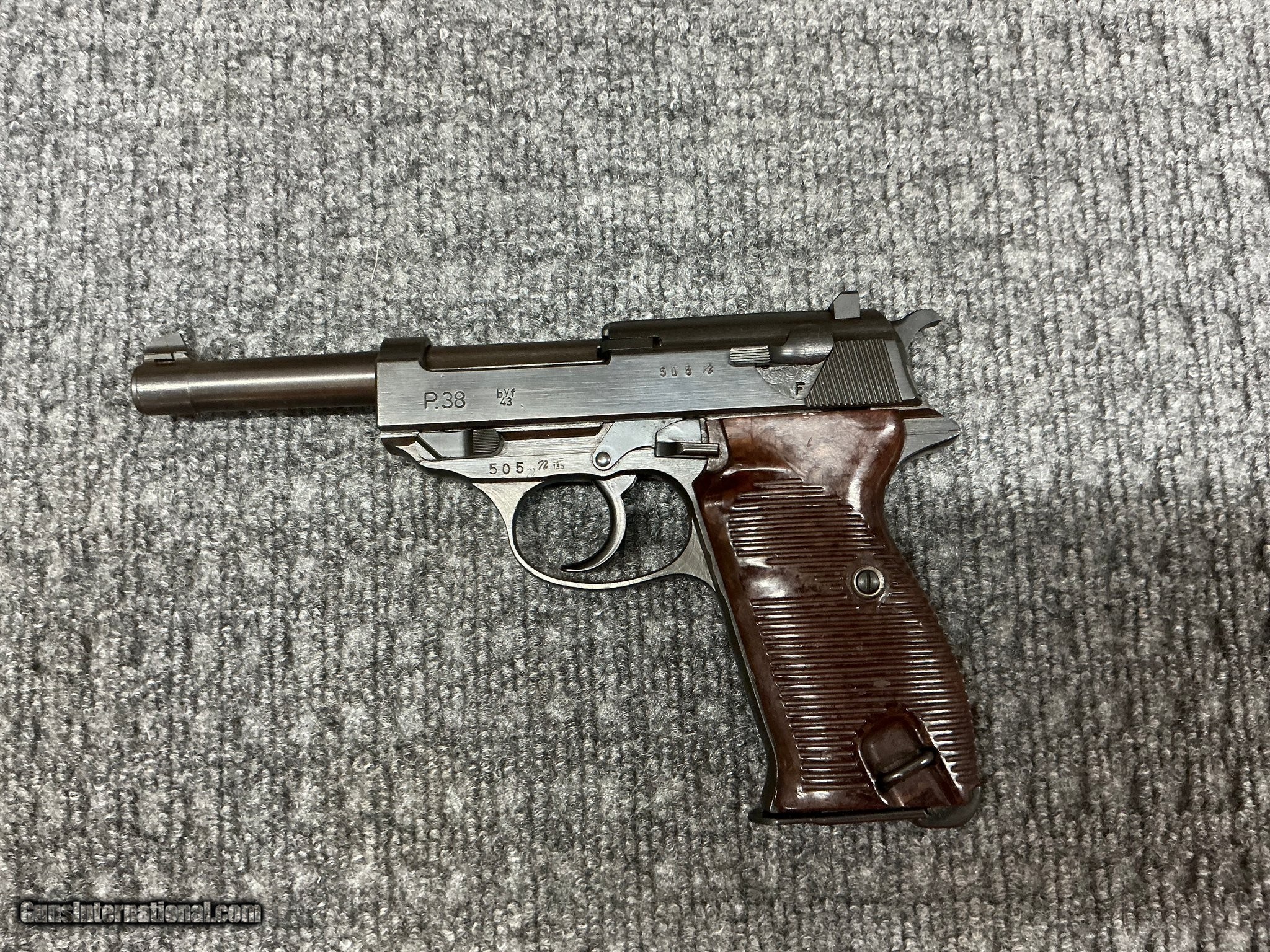
1 of 3
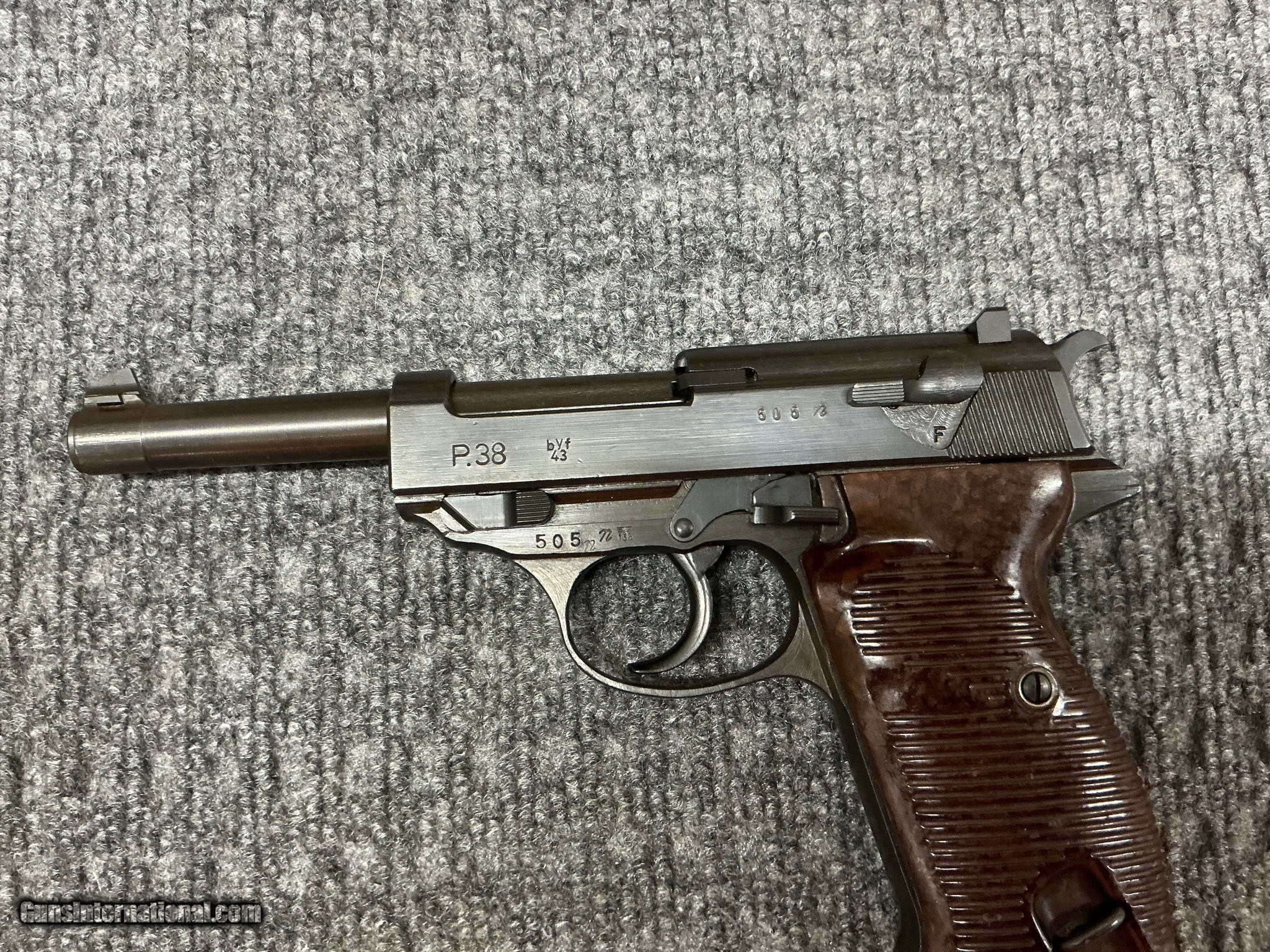
2 of 3
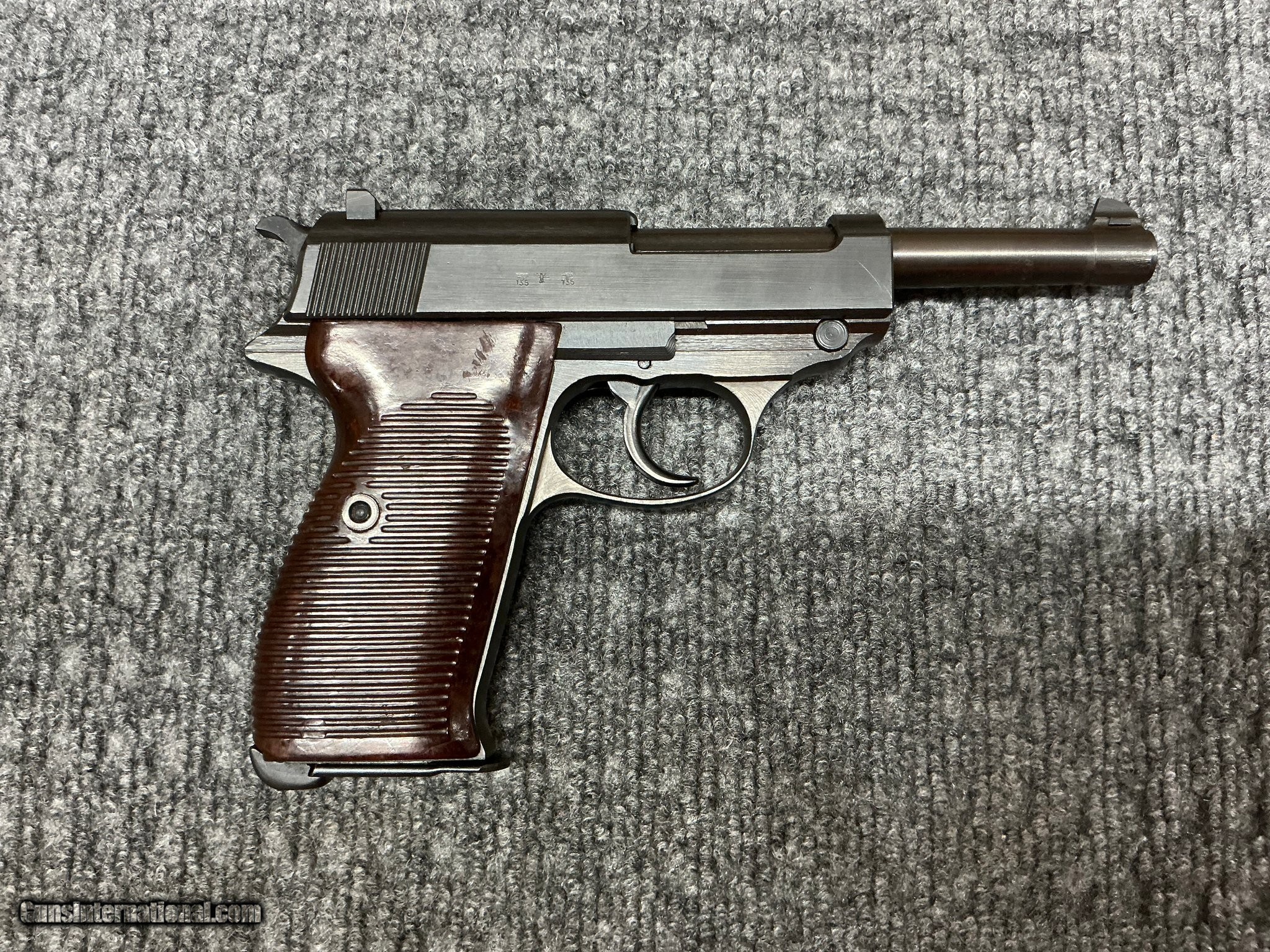
3 of 3
 The server has not detected any activity for the last 3 hours.
For your security, your session will expire in 2 minutes and you will be redirected to the Sign In page.
Would you like to stay signed in?
The server has not detected any activity for the last 3 hours.
For your security, your session will expire in 2 minutes and you will be redirected to the Sign In page.
Would you like to stay signed in?


Guns International #: 103203689
Seller's Inventory #: 549194

|
Click Photo to Enlarge
|
Guns International #: 103203689
Category - Walther Pistols
- 9mm Pistols
Seller's Information
When emailing or calling sellers direct,
please mention that you saw their listing on GunsInternational.com
Seller: Guns Dot Com
Member Since: 9/8/21
State:
Minnesota
Zip: 55337
Country: United States
Phone:
(866) 582-4867
Platinum Seller
Active Listings: 40750
Total Listings: 408943
Seller Type: FFL Dealer
Return Policy: All new gun sales are final.
CERTIFIED USED GUNS Guns Certified Used Guns may be returned within 3 days after the transfer is complete for any reason for a full refund, minus any fees, shipping costs and a 15% restocking fee. A Guns Certified Used Gun may also be returned within 7 days if it is malfunctioning with proper use. NON-CERTIFIED USED GUNS Non-certified used guns can be returned if there is a mechanical defect that occurs within 3 calendar days of the physical transfer of the firearm to your possession. All other reasons for returns on non-certified used guns are ineligible. Payment Methods: Discover, Visa, MasterCard, American Express. Financing options also available.
About Us: Guns, thousands of products at great prices, you’re sure to find exactly what you’re looking for. You can be confident when you buy from us that you’ll receive an effortless experience and excellent service. Fill out the Contact Seller form below and you’ll receive a direct link via email to view and purchase this firearm at Guns. Due to to current regulations, we do not sell firearms in CT, HI and AK.
WALTHER P.38 9MM LUGER (9x19 PARA)
Description: Guns Listing ID: 549194 Walther P38 Spreewerk manufactured Walther P38 Type Semi-automatic pistol Place of origin Nazi Germany Service history In service 1939–1945 (Nazi Germany) 1949–present (other countries) Used by See Users Wars World War II[1] First Indochina War[2] Algerian War[2] Portuguese Colonial War Rhodesian Bush War Vietnam War (limited)[3] The Troubles 1958 Lebanon crisis[4] Lebanese Civil War[4] War in Afghanistan Iraqi Civil War (2014–2017) (P1) Production history Designed 1938 Manufacturer Carl Walther Waffenfabrik, Mauser Werke, Spreewerk Unit cost 30 R?M? (1943) equivalent to €120 in 2021 Produced Walther P38 1939–1945 Pistole P1 1957–2000 No. built c. 1,000,000[1] Variants HP, P1, P38K, P38 SD, P4 Specifications Mass 960 g (34 oz) (empty)[5] Length 216 mm (8.5 in) Barrel length 125 mm (4.9 in) Width 36 mm (1.4 in) Height 140 mm (5.5 in) Cartridge 9×19mm Parabellum Action Short recoil, hinged locking piece assisted breechblock Rate of fire 116 rpm (semi-automatic) Muzzle velocity 1,050 ft/s (320 m/s)[6][full citation needed] Effective firing range Sights set for 50 metres (55 yd)[6] Feed system 8-round magazine Sights Rear notch and front blade post The Walther P38 (originally written Walther P.38) is a 9 mm semi-automatic pistol that was developed by Carl Walther GmbH as the service pistol of the Wehrmacht at the beginning of World War II. It was intended to replace the comparatively complex and expensive to produce Luger P08. Moving the production lines to the more easily mass producible P38 once World War II started took longer than expected, leading to the P08 remaining in production until September 1942 and copies remained in service until the end of the war.[7] Development As the previous service pistol, the Luger P08, was expensive to produce, Germany started to look for a replacement as early as 1927, settling on the Walther P38 in 1938, which offered similar performance to the Luger P08 but took almost half the time to produce.[8] The first design was submitted to the German Army and featured a locked breech and a hidden hammer but the Army requested that it should be redesigned with an external hammer. The P38 concept was accepted by the German military in 1938 but production of prototype (\"Test\") pistols did not begin until late 1939. Walther began manufacture at their plant in Zella-Mehlis and produced three series of \"Test\" pistols, designated by a \"0\" prefix to the serial number. The third series pistols solved the problems for the German Army and mass production began in mid-1940, using Walther‚‚s military production identification code \"480\".[citation needed] Several experimental versions were later created in .45 ACP, and .38 Super but these were never mass-produced. In addition to the 9×19mm Parabellum version, some 7.65×21mm Parabellum and some .22 Long Rifle versions were also manufactured and sold. Design details P38 cut-away model The P.38 is a semi-automatic pistol design, which introduced technical features used today in commercial and military semi-automatic pistols, including the Beretta 92FS and its M9 sub-variant. The P38 was the first locked-breech pistol to use a double-action/single-action (DA/SA) trigger (the earlier double-action PPK was an unlocked blowback design, but the more powerful 9×19mm Parabellum round used in the P38 needed a locked breech design). The shooter could chamber a round, use the safety-decocking lever to lower the hammer without firing the round, and carry the weapon with a round chambered. The lever can stay on \"safe\", or if returned to \"fire\", the weapon remains safely \"ready\" with a long, double-action trigger pull for the first shot. Pulling the trigger cocks the hammer before firing the first shot with double-action operation. The firing mechanism extracts and ejects the first spent round, cocks the hammer, and chambers a fresh round for single-action operation with each subsequent shot; all features found in many modern handguns. Besides a DA/SA trigger design similar to that of the earlier Walther PPKs the P38 features a visible and tactile loaded chamber indicator in the form of a metal rod that protrudes from the rear of the slide when a round is chambered.[9] 1943 Mauser P.38 barrel showing locking block design P38 made by Mauser, coded \"byf 44\" with matching presstoff and leather holster The moving-barrel mechanism is actuated by a wedge-shaped hinged locking piece underneath the breech. When the pistol is fired, the barrel and slide recoil together, until the hinged locking piece drives down, disengaging the slide and arresting further rearward movement of the barrel. The slide continues its rearward movement on the frame, ejecting the spent case and cocking the hammer before reaching the end of travel. Unlike most autopistols which eject empty cases to the right, the Walther P38 ejects empty cases to the left. Two recoil springs on either side of the frame and below the slide, having been compressed by the slide‚‚s rearward movement, drive the slide forward, stripping a new round from the magazine, driving it into the breech and re-engaging the barrel; ending its return travel with a fresh round chambered, hammer cocked and ready to repeat the process. The hinged locking piece assisted breechblock design provides good accuracy due to the in-line travel of the barrel and slide. Initial production P38 pistols were fitted with walnut grips, but these were later supplanted by Bakelite grips.[10] Sheet metal grips were used for a time on pistols produced in France after the war, being called \"Gray Ghosts\" by collectors on the account of their distinctive parkerizing and sheet metal grips. Post war P1 grips were made of black colored plastic. Variants The Walther P.38 was in production from 1939 to 1945.[11] Initial development of the pistol took place 1937–1939, culminating in the first Model HP or Heerespistole (\"army pistol\"), which had several variants as engineering changes were made. Early production included a Swedish contract. The designation P.38 indicates Wehrmacht adoption in 1938, although the exact date is unknown. The transition from HP to the mechanically-identical P.38-marked pistols took place 1939–1940.[12] Sweden bought the Walther HP in 1939.[13] During WWII, the P.38 was produced by Walther, Mauser, and Spreewerk. To conceal manufacturer identities, each wartime manufacturer used a letter code: ac (Walther); byf (Mauser), and cyq (Spreewerk), followed by the date (e.g.: ac44: Walther 1944 production). Spreewerk did not mark production dates. Pistols were produced in blocks of 10,000 consecutively numbered pistols, with each block having a consecutive letter suffix, to conceal production volume. 1,277,680 P.38s were produced during WWII: 617,585 by Walther in Zella-Mehlis; 372,875 by Mauser in Oberndorf; 287,220 by Spreewerk Grottau.[14] Late in the war,[ambiguous] the Spreewerk (cyq) die broke. Subsequent pistols appear to be marked \"cvq\" due to the broken die. About 31,400 pistols are so marked. Spreewerk production ended April 1945.[15] From 1945 to 1946, several thousands of pistols were assembled for the French armed forces[2](frequently dubbed \"grey ghosts\" because of parkerized finish and grey sheet metal grips). Only after 1957 was the P38 again produced for the German military. West Germany desired to rebuild its military so that it could shoulder some of the burden for its own defense. Walther retooled for new P38 production since no military firearms production had occurred in West Germany since the end of the war, knowing that the military would again seek Walther firearms. When the Bundeswehr announced it wanted the P38 for its official service pistol, Walther readily resumed P38 production within just two years, using wartime pistols as models and new engineering drawings and machine tools. The first of the new P38s were delivered to the West German military in June 1957, some 17 years and two months after the pistol had initially seen action in World War II, and from 1957 to 1963 the P38 was again the standard sidearm. P1 The P1 used by the Bundeswehr In late 1963 the postwar military model P1 was adopted for use by the West German military, identifiable by the P1 stamping on the slide. The postwar pistols, whether marked as P38 or P1, have an aluminium frame rather than the steel frame of the original design. Starting in June 1975, the aluminum frame was reinforced with a hex bolt above the trigger guard, and a slightly modified, stronger slide design was introduced. During the 1990s the German military started replacing the P1 with the P8 pistol and finally phased out the P1 in 2004. Walther P1 (1980) frame was reinforced with a hex bolt, and stronger \"fat\" slide. SOLD Manufacturer: WALTHER Model: P.38 Caliber Info: 9MM LUGER (9x19 PARA) Condition: Used - Non-Certified Barrels: 4.9 BARREL Action: SEMI AUTOMATIC Finish: blue |
Guns International #: 103203689
Seller's Inventory #: 549194
Guns International #: 103203689
Seller's Inventory #: 549194


Guns International #: 103203689
Seller's Inventory #: 549194


