 |
 |
 |
 |
 |
 |
 |
 |
 |
 |
 |
 |
 |
 |
 |

Smith & Wesson triple lock blued 4" barrel revolver
Guns International #: 101370534 Seller's Inventory #:
Category: .44 Special Revolvers - Smith & Wesson Revolvers - Antique
Seller's Information
When emailing or calling sellers direct, please mention that you saw their listing on GunsInternational.com

Seller: Double Haul
Member Since: 1/19/20
First Name: Jack
Last Name: Thompson
State: Oregon
Zip: 97846
Country: United States
Phone: (541) 577-3214
Seller: Private Seller
Return Policy: 3 day inspection and return policy on used guns.
USPS registered mail
Payment Types Accepted: cashiers check, money order
Description:
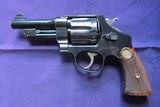
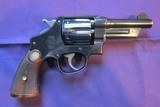
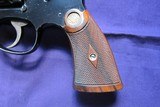
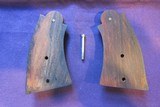
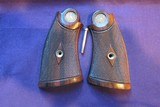
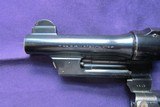
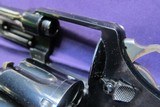
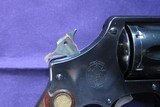
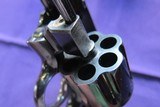
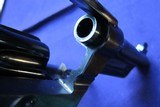
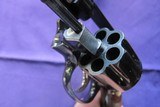
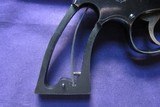
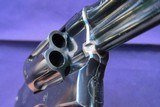
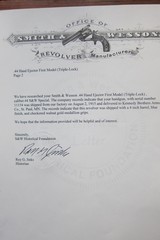
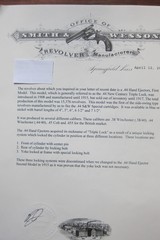
Here is a very well kept Smith & Wesson blued triple lock revolver with the relatively rare 4 inch barrel. It was produced in 1915 and shipped to St.Paul, MN in the same year. It represents an example of Smith and Wesson's first N-frame gun and perhaps its finest revolver, easily comparable in quality of construction to the more modern day Colt Python. Only a little over 15000 of these guns were manufactured between 1908 and 1915. Its triple lock mechanism evolved as a consequence of the need for a stronger frame and lock up than earlier guns of this vintage due to the introduction of the .44 Special caliber by the S&W company. A well known gun scribe at the time, Elmer Keith, highly touted this pistol and with his influence it surely was instrumental in the eventual development of the .44 magnum cartridge. Interestingly, the cylinders in this early gun were not heat treated at the time but the hammers and triggers were case hardened. You might think this dichotomy would have been in question by metallurgists back then but apparently it was not. Regardless, the pistols tolerated this heavy caliber well and many of this model and even more of the second model were used by the British during WW1. The cost of producing these things became somewhat prohibitive early on and so the revolvers to follow did away with the costly triple lock mechanism. Actually, the less complicated lock up system of the later guns allowed them to tolerate the mud, dust, and abuse associated with military field use better than the meticulous almost Swiss clock-work mechanism of the first guns. The Brits purchased and successfully put to use some 70,000 of the second model guns during the war. This particular one was made during the last year of its official production and remains in excellent condition. It retains about 97 percent of its original bluing and has a perfect bore and action with an even more solid lock up. When cocked there is absolutely no cylinder movement and even with the hammer down only suggestive rotational movement can be detected. No cylinder movement can be felt regardless of the hammer position if the cylinder is mechanically moved in the rear or forward direction. This gun is as tight as a revolver gets. It deserves its reputation. Examination of the cylinder face shows only suggestive evidence that the weapon has ever been fired. Maybe only at the factory if it was a routine to do it at that time. The grips remain in near perfect condition showing only the changes produced by simply aging. There is a minor abrasion on the right side of the frame and barrel that can be seen in one of the photographs. There is also a very small ding on the left side of the barrel in its mid portion which doesn't show up in the pictures. Basically this is an extraordinary example of a rare well made pistol which belongs in an advanced Smith & Wesson collection somewhere. Will answer any questions posed to the best of my ability. Thanks for taking a look. Jack
SOLD