 |
 |
 |
 |
 |
 |
 |
 |
 |
 |
 |
 |
 |
 |
 |
 |
 |
 |
 |
 |

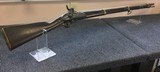
VERY FINE .70 CALIBER 1809 MODEL PRUSSIAN “POTSDAM” SMOOTHBORE MUSKET
Guns International #: 101577967 Seller's Inventory #:
Category: Military Rifles - Antique - Antique Rifles - Percussion
Seller's Information
When emailing or calling sellers direct, please mention that you saw their listing on GunsInternational.com

Seller: James Carr's Antique Guns and Collectibles
Member Since: 3/8/15
First Name: James
Last Name: Carr
State: Colorado
Zip: 81403
Country: United States
Phone: (703) 431-3159
Premium Seller
Number of Active Listings: 23
Total Number of Listings: 148
Seller: Private Seller
Return Policy: 3 day inspection and return policy on used guns.
Payment Types Accepted: Zelle, money orders or checks with cleared funds
Description:
VERY FINE .70 CALIBER 1809 MODEL PRUSSIAN “POTSDAM” SMOOTHBORE MUSKET
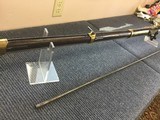
The 3-band Prussian Model 1809 Smoothbore Musket (often referred to as “the Potsdam Musket”) was one of the most recognizable imported arms during the American Civil War. The weapon was originally manufactured as a flintlock for use by the Prussian Army, with the lock plate stamped with the particular armory of manufacture - “Potsdam”, “Saarn”, “Neisse”, “Suhl” or “ Dresden”. Beginning in 1839 most were converted to the percussion system, with the year of that upgrade stamped on the underside of the barrel. Starting in 1855, the Prussians began to rearm their front line infantry with breech loading Dreyse rifles. Accordingly, even though the 1809 Model remained a well made and fully serviceable weapon, the Prussians sold many of their surplus to the United States government. The gun proved a reliable long arm for many infantry units. It was referred to by many soldiers as a “pumpkin slinger”, given the large caliber of round ball it sent down the battlefield (ranging from .69 to .72). It did serious damage up to 100 yards.
This particular musket was acquired by me in 2012 to be used in smoothbore competition with the North South Skirmish Association. Judging the condition of the bore to be a bit iffy for competition, I had the barrel relined by Dan Whitaker, at his Civil War gun barrel workshop. (By my mic, the bore after relining is approximately .70; but mileage may vary with your own measurement). Relocation across the Country and the press of other matters has precluded my shooting let alone working up a proper load for this musket. Now, I am too geographically distant to further compete with the NSSA, so I am selling this musket along with other antique guns in my toy chest.
The details of the musket are as follows:
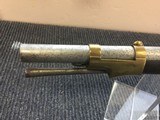
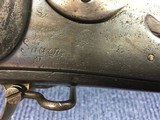
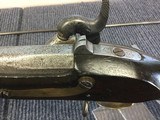
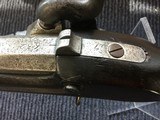
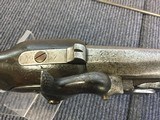
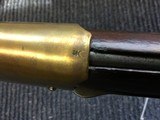
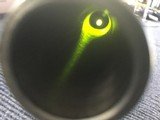
Barrel (steel): Having been relined the bore is absolutely smooth, bright and mint. There is consistent gray age patina on the exterior of the barrel, with some age spots but only very tiny and very random pin prick pitting. The bolster is clean and intact with an unbuggered cleanout screw and clean entry to the ignition chamber. The markings: Top Flat - large 632; under bolster very small AS; lower left flat medium FW with crown above and to right very small 1821; bottom of barrel rear - tiny 86 followed by birdlike symbol [hereafter maker mark #1] followed by small 1840 followed by large 2 and then another large 2 followed by 22414 and then another indistinguishable symbol (smile with dot above); breach plug has 7 on top flat, 22414 on right flat, tiny M with crown above on left flat, tiny 86 on bottom flat, and on rear flat a B and below an H above which is an indistinguishable tiny symbol. Breach plug mounts fixed rear sight which lines up perfectly with tiny cut in center of top flat of barrel. Spoon is mounted with tiny retaining pin at raised post with hole at bottom front of barrel.
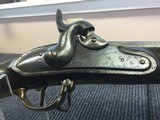
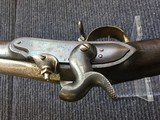
Hammer (appears case hardened): External - cock with deep cross hatch; inside stamped with tiny 86 and crown over M.
Lock (appears case hardened): External - small surface pitting with stamps: maker mark #3, an S, and Saarn with small F below; inside - plate stamped with tiny 8 and 86 and 22414, and larger VFL, and stirrup marked with tiny 86.
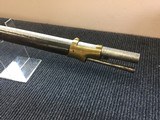
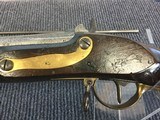
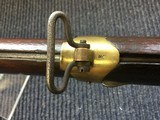
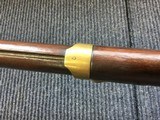
Barrel Bands (brass): Front band with front sight and external maker stamp (tiny crown or star or similar with wide U above [hereafter maker mark #2]; middle band with external maker stamp [#2] and internal L stamp; rear band with external maker stamp (0 with tiny star or crown or similar above [hereafter maker mark #3] and internal s inside 4 stamp points in square.
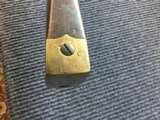
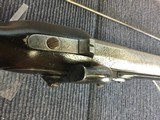
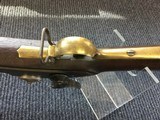
Base Plate (brass): Bottom external stamped 22414 and, smaller, 42598; top external stamped with maker mark #3 and 632 and C. and 28 and L.W. R. 1821 just below top screw hole.
Swivels (iron): no marks
Estrucheon Screws (iron): Each stamped with tiny 86.
Estrucheon (brass): 0 with indistinguishable symbol above stamped on exterior center.
Trigger Guard (brass): exterior - tiny 86 with indistinguishable symbol below on far bottom; interior - medium L at far top
.
Ramrod (steel): Flat bottom, swelled flat top with internal screw thread for attachments. Marks: medium 605 at top, 5 below, then 5 below, tiny 0 with crown above at top, tiny 11 or 77 at top. Series of 3 small W's midway on rod appear scratched there by soldier.
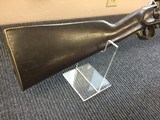
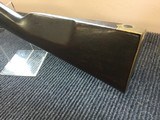
Furniture: Very solid and intact with minimal shrinkage and still with good wood to metal fit. Some minor wear and crease marks consistent with age. Tiny chip immediately behind tang end. Walnut stock is very solid with intact ramrod channel. Markings: Marked on lock flat with large FW with crown above in center, and M with crown above to right. Underneath trigger guard: two I's and a back slash. In top of inlet, below lock: 7 small slashes at center top, 2 larger slashes to the right.
From the foregoing it appears the gun is one of the mid generation issues of the 1809 Model Prussian ("Potsdam"). Butt plate and barrel markings identify it as having been made in 1821 at the Prussian military factory at Saarn. Conversion to percussion by the typical armory mode was done in 1840, but it is unclear precisely where. (I believe from S stamps either Saarn or the factory at Soemmerda). The buttplate markings indicate this was musket #632 of Company C of the 28th Landwehr Regiment. The Landwehr regiments were originally formed in 1813 as active field regiments of the Prussian army, but in 1859 these units were redesignated local defense units composed of all able men 17 to 45 not in the regular army, who were to serve as “national guard” troops in the local area where mustered. In 1855, the Prussians had some 380,000 Model 1809 muskets still in active use, and began a program of “modernizing” these weapons by rifling and resighting them. This program had hardly begun when government officials decided to replace the Model 1809 with the new breach loading Dreyse (needle) rifle. When the American Civil War broke out, the Prussians were delighted to sell their still unrifled Model 1809’s to both American Federals and Rebels. Records indicate that some 165,000 of these Model 1809 muskets were sold to the Federals alone, and almost all of these came from the Landwehr arsenals. While this particular musket does not bear an import stamp from either side, it is reasonable to presume that the musket is with us today because it was imported to this country in 1861 or 1862.
The Model 1809 I am selling is all original and complete (down to the often missing originally marked ramrod), and is in very fine condition. It offers a nice opportunity for acquisition, either by a collector or a current NSSA member seeking an excellent gun to work up for future smoothbore competition.
Price: $1,600, plus shipping costs by UPS, which will need to be determined by the purchaser’s location for receipt and selection of shipping service.
Terms of Sale:
1. I only sell and ship to purchasers within the continental USA, and do not accept credit cards, pay pal or other payment pathways. I prefer payment by USPS money order, which is instant cash and after receipt will generate next business day send off of your item. Or, if you are in no rush, you can send me any form of good check you wish, with the understanding that your item will not ship until I have deposited your check and it has cleared to become cash monies, a process depending on your payee bank which may take 7 to 10 days.
2. This gun meets the definition of a pre-1898 “antique” under the United States Gun Control Act of 1968, and accordingly, may be shipped directly to a purchaser without the requirement of passing through an FFL. However, if a purchaser’s state, county, or city requires a permit for purchase, the purchaser must comply and copy documentation of compliance with payment. No firearms are sold to minors (as “minor” is defined by the law of the recipient’s state). I will need a copy of a driver’s license to confirm this for my C&R License records. The item will be shipped by UPS regular ground or the purchaser’s election of service. Actual shipping costs, including charges for insurance and adult signature required are payable by the purchaser in addition to the indicated sales price.
3. This firearm is sold as a collector's item only. The seller assumes no liability, expressed or implied, as to the shooting capacity, safety or accuracy of the item listed for sale. Any gun, whether antique or modern, should properly be examined and approved for firing by a capable gunsmith. But please also note: Those who are not experienced in the metallurgy of antique gun barrels, the necessity of using only black powder in appropriate amounts when shooting, and the necessity of following safe loading and firing practices which are unique to black powder weapons, can cause serious injury and death to themselves or others if attempting to fire one of these guns.
4. A three-day right of inspection will apply to any gun sold, consistent with the standard terms detailed for buyers and sellers by Guns International.
5. The seller is just an old guy liquidating his collection and is neither a gun dealer or purports to be an “expert” in firearms. Any comments concerning the subject item for sale are matters based upon my personal observation, research and past experience with antique firearms.
SOLD
Curio/Relic: Yes
Antique: Yes