 |
 |
 |
 |
 |
 |
 |
 |
 |
 |
 |
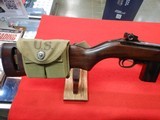 |

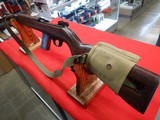
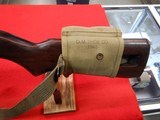
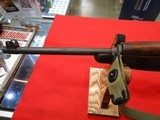
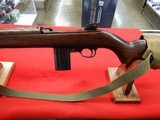
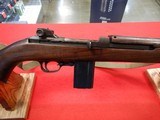
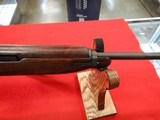
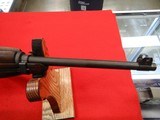
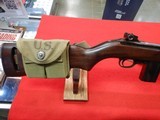
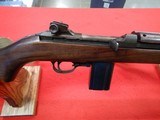
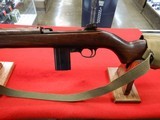
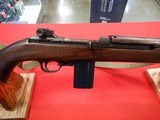
US M1 CARBINE .30 M1
Guns International #: 102105115 Seller's Inventory #:
Category: Military Arms - Military Rifles - M1 Carbine
Seller's Information
When emailing or calling sellers direct, please mention that you saw their listing on GunsInternational.com

Seller: The Bullet Hole
Member Since: 7/17/19
State: Kansas
Zip: 66202
Country: United States
Phone: (913) 432-0050
Seller: FFL Dealer
Return Policy: 3 day inspection and return policy on used guns.
Payment Types Accepted: Credit Card or Cashier's Check
Description:
WE HAVE A US M1 CARBINE IN .30 M1 CALIBER, HISTORY AND SPECS ARE AS FOLLOWS;
WHY THE M1 CARBINE BECAME AN AMERICAN LEGEND
December 21, 2021 · Travis Pike
World War 2 was a fascinating time for weapon development. We saw the birth of the general-purpose machine gun, the adoption of an autoloading rifle, and even the development and mass fielding of automatic rifles. During this terrible war, we also developed the M1 Carbine, which would go on to become legendary in both performance and concept.
Breaking Down the M1 Carbine
The M1 Carbine was a short and light semi-automatic rifle firing the .30 Carbine cartridge. The design fed from a box magazine that held 15 rounds. Most of the time, the term carbine applies to a shorter variant of a standard rifle. However, the M1 was its own design and not a smaller variant of any other platform.
The M1 Carbine utilizes a short-stroke gas piston system designed by David Marshall ‘Carbine’ Williams, who started designing guns while serving a prison term for murder. Winchester developed the rifle and cartridge, and the U.S. Army adopted it in October of 1941.
The M1 Carbine. Photo courtesy of the Swedish War Museum.
The M1 Carbine was an oddball weapon for the United States to develop. The main battle rifle for the U.S. at the time was the M1 Garand, a weapon that fired the powerful .30-06 cartridge. Alongside it served the pistol caliber Thompson submachine gun and the Browning Automatic rifle. Somewhere in the middle of these weapons sat the M1 carbine, with its famed .30 carbine cartridge.
It was not quite a battle rifle cartridge and not quite a pistol cartridge, but rather somewhere in between the two. It offered more range and velocity than the Thomspon or M3 but couldn’t keep up with the range and power of the famed M1 Garand. Why exactly would the Army want such a weapon?
Into Service
Its purpose was to replace the M1 Garand for all non-combat troops. The M1 Garand weighed 9.5 pounds and was 43.5 inches long. It’s was a hassle for artillerymen, truck drivers, armored troops, and mortarmen to deal with. The M1 Carbine offered a smaller, lighter rifle with more combat potential than a 1911. It was 35.6 inches long and weighed only 5.8 pounds loaded.
A mortar crew in action at Camp Carson, Colorado. Photo courtesy of Sandboxx.
Thompsons were too expensive and hard to come by to equip noncombat troops with them, and the M1 Carbine offered a $45 dollar solution to the problem. Plus, M1 Garands were already in short supply at the beginning of the war, and the nation’s infantrymen needed the extra range and power the M1 Garand offered.
Upon entering service, the M1 Carbine became an instant favorite among troops. Troops love cutting weight, and a light and handy rifle is always appreciated. Warfare in World War II was different than any other war, and in comparison to previous conflicts, it moved at a lightning pace. While the .30-06 could reach out well beyond 500 yards, engagements were often within 300 yards or closer.
A Marine pulls security with an M1 Carbine at Iwo Jima. Photo courtesy of Sandboxx.
The carbine was accurate and effective out to 300 yards and much easier to handle in close quarters combat than the big and heavy recoiling M1 Garand. It offered a longer effective range than the Thompson, and by falling into its own little niche, it proved to be an effective option for combat use.
The M1 Carbine became a standard infantry firearm popular with Staff NCOs, Paratroopers, radiomen, bazooka wielders, and machine-gun teams. And unintentionally, it became a revolutionary firearm.
Why It Was Revolutionary
The M1 Carbine was revolutionary in three different ways.
While it can’t claim the title of the world’s first assault rifle, it does get quite close. It lacked selective fire capability until the M2 Carbine was invented. The cartridge it fired wouldn’t be considered intermediate by today’s standards, but at the time, it’s hard to classify it as anything but intermediate when compared to the .45 ACP and .30-06.
**BUYER PAYS SHIPPING AND INSURANCE**
SOLD
Rifle Caliber: .30 Carbine
Manufacturer: US
Model: M1 CARBINE
Serial Number: 501306
Barrel Length: 18
Condition: VERY GOOD
Metal Condition: VERY GOOD
Wood Condition: VERY GOOD
Bore Condition: VERY GOOD