 |
 |
 |
 |
 |
 |
 |
 |
 |
 |
 |
 |
 |
 |
 |

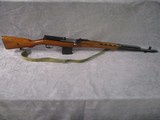
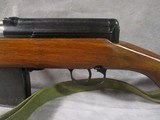
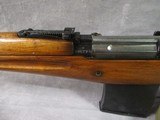
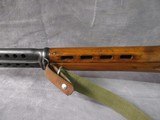
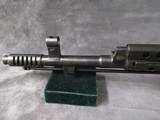
Tula Arsenal SVT-40 Semi-Auto Rifle Made 1941 WWII Soviet Rifle No Import Markings
Guns International #: 102179533 Seller's Inventory #: 2301-0085
Category: Military Rifles - Non-US - Rifles - Russian
Seller's Information
When emailing or calling sellers direct, please mention that you saw their listing on GunsInternational.com

Seller: Shooter's Supply, LLC.
Member Since: 3/16/16
First Name: Patrick
Last Name: Brown
State: Tennessee
Zip: 37343
Country: United States
Phone: (423) 875-4868
Number of Active Listings: 28
Total Number of Listings: 1372
Seller: FFL Dealer
Return Policy: 3 day inspection and return policy on used guns.
We normally ship USPS Priority Mail which should be 2-day ship. Shipping is actual cost with a minimum of $30.00 for pistols and $50.00 for rifles/shotguns to ship to most of the 48 contiguous states. Shipping to Alaska may require an extra fee. Shipping insurance is available upon request for an extra fee. We cannot do international sales. As of November 2019, we no longer ship guns to California and Hawaii.
Payment Types Accepted: Visa, Master Card, American Express, USPS Money Order. NO CREDIT CARD FEES!!!
About Us: We are a small family owned business located in Hixson, Tennessee. Do you have firearms at home collecting dust? We have a lively consignment business. Our fee is 20% with a $50 minimum. Firearms are consigned for a an average period of 180 days but the length of period is negotiable. We also do handgun carry permit classes for the state of Tennessee. We have a nice indoor shooting range with reasonable rates. Please check us out at shooterssupply.
Description:
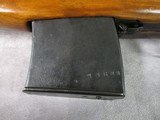
The SVT-40 was a refinement of the earlier SVT-38. Both were designed by Fedor Tokarev, the designer of the famous Tokarev pistol. Both were built with the intention of replacing the venerable Mosin-Nagant bolt-action rifle, much as the M1 Garand replaced M1903 Springfield rifle. However, several factors ultimately prevented this. The first was training; while there were Soviet soldiers who liked the SVT-40, the majority of Soviet soldiers had little to no training, sometimes being thrown into combat with only a few hours of instruction in the rifle’s use. Semi-auto rifles like the SVT-40 require far more training to operate effectively than a bolt action rifle like the Mosin-Nagant. The second issue was the low level of development with respect to Soviet metallurgy, manufacturing facilities, and a severe lack of qualified personnel. Some machinery and tools actually had to be purchased from the U.S. in order to facilitate production of the SVT-40. At certain points during the production run, the proportion of defective parts could be as high as 90 percent. The third factor was cost: an SVT-40 cost 713 rubles in 1940; meanwhile the Mosin-Nagant only cost 170 rubles, not to mention the difference in man hours need to produce both weapons. The final factor was the method of operation. World War 2 saw the first use of semi-auto rifles in large numbers, and at the outbreak of war, there were no theoretical calculations for the process of re-using the energy produced by gases to cycle a piston. Even the Germans, as advanced as many of their firearms designs were, did not believe it was even possible to produce a rifle with a hole drilled into the bore to tap the gases without compromising the strength of the barrel. Even the M1 Garand was originally designed with a gas trap mechanism, as was the German G41 rifle. Eventually, the M1 was modified to a drilled hole, and experience with the SVT-38/40 led the Germans to create the G43. Although the rifle itself did not have a large impact on the war itself, the SVT-40 played an important role in the development of modern military rifles. Both the British SA80 and American AR-18 (not -15) use a gas system similar to the SVT-40. The French FR-F1 rifle utilizes a safety very similar to the SVT’s. The Swedish Lungman AG M/42 rifle uses a similar bolt locking method to the SVT-40. Overall, the SVT-40 is a very important firearm in military history.
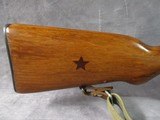
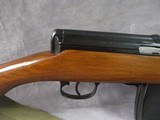
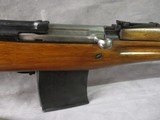
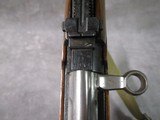
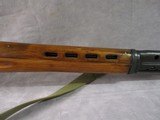
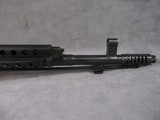
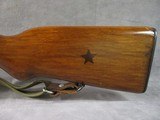
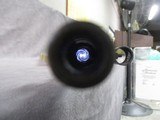
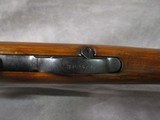
The rifle shown is in good condition though it has been through an arsenal rebuild at some point. For collectors familiar with it, there are 5 categories that the SVT-40 generally falls into: 1) “Veteran Bring Backs”, 2) German Capture, 3) Finn Capture, 4) Bulgarian Refurbish, and 5) Soviet/Russian Refurbish. This example does not fall into any one category. While it most certainly does not fall into the first three categories, it lacks a few features found in categories 4 and 5 and so it is difficult to pinpoint who did the refurbishing. The parts are non-matching, but oddly, there are no visible import stamps despite a thorough disassembling of the rifle. All serial numbers are stamped, not electro-penciled, as is commonly found on Soviet/Russian refurbished rifles. The bottom of the bolt retains its original serial number, rather than it being removed. The bottom of the trigger guard has its own serial number, but the font is different from that found on the receiver. This is sometimes found on Russian refurbished rifles though, as stated before, they prefer to use the electro-pencil. This does not, however, explain the lack of import markings, unless the rifle was imported sometime in the later 1950s/early ‘60s. The bluing is in excellent shape for an arsenal refinish. The bolt is still “in the white” and exhibits very little pitting of the metal. This is unusual in that most Bulgarian and Russian refurbished guns have the bolt dipped in a bluing solution and they come out with purple-brown or plum-colored hue. The buttstock has been modified with a wooden, dark-red star insert on each side. Despite a rather thorough search online, the author has not managed to find another refurbished SVT-40 with this feature. The wood is in great physical shape other than one missing chip in front of the brass reinforcement pin on the right side of the hand guard. Otherwise, there is some minor handling wear. There is no serial number on the inside of the hand guard, so it is unlikely this rifle went through an arsenal rebuild in Bulgaria. The front barrel band is the early two-piece type, which makes sense since the rifle was made in 1941. The bore is in good shape for its age and the given use of corrosive primers. Rifling is well defined although frosting is present in the grooves. Accuracy should still be good if not superb. At the end of the day, this rifle would make a nice addition to any World War II collection.
SOLD
Rifle Caliber: 7.62x54mmR
Manufacturer: Tula Arsenal
Model: SVT-40
Serial Number: AM1374
Bore: Rifled, 4 grooves
Ejectors: Auto-ejection
Condition: Used - Good
Barrel Type: Round steel barrel with integral flash suppressor
Action: Semi-Automatic Rifle, Gas-Operated short-stroke pistol, Tilting Bolt
Triggers: Single, 4.5 - 5.0 lbs. pull
Stock: Wood, semi-pistol grip
Fore End: Wood
Butt Pad: Metal plate
LOP: 13.0 inches (330 mm)
Finish: Blued
Weight: 8.5 lbs.
Sights: Leaf gradient rear sight, post front sight, sight radius 23.6 inches (600 mm)
Manufacture Date: 1941