 |
 |
 |
 |
 |
 |
 |
 |
 |
 |
 |
 |
 |

U.S. Model 1873 Trowel Bayonet
Guns International #: 103524010 Seller's Inventory #: JQC-029
Category: Bayonets - Edged Weapons Pre 1900
Seller's Information
When emailing or calling sellers direct, please mention that you saw their listing on GunsInternational.com

Seller: Civil War Toys
Member Since: 5/30/19
First Name: vincent
Last Name: caponi
State: New York
Zip: 11565
Country: United States
Phone: (516) 353-3250
Premium Seller
Number of Active Listings: 40
Total Number of Listings: 1086
Seller: Private Seller
Return Policy: 3 day inspection and return policy on used guns.
Payment Types Accepted: Checks, Credit Cards, PayPal
Description:
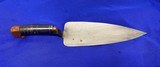
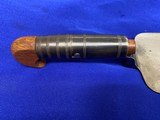
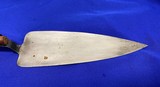
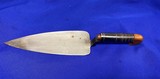
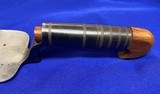
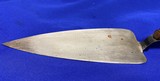
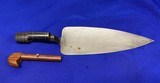
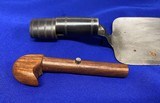
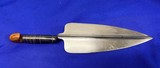
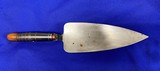
This an original U.S. Model 1873 trowel bayonet measures 16” with the handle by 3-1/2” at the widest point. The bayonet is in excellent untouched condition. The trowel bayonet was originally issued with a wooden dowel handle that locked into the bayonet socket as well as a leather scabbard (scabbard is missing). Interestingly, this trowel bayonet had a dual purpose. First, as a tool, it could be used as an entrenching tool to dig a rifle pit, as a hatchet, as a masonry trowel to spread mortar on walls, and for any other jobs that a soldier might need a trowel. The Model 1873 trowel could also be attached to the end of a Model 1873 Springfield, commonly known as the “Trapdoor” rifle. However, the trowel was not meant to be used as a shovel when attached to the rifle. Needless to say, this configuration could potentially have some disastrous consequences. Further, the trowel when mounted as a bayonet was not particularly effective as it was too wide and could not penetrate an enemy soldier as efficiently as a traditional bayonet. Colonel Edmund Rice, inventor of the M1873 Trowel attempted to combine both tool and weapon into one object. Despite the shaky concept, it was promising enough that Brigadier General Stephen Vincent Benet, Chief of Ordnance ordered 10,000. During its limited service life, the trowel was used effectively at the Battle of Clearwater, Battle of Big Hole, and Bear Paw Mountain in 1877 during the Nez Perce Conflict. Douglas C. McChristian summed it up best in his book, Uniforms, Arms, and Equipment: The U.S. Army on the Western Frontier, 1880-1892, Vol. 2, Weapons and Accouterments, “…the army never fully accepted the concept. It was at best a compromise that failed to fulfill the role of either entrenching tool or bayonet.
SOLD