 |
 |
 |
 |
 |
 |
 |
 |
 |
 |
 |
 |
 |
 |
 |

Winchester M1 Garand Made July 1942 CMP Certificate
Guns International #: 103659711 Seller's Inventory #: 26030198
Category: Military Rifles - M1 Garand - Winchester Rifles - Military
Seller's Information
When emailing or calling sellers direct, please mention that you saw their listing on GunsInternational.com

Seller: Shooter's Supply, LLC.
Member Since: 3/16/16
First Name: Patrick
Last Name: Brown
State: Tennessee
Zip: 37343
Country: United States
Phone: (423) 875-4868
Number of Active Listings: 17
Total Number of Listings: 1391
Seller: FFL Dealer
Return Policy: 3 day inspection and return policy on used guns.
We normally ship USPS Priority Mail which should be 2-day ship. Shipping is actual cost with a minimum of $45 to ship to most of the 48 contiguous states. Shipping to Alaska may require an extra fee. Shipping insurance is available upon request for an extra fee. We cannot do international sales. As of November 2019, we no longer ship guns to California and Hawaii.
Payment Types Accepted: Visa, Master Card, American Express, USPS Money Order. NO CREDIT CARD FEES!!!
About Us: We are a small family owned business located in Hixson, Tennessee. Do you have firearms at home collecting dust? We have a lively consignment business. Our fee is 20% with a $50 minimum. Firearms are consigned for a an average period of 180 days but the length of period is negotiable. We also do handgun carry permit classes for the state of Tennessee. We have a nice indoor shooting range with reasonable rates. Please check us out at shooterssupply.
Description:
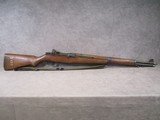
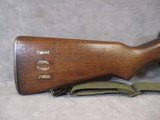
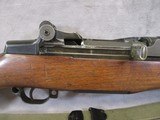
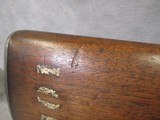
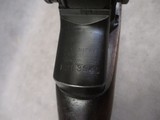
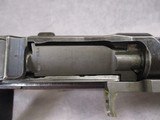
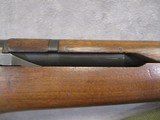
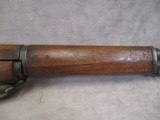
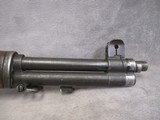
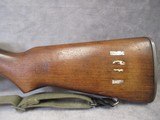
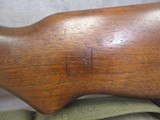
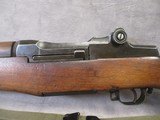
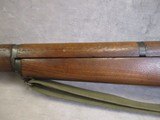
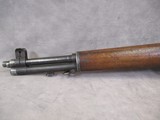
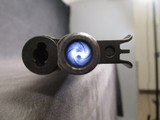
The M1 Garand is one of the most important firearms ever produced by the United States of America. It served faithfully from World War Two (as the standard issue rifle) all the way into early Vietnam (in the sniper role). This is a Winchester-built M1 (with the CMP Certificate) which features a number of Springfield parts. Almost all original M1 rifles were rebuilt at some point. Virtually any parts matching rifle found today is likely one that has been put together by a collector. Indeed, many collectors will buy multiple rifles and reassemble them with as many parts from one manufacturer as possible. The serial number on the receiver dates it to July of 1942. The barrel was produced by Springfield in June of 1944. Looking down the bore of the rifle, there is no rust or pitting. With a combination muzzle/throat erosion gauge, it has been determined the muzzle tightness is 1.5 while the throat is 2.0. The rifle should still retain a good if not superb level of accuracy. The stock is rather interesting in that it has no cartouche but instead possesses a rebuild stamp. The stamp is a box with “S.A.” on the top row and “R.” on the bottom row to the right. This indicates the rifle was rebuilt at the Springfield Arsenal itself rather than at one of the usual refurbishment facilities such as the Anniston Army Depot (A.N. or A.A.N.) in Alabama, or the Benicia Arsenal (B.A.) in California. The classic “P” (in a circle) proof stamp is stamped on the front of the pistol grip. It is obvious from the rifle’s appearance that this rifle saw heavy usage in combat during the second World War and possibly also in the Korean War. The stock and both handguards exhibit the usual wear such as dings and dents, but surprisingly, no major cracks. The gas lock cylinder seems to have suffered the most with respect to the finish. Like the gas cylinder, the gas cylinder lock is made of stainless steel and could not be given the usual parkerized finish found on other M1 parts. The receiver has some finish wear on the edges and the sides of the op rod trackway. Mechanically, the M1 is in excellent shape.
A list of the parts is given at the bottom of the description. Here is a brief description for some of the most important ones. The bolt is of Winchester manufacture and is stamped “D28287-1 W.R.A.” This was the stamp used for all Winchester bolts made from June of 1941 till June of 1945. The hammer is stamped “C46008-3 SA”. These were manufactured for use on production rifles from July 1942 through May 1943. The operating rod is marked “7790722 SA” which indicates it is a postwar op rod manufactured by Springfield. After World War 2, the US Army ordered that during a rebuild, the M1 Garand was supposed to have whatever rear sight was installed at the time replaced by the newer T105E1 rear sight. This example received the upgrade, with the windage knob being manufactured by Bruce Machined & Engineering (BME), and the elevation knob manufactured by Wico Electric Corp. (whose acronym is stamped, oddly, as WCE rather than the logical WEC). The trigger housing was made by Springfield and is marked “D28290-12-SA”. It was produced between December of 1942 to the end of August 1944. The safety is also of Springfield manufacture, being stamped with the well-known “SA-11” stamp.
Many people utilize M1 Garands for competition shooting. A word on handloading ammunition for these rifles. Normally, only 150gr bullets should be used in a standard issue M1. This is done to preserve the operating rod. Extensive use of heavy bullets in an unmodified Garand will result in the operating rod bending, meaning the gun will no longer function until the part is replaced. In order to use heavier bullets, a Schuster gas plug must be fitted. If you want to shoot the heavy 220gr round nose ammo, adjust the plug so that the fired cases eject no more than five feet away. If they are ejecting something like twenty feet away, your operating rod is in danger. Hornady .30-caliber 225gr spitzers will usually be too long to fit and require single-loading into the chamber. These gas plugs work well, and I enjoy shooting my personal M1 Garand equipped as such. The only exception to the 150gr rule is M1-specific match ammo which uses a 168gr bullet and is loaded to a lower pressure to compensate for the heavier bullet. One important characteristic of the rifle is of course its name. The rifle was named after its inventor, John C. Garand. Today, most people pronounce it “Guh-rand”, the last part coming out like “grand” or “rand” (like Remington-Rand). This is not how Mr. Garand pronounced his own last name. The correct pronunciation is “Gare-rind” with the first part sounding like “dare” (“I dare you to…”) or “bear”, and the second part sounding like “wind” but with the rolling “r” sound instead of the “w”. Most people continue to pronounce the word as many always have (even in WW2) because of tradition but it’s nice to hear the correct pronunciation now and then.
Barrel: Carbon steel, Marked (side): “2 S A 6 44”, Marked (top): “D35448-31-Y-70-E--2” (note the double dash between “E” and “2”) with Ordnance Wheel stamp to the right, then a letter “M” stamp.
Bore: TE = 2.0, Muzzle = 1.5
Barrel Length: 24.0 inches (610 mm)
Rifling: Uniform, 4 grooves, 1:10 inches (1 in 254 mm) RH twist.
Length of Pull: 13.0 inches (330 mm)
Overall Length: 43.5 inches (1105 mm)
Capacity: 8-round en-bloc clip
Receiver: Winchester, Carbon Steel, Marked: “D28291-2”, as well as “B” (small, bottom), “P” (large, bottom), a punch dot (bottom).
Finish: Parkerized
Stock: Wood, storage space in butt, metal butt plate with flip open cover.
Forearm: Wood
Cartouche: None (no original cartouche + rebuild stamp suggests the stock started as a field replacement which then went through the rebuild after WWII)
Rebuild Stamp: Box with “S.A.” (top row), “R.” (bottom row below the “A”).
Other Stock Markings: Large P in circle proof stamp, “101” painted on both sides.
Rear Handguard: Unmarked with clearance cut
Front Handguard: Late, unmarked
Sights: T105 rear sight assembly, blade front sight, Sight Radius 27.875 inches (708 mm).
Aperture: Angle cut (SA), grooves, unmarked
Cover: Unmarked, stamped with reinforcing grooves.
Base: Angled inside corner, unmarked (Springfield)
Pinion: Long Pinion, long splines without cut
Windage Knob: T105, BME (Bruce Machine Engineering Co.)
Elevation Knob: T105, WCE (Wilco Electric Corp., no idea why it is “WCE” instead of “WEC”).
Scope: None
Bolt: Winchester, Marked “D28287-1 W.R.A.”, correct for s/n 1,000,000 - 2,536,600.
Operating Rod: Springfield, Marked “7790722 SA”, straight cut, flat side, post-war.
Bullet Guide: Stamped, wide slot, fold-over top, parkerized.
Op Rod Catch: Unmarked
Follower: Unmarked, parkerized. Slide parkerized.
Follower Arm: 2 S * 6 (asterisk represents a middle-height dot); single bevel, parkerized.
Follower Rod: Late, long fork, one stamp line (HRA, postwar)
Lower Band: Unmarked, stamped, flat
Clip Latch: Early, round faced.
Trigger: Unmarked, parkerized.
Trigger Housing: Springfield, Marked: “D28290-12-SA”, beginning of Dec. ‘42 till end of Aug. ‘44.
Trigger Guard: Winchester, Marked: “C 46025 W.R.A.”, May 1942 to June 1945.
Hammer: Springfield, Marked: “C46008-3 SA”, beginning Jul. ‘42 till end of May ‘43.
Safety: Springfield, SA-11, beginning Aug. ‘43 till end of war.
Spring Housing: Parkerized
Guide: Square with wings
Gas Cylinder: Round top ring (Winchester), diagonal saw cut.
Gas Lock: Unmarked, round top
Gas Plug/Screw: early single slot
Price: $1,700.00
Rifle Caliber: .30-06 Springfield
Manufacturer: Winchester Repeating Arms
Model: M1 Garand
Serial Number: 1,213,940
Barrel Length: 24.0 inches (610 mm)
Bore: Rifled, Uniform, 4 grooves, 1:10 inches (1 in 254 mm) RH twist.
Ejectors: Auto-ejection
Condition: Used - Good to Very Good
Barrels: Carbon steel
Barrel Type: Standard M1
Action: Semi-automatic, gas operated, short-stroke gas piston, closed rotating bolt.
Triggers: Standard M1
Stock: Standard M1 stock
Fore End: Wood
Butt Pad: Metal plate with trap door
LOP: 13.0 inches (330 mm)
Finish: Parkerized
Weight: 9.0 lbs.
Sights: T105 rear sight assembly, blade front sight, Sight Radius 27.875 inches (708 mm).
Manufacture Date: July 1942