 |
 |
 |
 |
 |
 |
 |
 |
 |
 |
 |
 |
 |
 |
 |

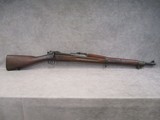
Springfield Model 1903 Low-Serial Number (1906) WW2 Rebuild
Guns International #: 103682820 Seller's Inventory #: 26060078
Category: Springfield Rifles - 1903 - Military Rifles - US
Seller's Information
When emailing or calling sellers direct, please mention that you saw their listing on GunsInternational.com

Seller: Shooter's Supply, LLC.
Member Since: 3/16/16
First Name: Patrick
Last Name: Brown
State: Tennessee
Zip: 37343
Country: United States
Phone: (423) 875-4868
Number of Active Listings: 18
Total Number of Listings: 1393
Seller: FFL Dealer
Return Policy: 3 day inspection and return policy on used guns.
We normally ship USPS Priority Mail which should be 2-day ship. Shipping is actual cost with a minimum of $45 to ship to most of the 48 contiguous states. Shipping to Alaska may require an extra fee. Shipping insurance is available upon request for an extra fee. We cannot do international sales. As of November 2019, we no longer ship guns to California and Hawaii.
Payment Types Accepted: Visa, Master Card, American Express, USPS Money Order. NO CREDIT CARD FEES!!!
About Us: We are a small family owned business located in Hixson, Tennessee. Do you have firearms at home collecting dust? We have a lively consignment business. Our fee is 20% with a $50 minimum. Firearms are consigned for a an average period of 180 days but the length of period is negotiable. We also do handgun carry permit classes for the state of Tennessee. We have a nice indoor shooting range with reasonable rates. Please check us out at shooterssupply.
Description:
The Model 1903 Springfield rifle was designed to replace both the U.S. Army’s Krag Rifle and the Navy's Lee-Navy rifle then in service. It was built around the one-size-fits-all concept, and so did not have a cavalry/artillery specific model as did the Krag rifle. The M1903 was originally chambered for the .30-03 cartridge, which featured a 64.5mm long case and a 220gr round-nosed bullet. With the introduction of the German 8mm S Patrone and its 154gr Spitzgeschoss or Spire Point Bullet, the US had to follow suit and by 1906 the .30-06 was born (with its 150gr spitzer bullet and slightly shorter 63mm case length). As the Springfield was essentially a Mauser 1898 with a small ring receiver, royalties were paid to Mauser up until the U.S. declared war on Germany in 1917. By the time the US entered WW1 in 1917, 843,239 M1903 rifles had been produced at the Springfield Armory and Rock Island Arsenal.
Prior to the entry into war, it had been discovered that the production of the M1903 utilized questionable metallurgy. Some of the receivers constructed using the single-heat-treated method using case-hardened steel were improperly subjected to temperatures well above what was required during the forging process. Essentially, the carbon would be “burnt” out of the steel, resulting in an exceptionally brittle receiver. Contrary to popular belief, while there is documented evidence indicating some early receivers were improperly forged, actual cases of receivers self-destructing were very rare. Although some cases of serious injury resulting from a receiver failing during firing are documented, the U.S. Army never reported any fatalities. Indeed, a large number of the failures were not solely due to the quality of the receiver’s construction, but in fact to what was being loaded into the rifle. Some of the failures were linked to the use of incorrect cartridges such as the 8x57 Mauser. There is also evidence that Winchester may have significantly overloaded some of the .30-06 ammo they produced during the war. Nonetheless, pyrometers were installed in December of 1917 to more accurately measure temperatures during the forging process. The process of heating and quenching the steel was changed as well. This change was made at serial number 800,000 for rifles made at the Springfield Armory and at serial number 285,507 at the Rock Island Arsenal. Rifles with serial numbers lower than 800,000 are commonly referred to as “low-number” 1903s and while those above are termed “high-number” 1903s. The high-number 1903s are said to have been “double-heat treated” which refers to the newer heating/quenching process. Another change was made at serial number 1,275,767 with the introduction of nickel steel, replacing the WD 1325 steel used previously. While the likelihood of failure was low, the low-number 1903s still posed a potential safety risk, and the Ordnance Department withdrew as many of the low-number M1903s as they could find and stored them away. It is worth noting, though, that there were no more receiver failures after 1929. This is remarkable because the United States Marine Corps NEVER recalled any of their low-number Springfields. Indeed, they were using them all the way into World War 2, including at the Battle of Guadalcanal (7 August 1942 - 9 February 1943). For the U.S. Army, the story was different. At the beginning of the U.S. entry into World War Two, it was realized that, with the projected increase in the size of their forces, the supply of the relatively new M1 Garand would soon be outstripped by the demand for them (especially once the Marines began to adopt the M1). The urgent need for rifles to fill in the gaps resulted in the Ordnance Department’s decision to rebuild and reissue many of the low-number Springfields as well as the high-number ones. Sadly, as is usually the case with rebuilds involving large numbers of guns, the bolts tended to become mixed up during the process. However, telling the difference between a high-number bolt and a low-number bolt is easy. The original low-number bolt features a bolt handle which points directly downward or perpendicular to the length of the receiver. High number bolts, however, feature a bolt handle that is swept backwards at a slight angle. While some of the early high-number receivers came with the vertical bolt, NONE of the low-number receivers came with a swept-back bolt handle when they were originally built. Sometimes, during the rebuild, the original straight-grip stock would be replaced with the newer “Type C” wooden stock with pistol grip. This did not always occur though. What was much more likely to happen was the replacement of the original barrel with a newer one.
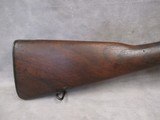
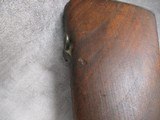
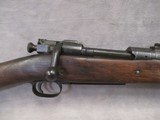
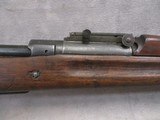
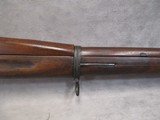
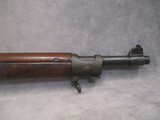
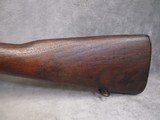
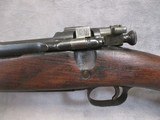
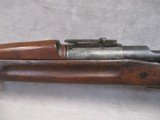
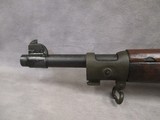
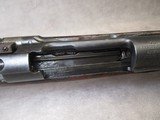
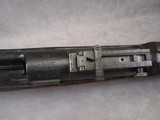
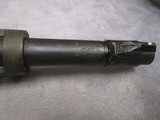
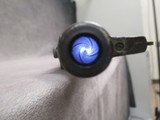
The rifle shown here is of course one of the low-number rifles rebuilt during World War 2. The receiver was built originally in 1906, the year the .30-06 Springfield and its spitzer bullet replaced the older .30-03 and its 220gr round-nosed bullet. The wear and tear on this rifle is consistent with one that has been used overseas. The barrel was a replacement made by Springfield Armory in July of 1942. The bore of the barrel is in superb shape with no visible rust or pitting. The bolt is surprisingly a “low-number” type, given the unswept bolt handle. The top part of the bolt handle has numbers on it in two forms, stamping and very light stenciling. The classic straight-grip stock has dings and a few dents here and there. The forward recoil lug “screw” has one part of the edge sheared off. Please see picture #5. The left side of the stock has a BA-WL stamp - the first two letters indicated the rifle was rebuilt at the Benicia Arsenal in Benicia, California. The “W.L.” is most likely the initials of the inspector. The grip face behind the trigger guard has two “P” proof stamps. The second one would have been added during the rebuild. The condition of the 03’s finish is what would be expected of a rifle that saw service during wartime. There are scratches and a few nicks in the metal on the rear sight collar. The rifle appears to have been cleaned of any rust on the external surfaces. The action has some remaining cosmoline in it, particularly in the depression just in front of the breech.
Price: $1,295.00
Rifle Caliber: .30-06 Springfield
Manufacturer: Springfield Arsenal
Model: M1903
Serial Number: 207,748
Barrel Length: 23.875 inches (606.425 mm)
Bore: 4 grooves, 1:10 inches (1 in 254 mm) RH twist.
Ejectors: Manual ejection via bolt operation
Condition: Used - Very Good
Barrels: Nickel steel
Barrel Type: Wartime replacement barrel
Action: Bolt action, Mauser-’98 action but small ring; cock-on-opening, controlled-round-feed.
Triggers: Standard M1903
Stock: Straight grip stock
Fore End: Wood
Butt Pad: Metal plate with trap door
LOP: 12.75 inches (324 mm)
Finish: Parkerized
Weight: 8 lbs. 13.5 oz.
Sights: M1905 Ladder type rear sight, blade front sight, sight radius 21.625 inches (549.275 mm).
Manufacture Date: 1906 (Receiver), Jul