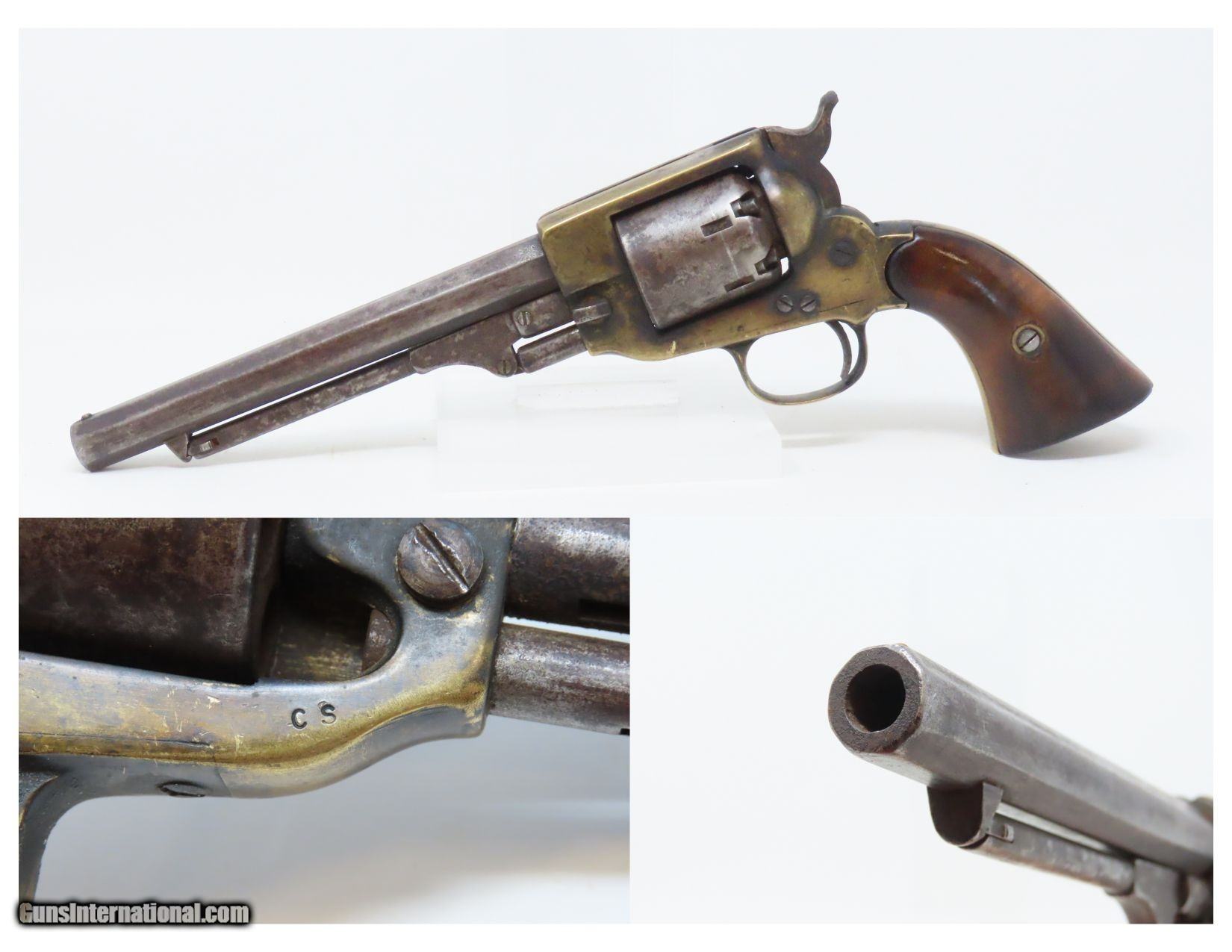
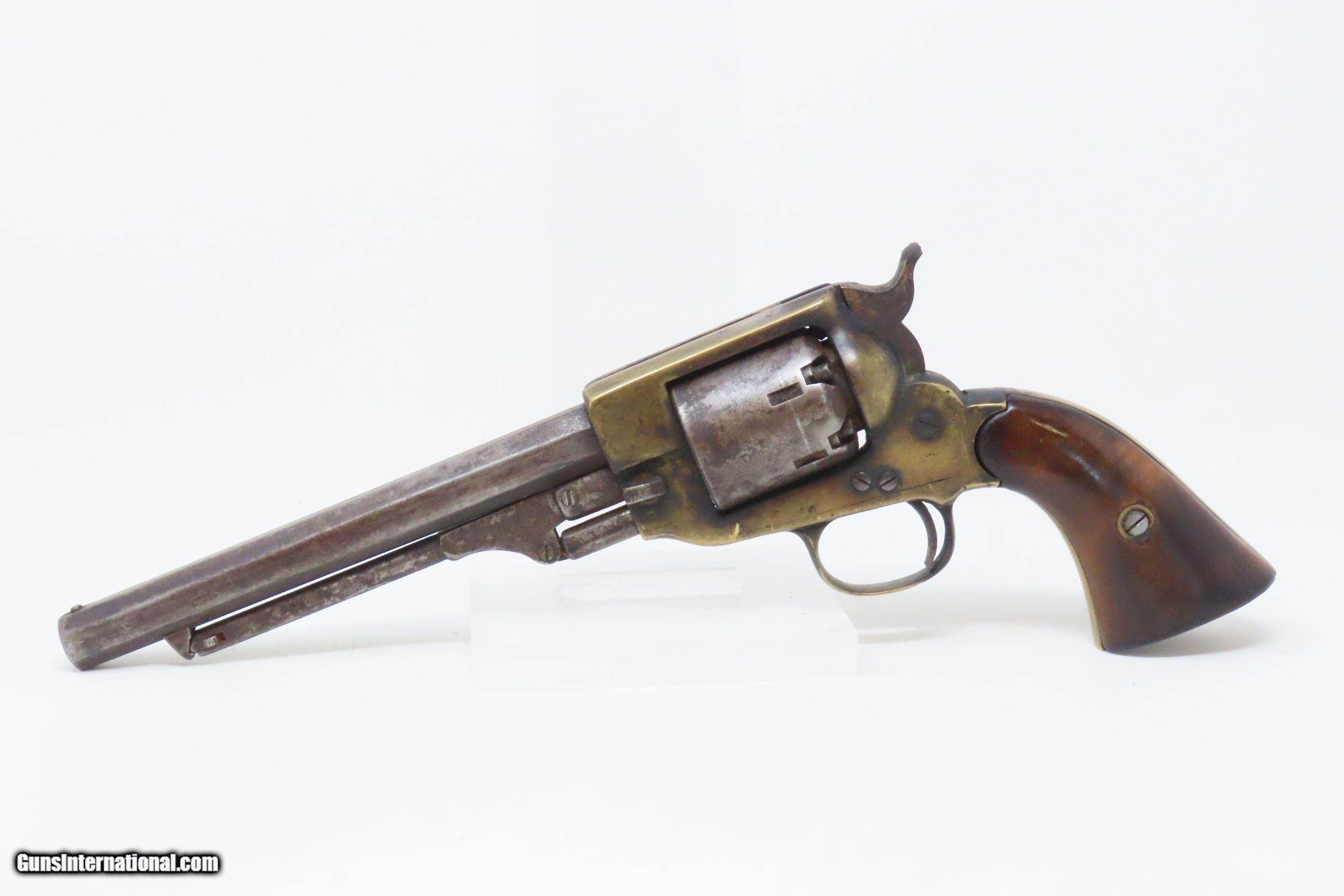
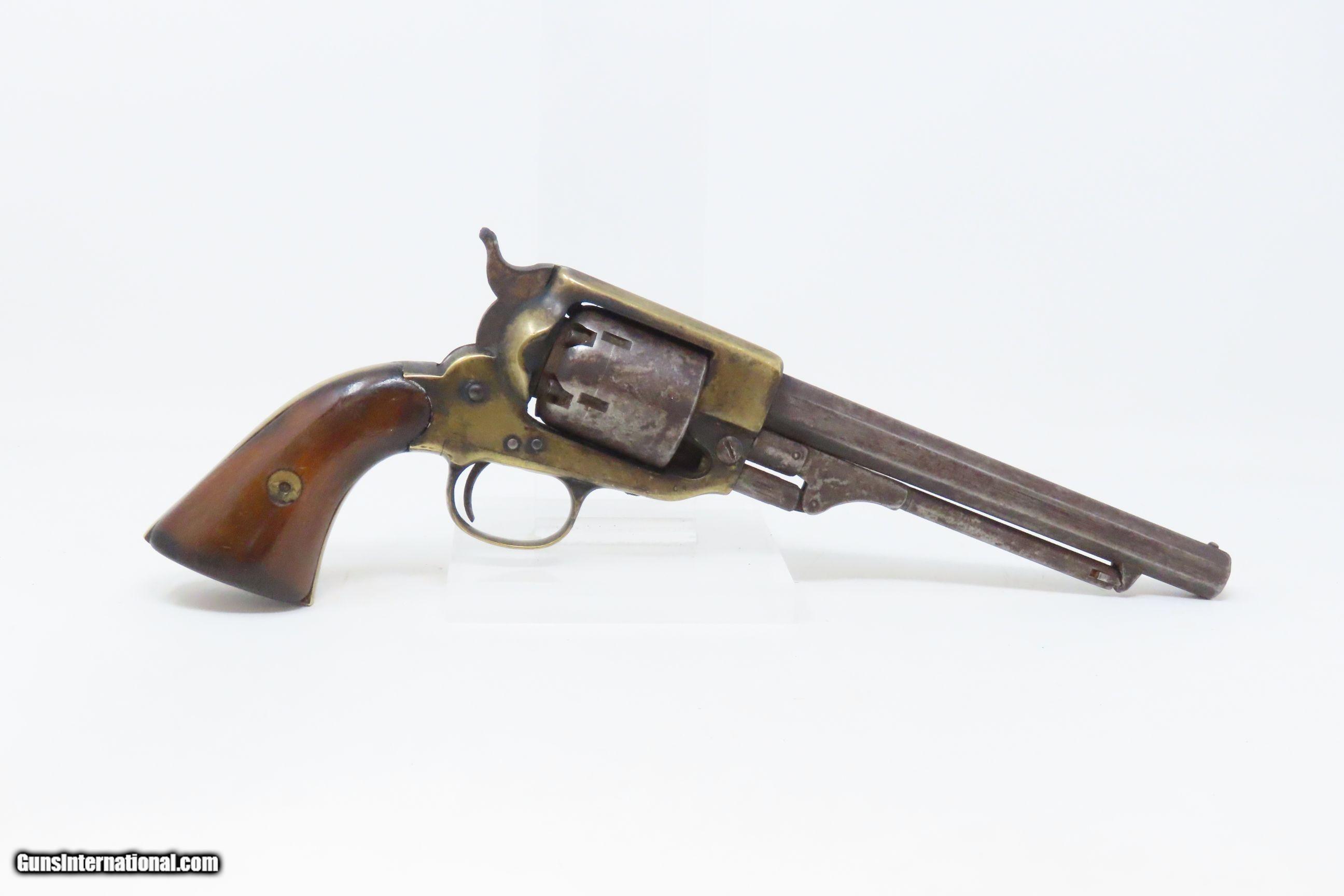
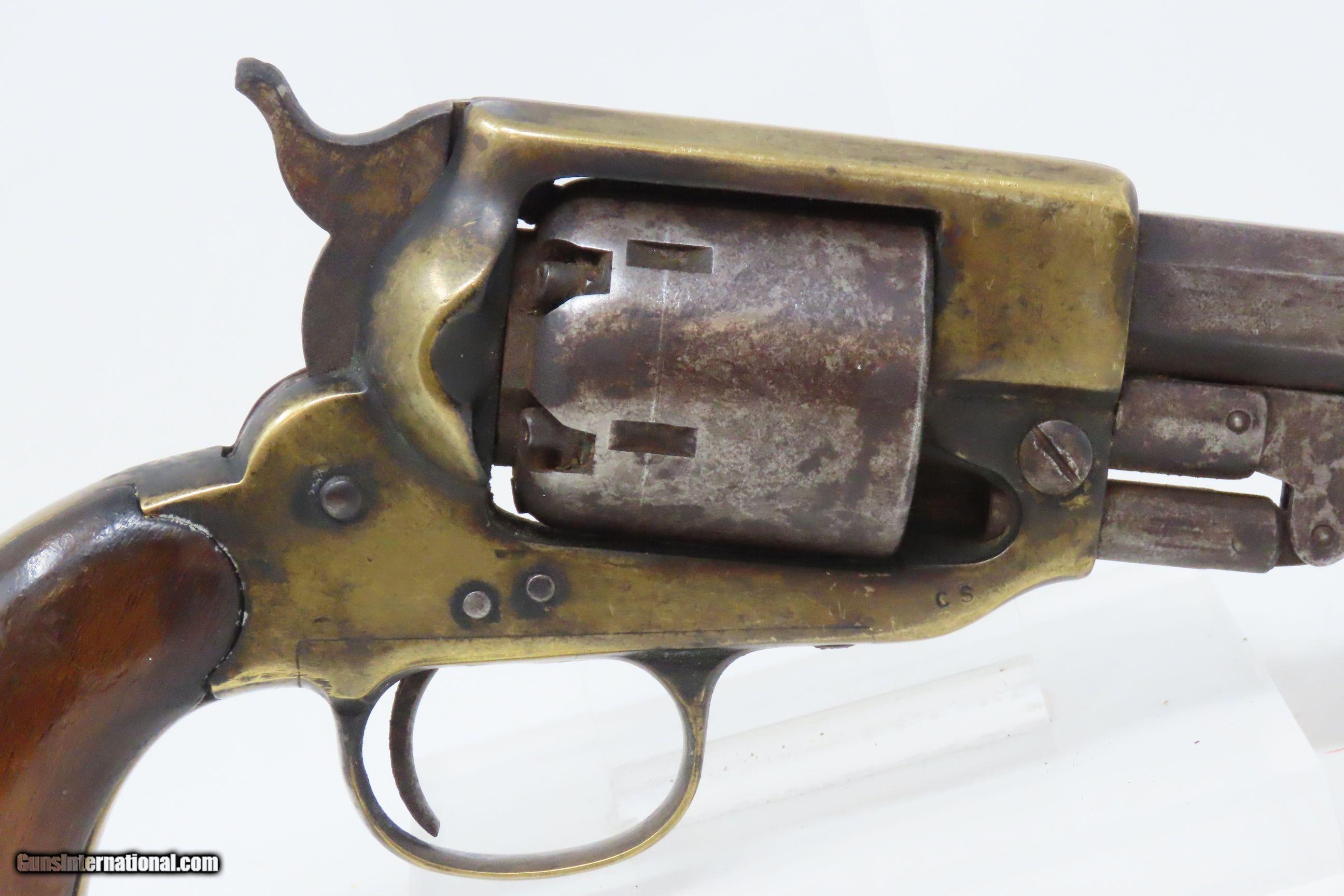
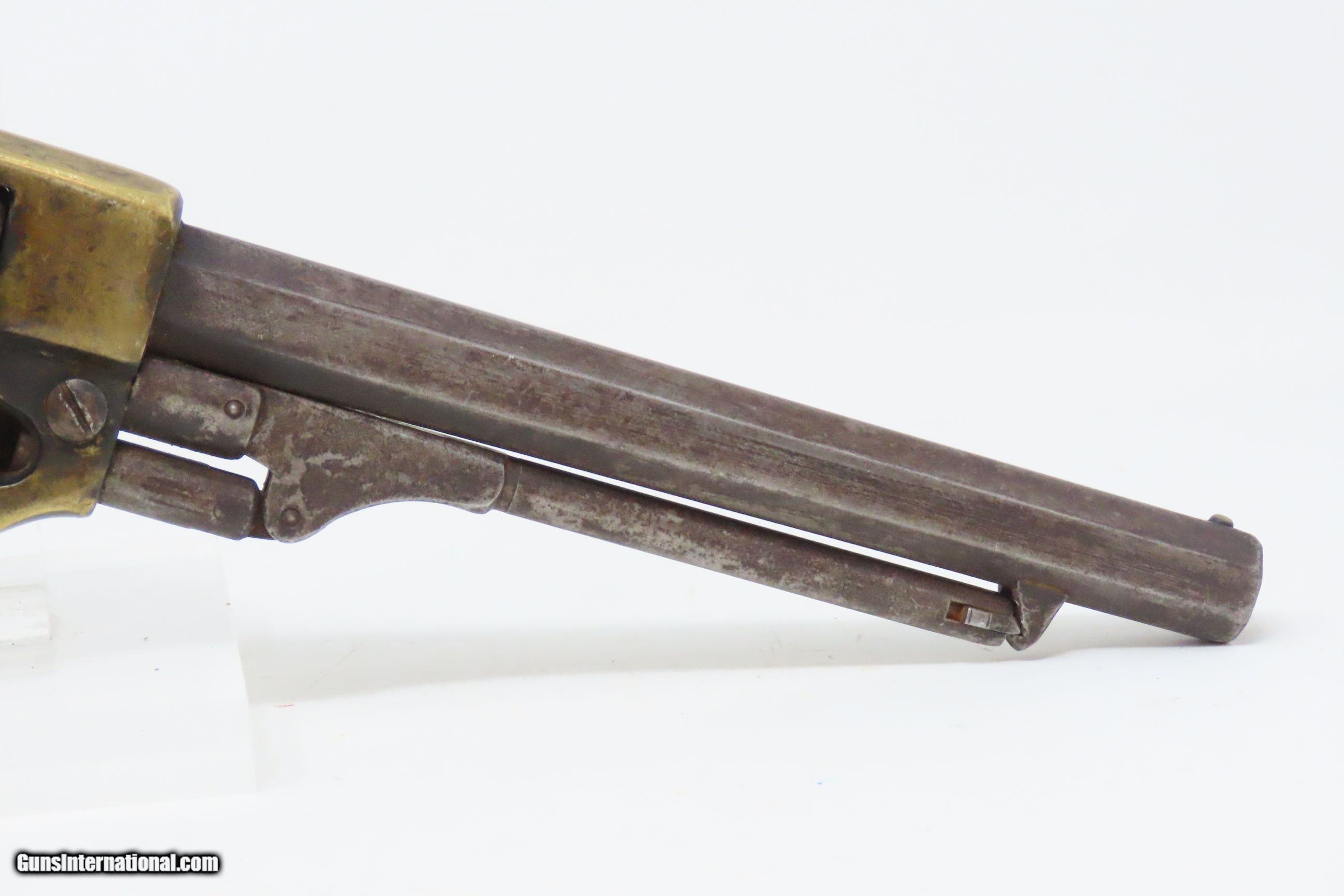
Copy of CONFEDERATE SPILLER & BURR .36 Navy Revolver
Percussion CIVIL WAR
EXTREMELY SCARCE Southern Made Revolver
Description:
Copy of CONFEDERATE SPILLER & BURR .36 Navy Revolver Percussion CIVIL WAR
EXTREMELY SCARCE Southern Made Revolver
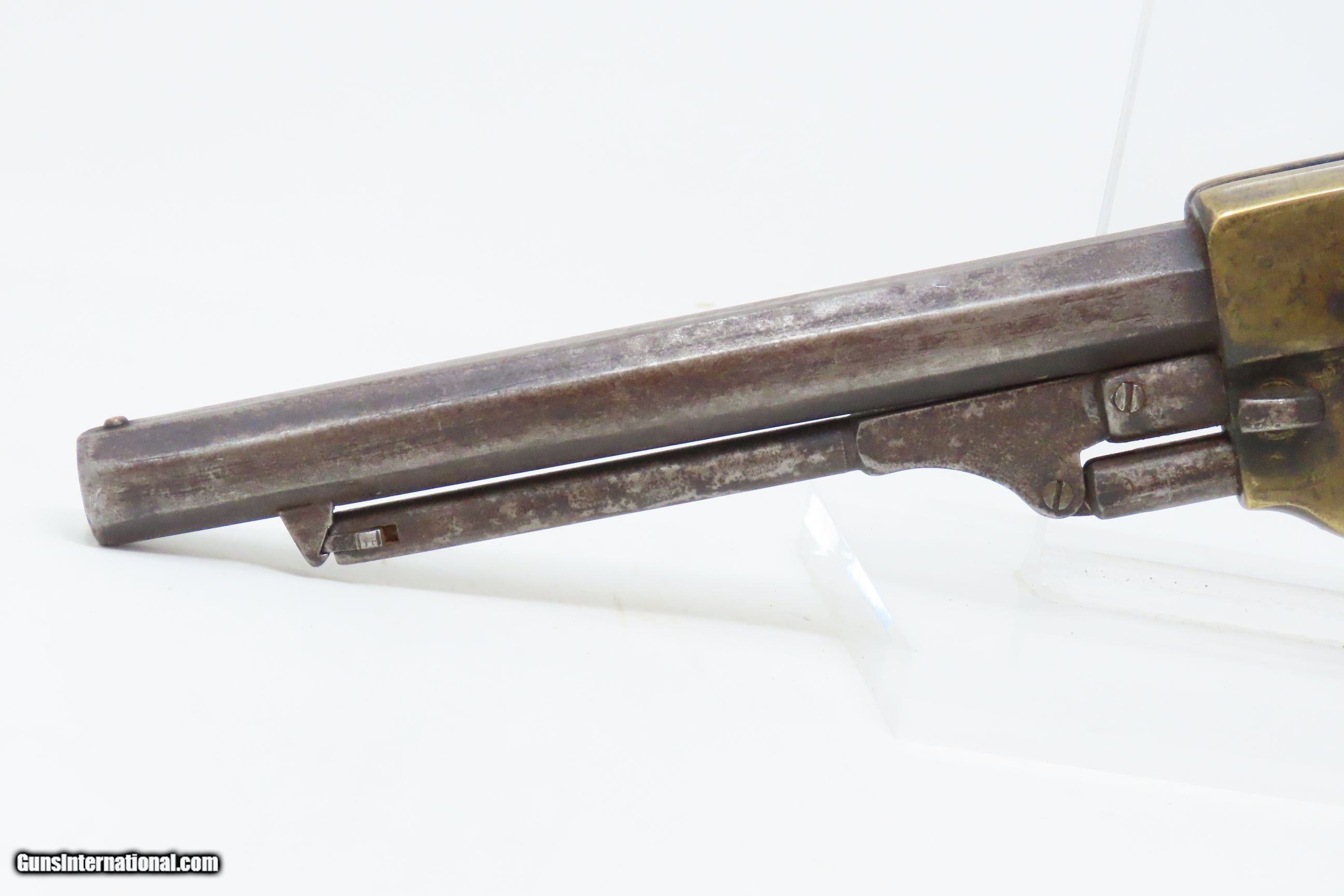
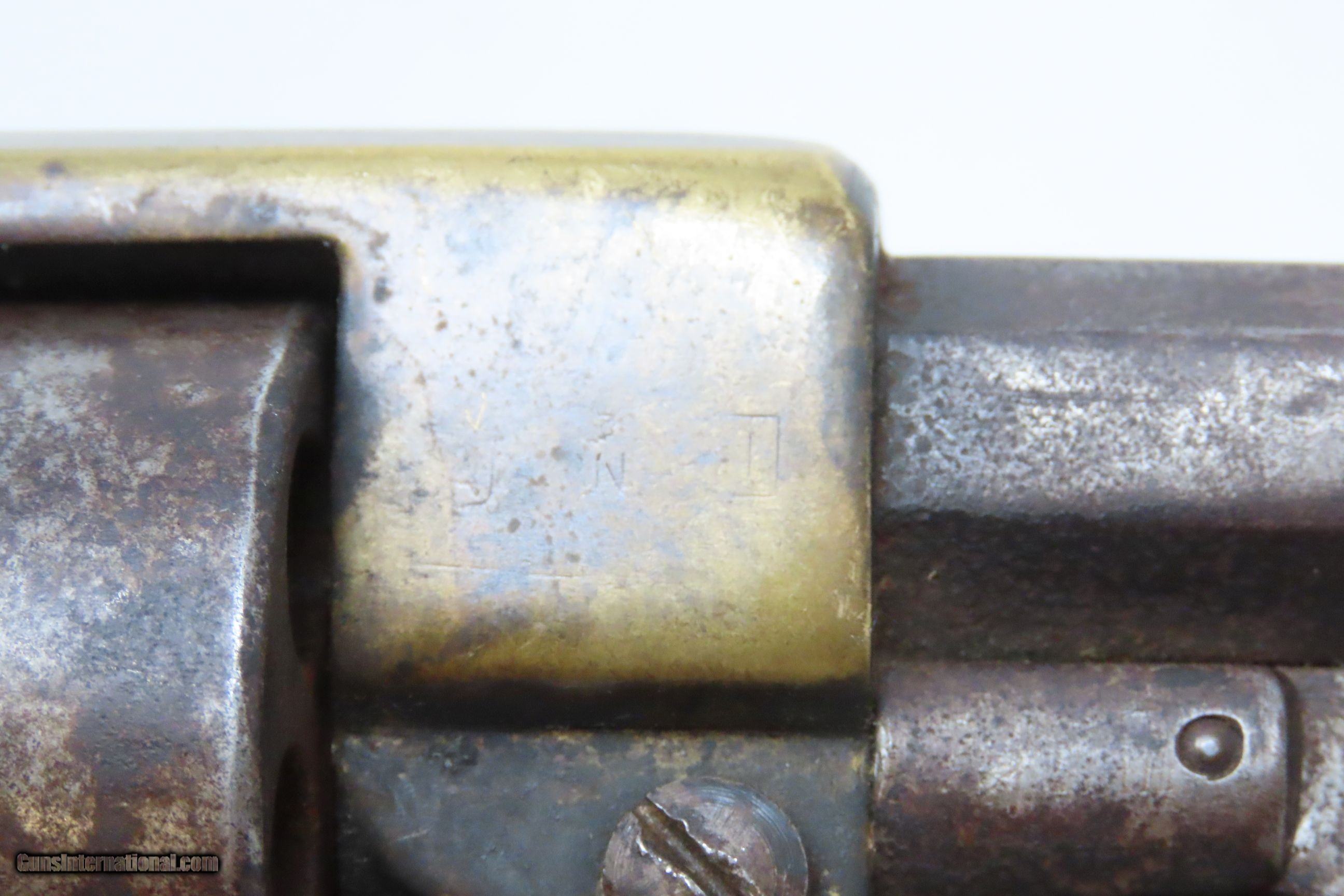
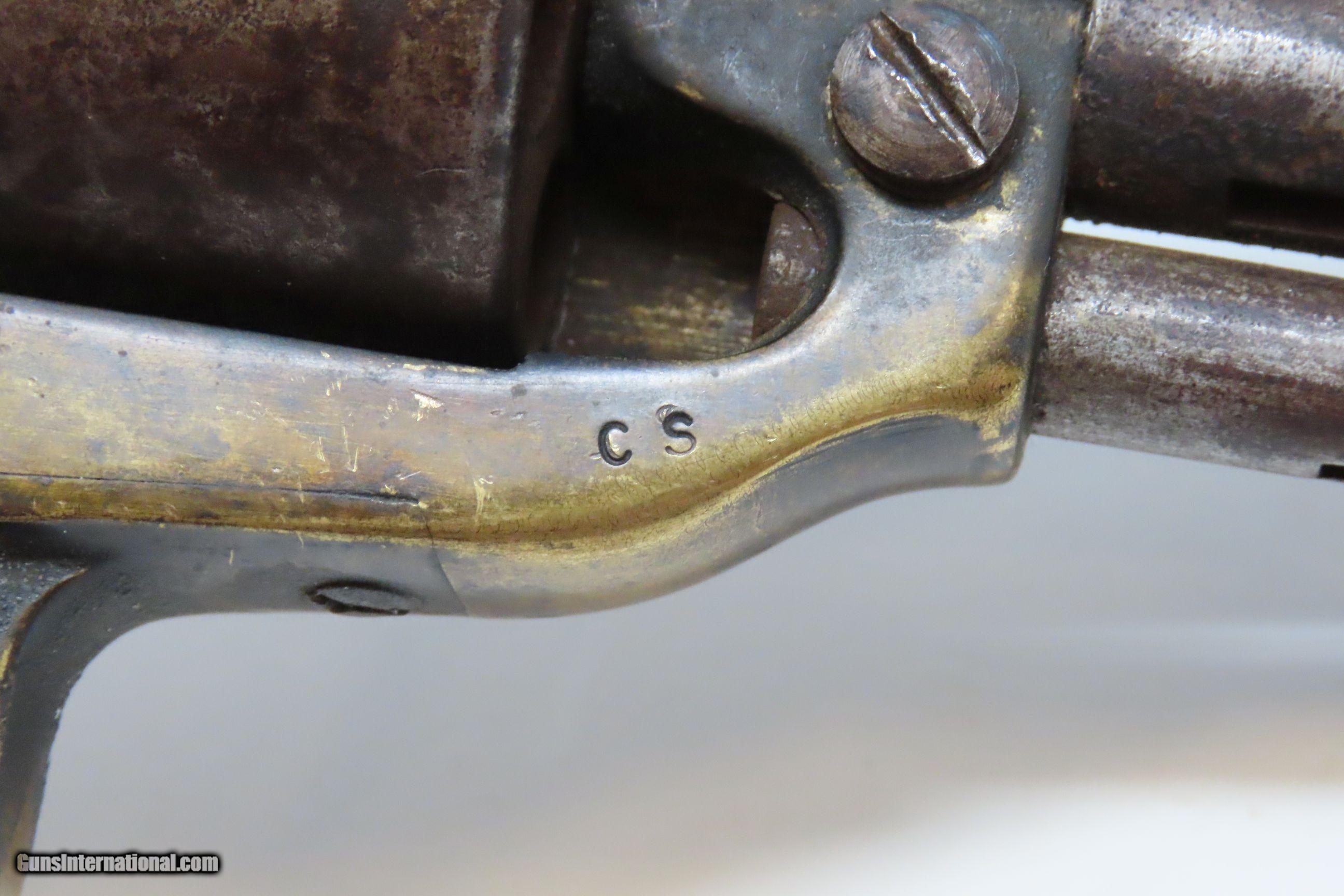
Here we present an Copy of a Confederate Spiller & Burr Navy Percussion Revolver. These were originally made circa 1863-64 in Macon, Georgia. This likely Italian copy has been aged to resemble one from the period of the American Civil War to fill a very hard to find niche in a collection.
When the overenthusiastic South fired on Fort Sumter on April 12, 1861, they were reacting emotionally instead of practically. The Confederates were full of vim and vigor, but truly didn’t think through everything prior to that day. While they were full of enthusiasm, they were truly lacking in manufacturing capabilities to produce enough arms and ammunition to institute a rebellion. Companies in the north, such as Colt and Remington, were making arms at a furious pace, with most all of them going to the Union forces. When hostilities broke out, the Union sealed the border between the North and the South, stopping the passage of arms heading south.
On January 21, 1860, the Virginia Assembly passed a bill reviving the old Virginia Manufactory of Arms, which had been vacant for 38 years, renaming it the Richmond Armory. Soon after that, the J.R. Richardson & Company was awarded the contract to reactivate the manufactory and hired James H. Burton to engineer the Richmond Armory contract, becoming the superintendent by the middle of 1861. His familiarity with the machinery for manufacturing firearms was a huge asset to the Confederacy. Then, in December of 1861, Burton received a commission as Lt. Colonel in the Confederate Army with the responsibility of seeing that Confederate soldiers were well armed. He then partnered with Edward N. Spiller and David J. Burr, two wealthy Virginia businessmen, to establish the private manufacturing firm of Spiller & Burr.
A lucrative contract was awarded to the company to supply the Confederacy with 15,000 revolvers within 2 1/2 years at a cost of $25 to $30 each in Confederate dollars. The contract stipulated that the revolvers be what we would now call a clone of the 1836, .36 caliber, Colt Navy revolver, as adopted as the issue revolver by the Confederacy. Burton, however, felt there was a better revolver. He managed to convince the Confederate Chief of Ordnance that the Whitney revolver would be a better choice. This pistol, which was a newer version of Eli Whitney, Jr.’s .36 caliber percussion revolver, featured a solid frame and was easier and less expensive to manufacture than the Colt. Whitney’s pistol is very close in design and form to the 1858 Remington.
There were twelve First Model, First Type revolvers submitted to the Confederate Ordnance Department for inspection and acceptance in Richmond. A second lot of 40 First Model, Second Type were sent to the Macon Armory in Macon, Ga., in April 1863 for acceptance. Of these, 33 were found to be unserviceable and were returned to Spiller & Burr. Subsequent revolvers were dubbed First Model, Second Type. The principal difference is that in the Second Type the front of the frame is thickened a bit so that it covers the barrel threads completely. By far, most surviving examples of the Spiller & Burr revolver are of the Second Type.
While Spiller & Burr’s contract called for 15,000 pieces, the material shortages due to a naval blockade only allowed for roughly 1,451 to be made. Toward the end of 1861, it seemed prudent to move the plant in Richmond deeper into Confederate territory. The powers thought that by moving the manufacturing facility to Macon, Ga., it would be better protected. However, they never dreamed of William Tecumseh Sherman. When Sherman took Atlanta, Spiller & Burr quietly moved as much of their manufacturing facility as they could to Savannah.
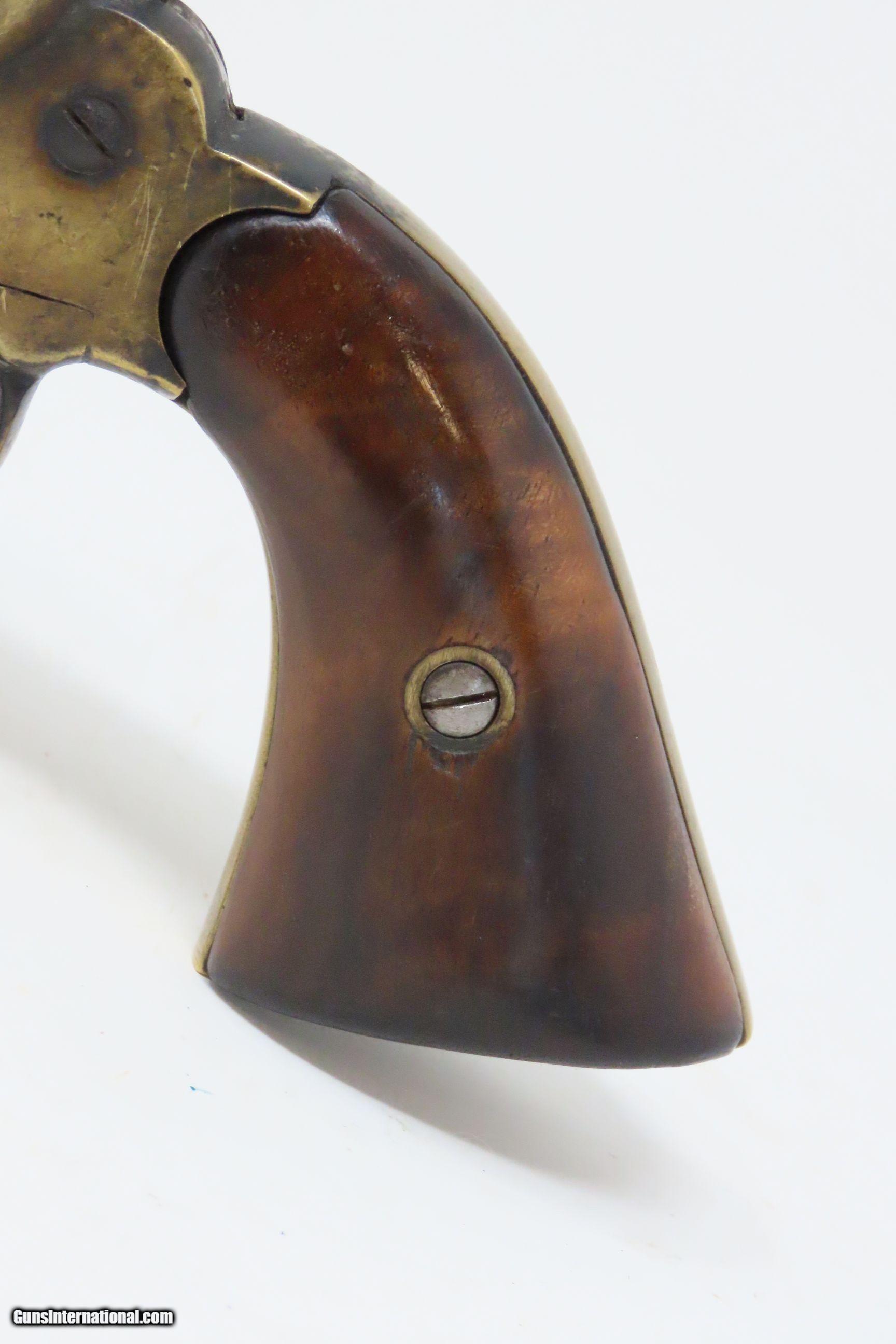
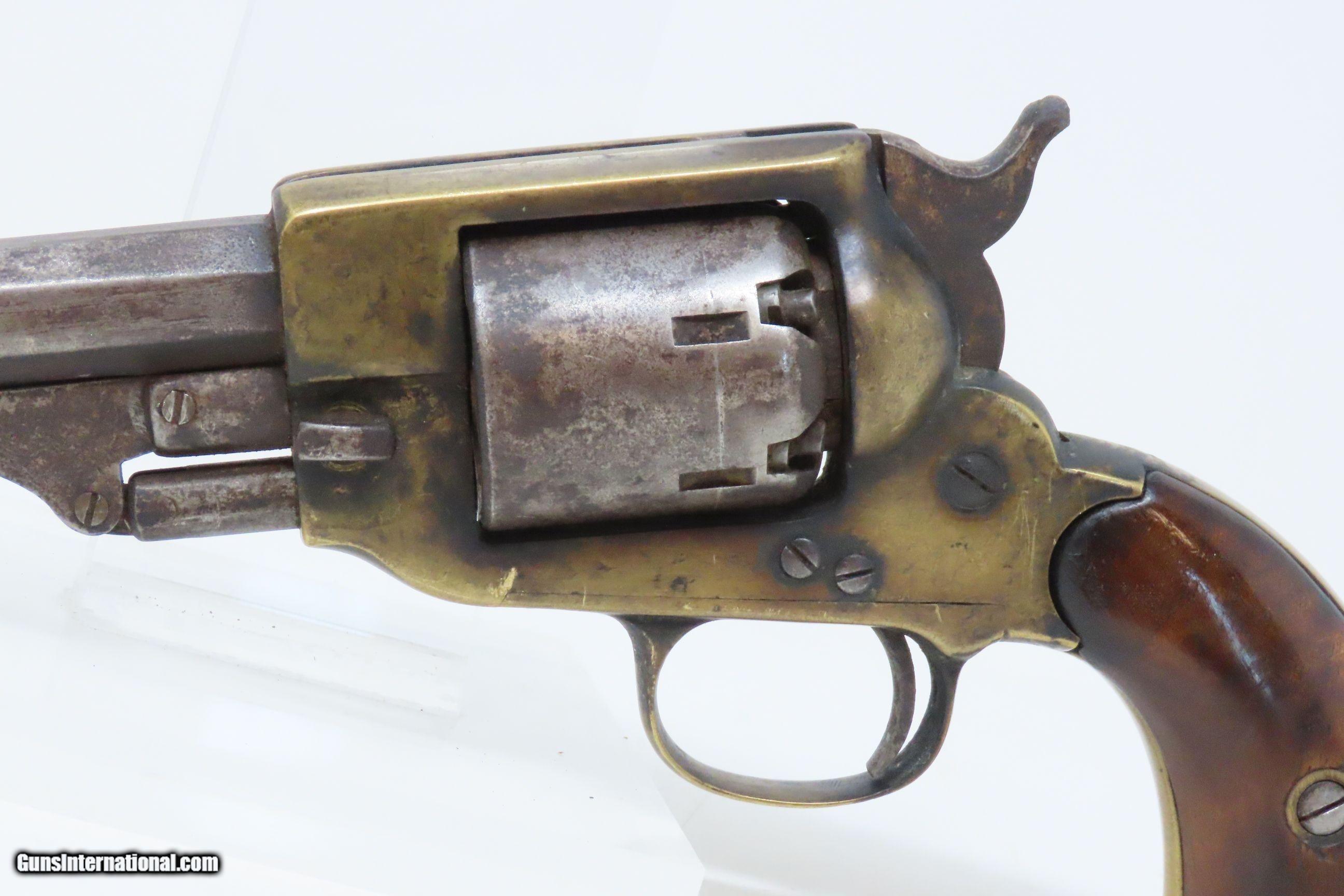
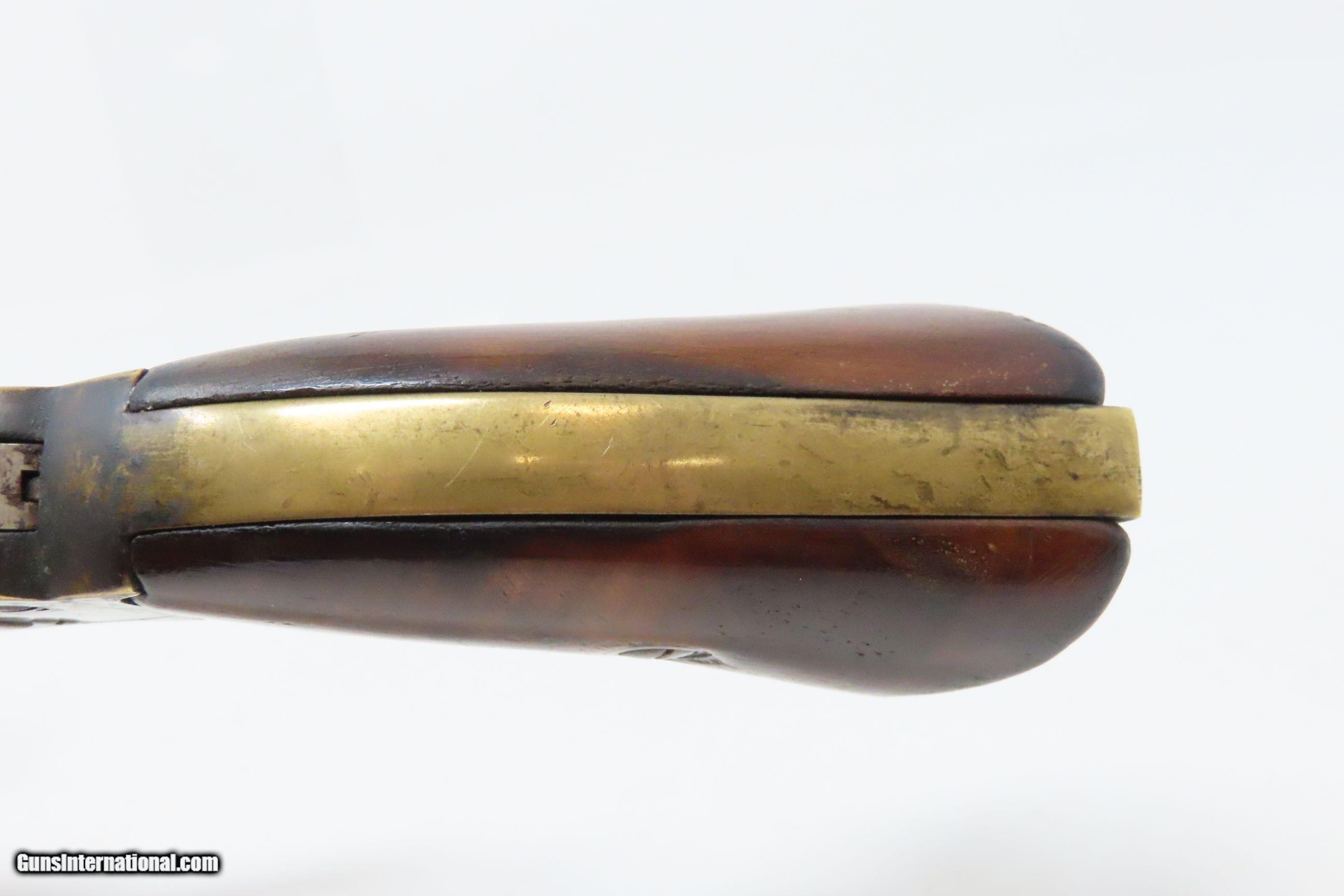
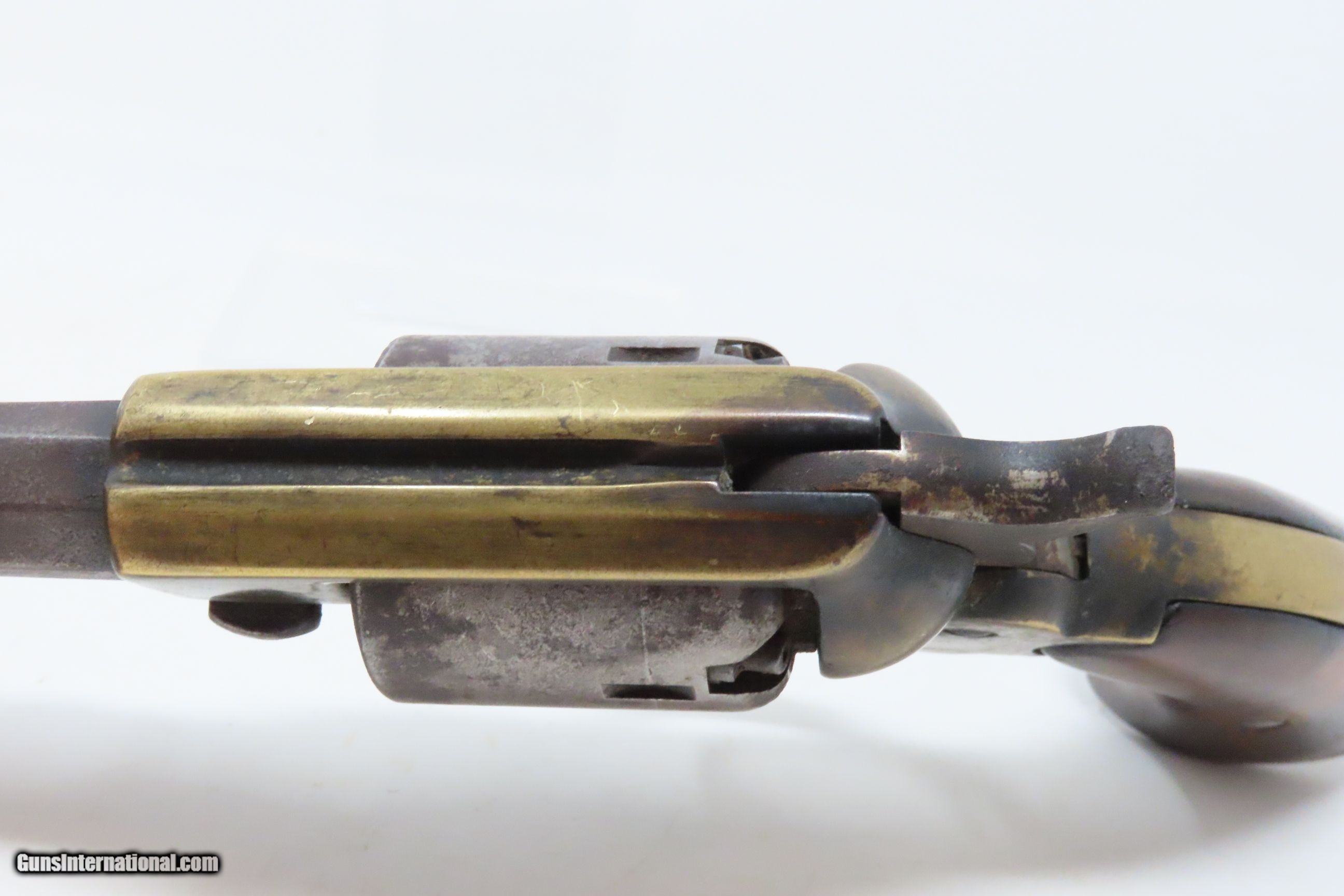
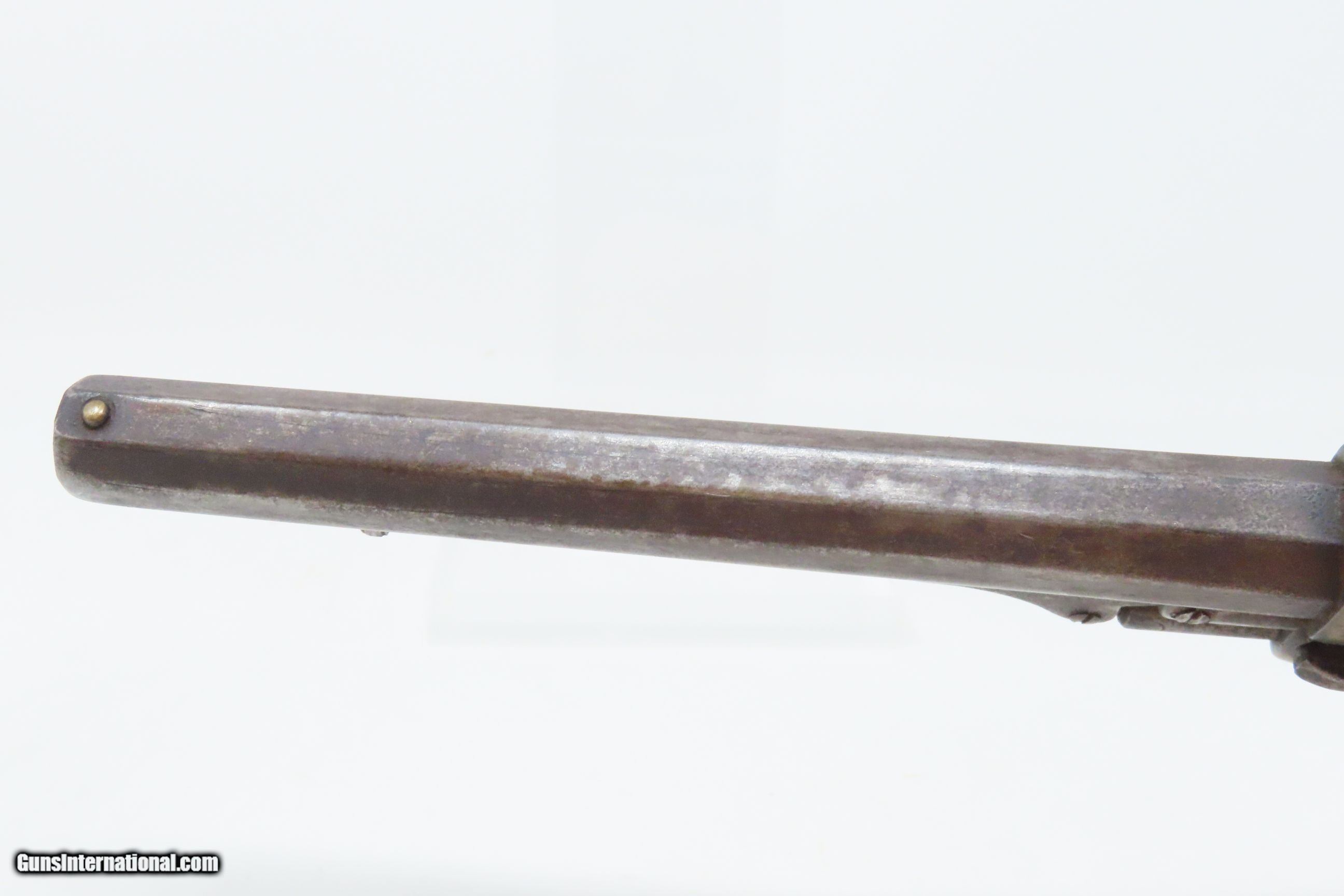
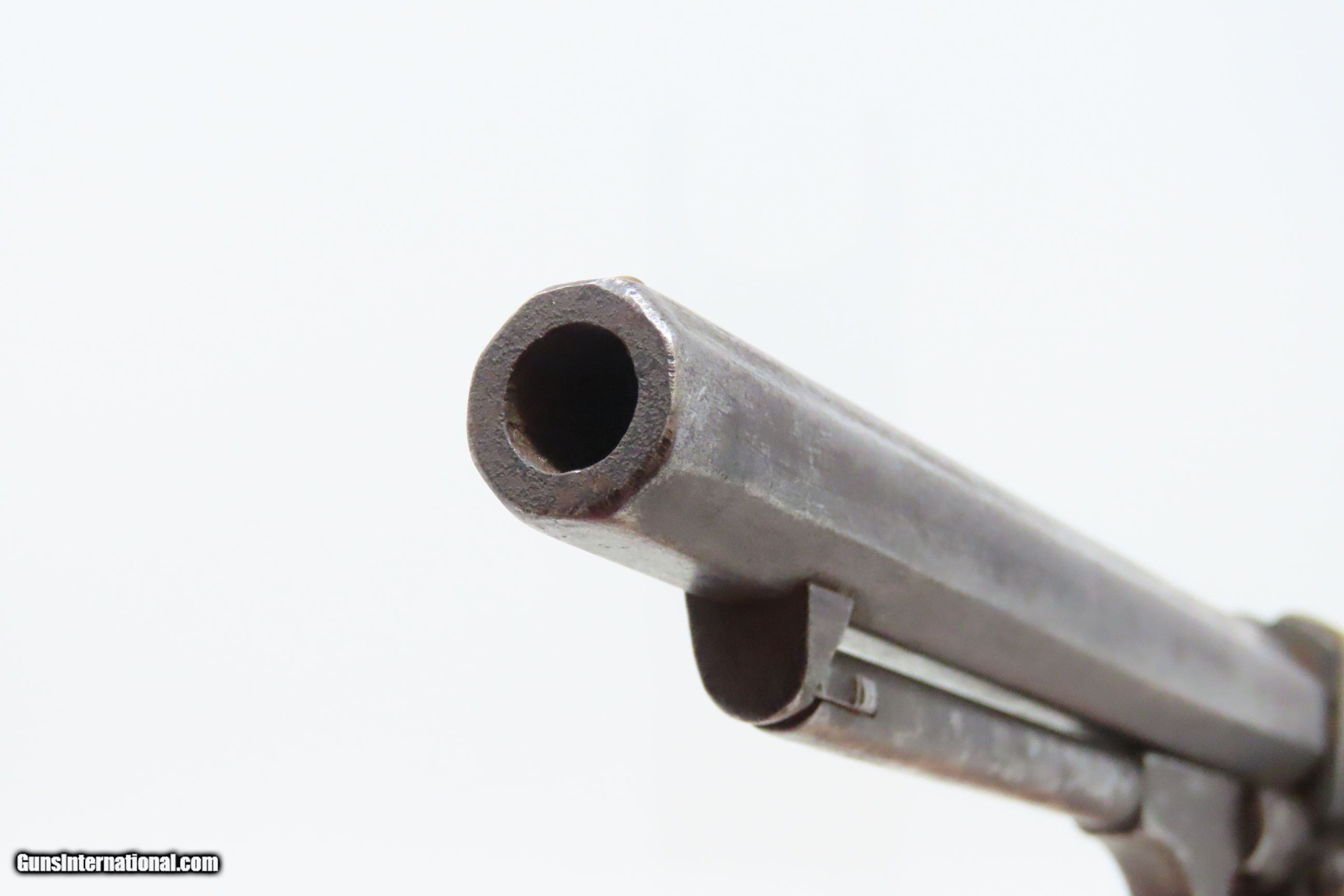
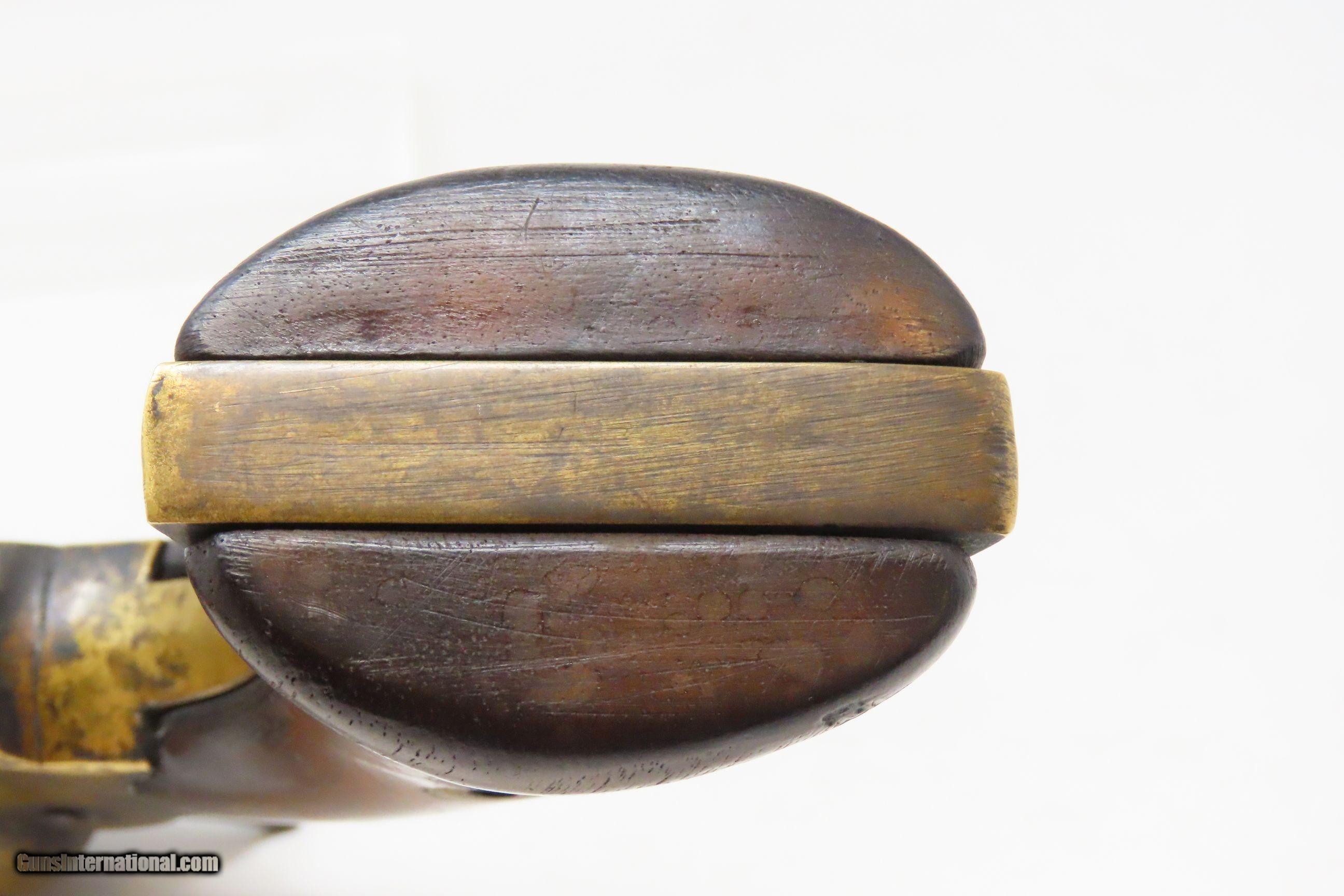
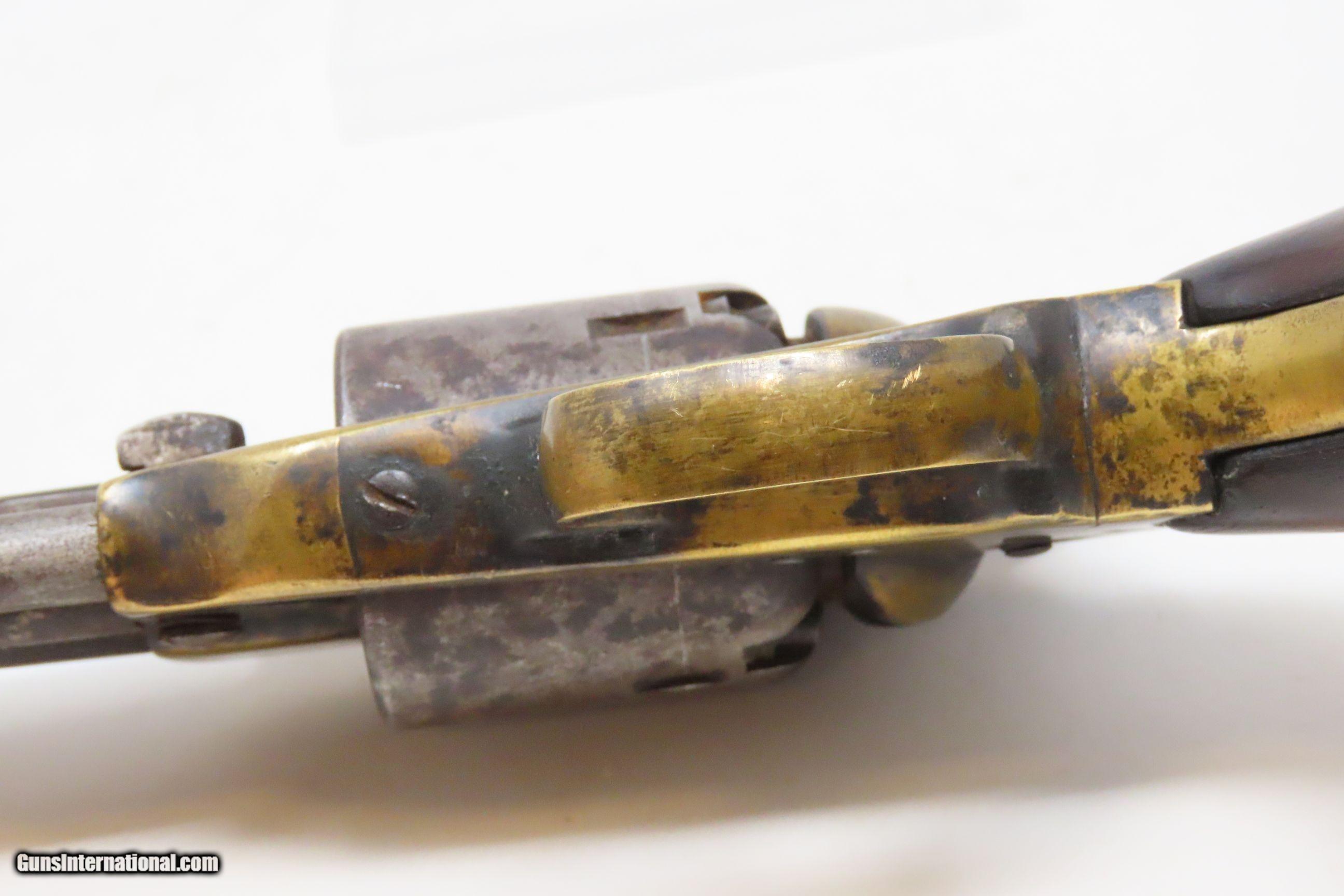
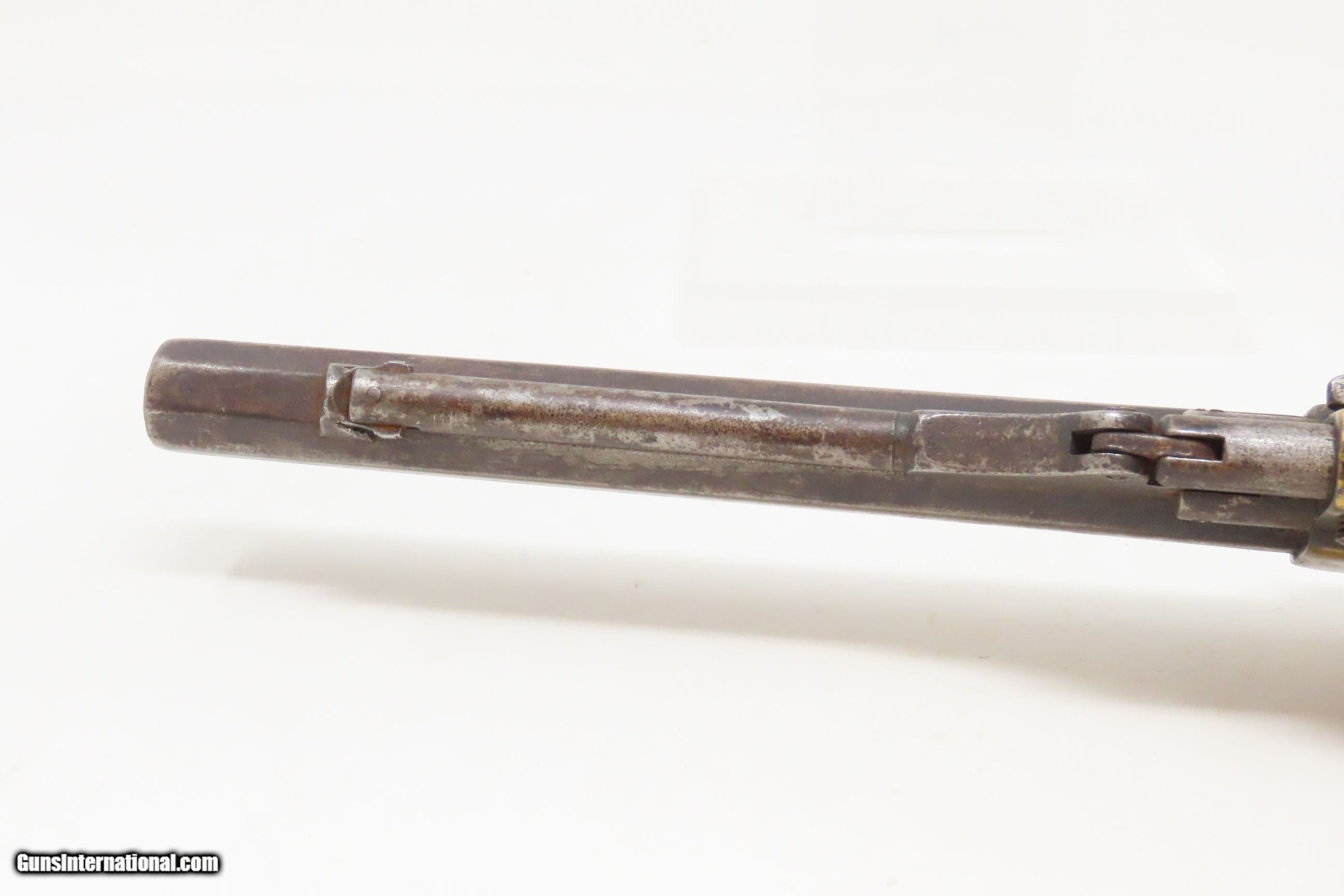
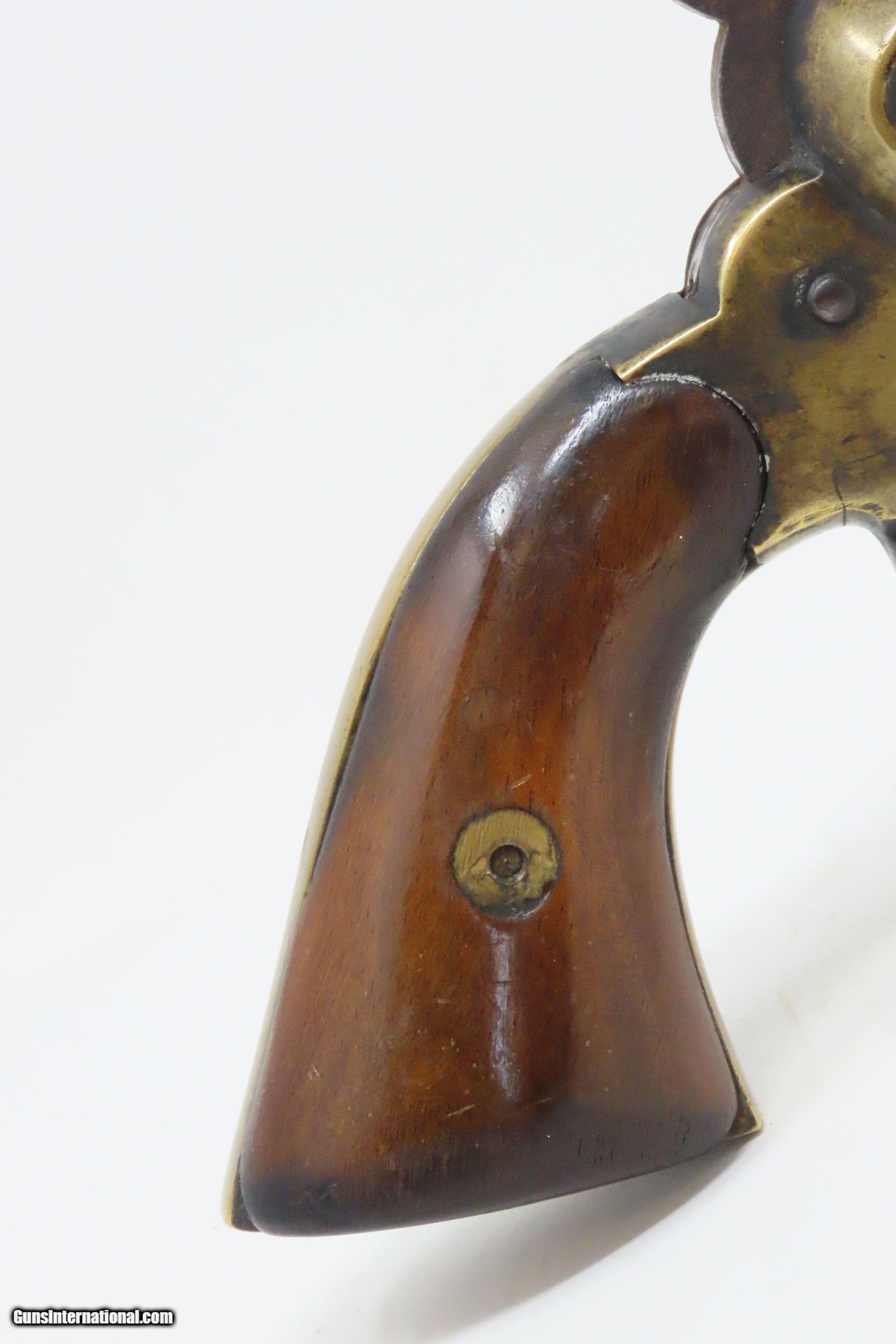
The overall condition is good. Quite the patina. The action is strong and the cylinder indexes but does not lock up. Bore is dim with sharp rifling. Grips are solid. Comes with a bullet mold that matches condition and patina.
Barrel is 7 inches.
Caliber: .36 Percussion
Overall condition as seen in photos.
Very Fast. Very Safe. FREE SHIPPING WORLDWIDE. Delivered directly to your door by express mail!
ancestryguns
$1600
#230654
SOLD
Antique: Yes


 to Favorites