

 to Favorites

Guns International #: 103723791 | Seller's Inventory #: 26060305


1 of 15
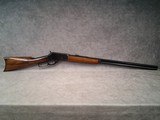
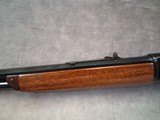
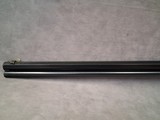
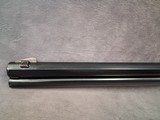
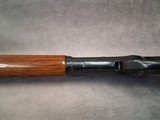
Marlin Model 1881 3rd Model cal. 38-55 Octagon Barrel Exc. Bore Made 1887
Description:
Often forgotten due to the success of the Winchester Model 1886, the Marlin Model 1881 was the first Marlin lever action rifle and also the first lever action rifle to be chambered for the .45-70 Gov’t. Long desired by the gun-buying public was a repeater in the .45-70, usually only found in single-shots rifles like the Trapdoor Springfield, the Sharps rifle, and the Ballard rifle. The first repeater to chamber it, the 1878 Remington-Keene rifle was a tube-fed bolt-action design. It was only produced to the tune of 5,000 examples as the market wanted a lever gun not a bolt gun. Winchester could not meet this demand at the time because their latest rifle, the Model 1876 was too short an action to fit the .45-70 and the design did not provide sufficient strength, being based on the older 1873 rifle (the sideplates left the receiver weak compared to a solid receiver). To meet this demand, John Mahlon Marlin collaborated with Andrew Burgess who owned the patent rights to a design for an under-barrel tube-fed magazine lever action rifle. Curiously, the resulting rifle was not initially marketed as the “Model 1881,” instead being known only as the “Marlin Repeating Rifle” until 1888, when the current name was finally introduced. Production ran from 1881 to 1892 with over 20,000 produced, with some sources stating up to 21,716 were made. In addition to the .45-70 Gov’t, the 1881 was also available in .32-40 Ballard/WCF, .38-55 Ballard/WCF, .40-60 Marlin, and .45-85 Marlin. It should be noted that both the .32-40 and .38-55 started life with the Ballard name, Winchester chambering their rifles for the cartridges with the “Winchester” moniker replacing the original. This was not unusual in those days as the various manufacturers did not want to put another manufacturer’s name on their products. The .40-60 Marlin is a slightly different story. Winchester later copied the cartridge but changed the name and powder load creating the .40-65 Winchester. Both cartridges are actually interchangeable. However, the .40-60 Marlin should NOT be confused with the unrelated .40-60 Winchester. The final cartridge, the .45-85 Marlin, is essentially an Express loading of the .45-70 using a 285gr bullet propelled at a muzzle velocity of 1600 fps.
The Model 1881 was available usually with a 28-inch-long octagonal barrel, round barrels being fairly rare. However, custom ordered options were available, with barrel lengths of 20 to 34 inches in length; different barrel weights and contours; rifle, shotgun, or crescent buttplate; different-length magazine tubes; engraved receiver; nickel-plated finish; checkered wood furniture; straight or pistol grip; different types of sights; even an option for double set triggers! There were three variations in the receiver: heavy frame, lightweight frame, and small frame. The latter two were introduced in 1885. Whereas the heavy frame had the 28-inch barrel and weighed 9 to 11 lbs., the lightweight frame had a shorter 24-inch barrel and weighed 8 to 9 lbs. The small frame was made for the .32-40 and .38-55 chamberings and weighed in at 7 ¼ to 7 ½ lbs. The terms “1st Model,” “2nd Model,” and 3rd Model,” do not refer to the heavy, lightweight, or small frames, but instead refer to the style of markings on the barrel, the shape at the front of the receiver, and few other differences (1st Models have a ¾ inch rebate; the front magazine barrel stud is flush with the sides of the barrel, etc….). The receiver lever, hammer, and butt plate were usually color case hardened while the rest was blued. It is worth noting that like its Winchester counterparts the Model 1881 is a top-ejection design. Its pistol-caliber counterpart, the Model 1888 was also a top-ejection, but was only produced for one year before being replaced by the Model 1889 (also pistol caliber) which introduced the side-ejection method most familiar to Marlin owners and lever action fans. The direct descendant of the Model 1881 as far as rifle cartridges are concerned was the Model 1893 which used the same side-ejection method as the Model 1889.
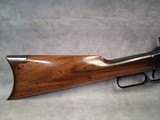
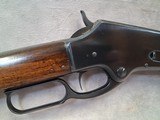
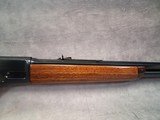
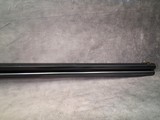
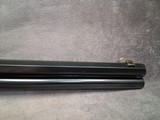
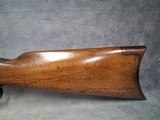
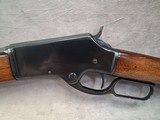
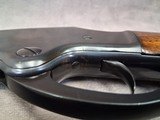
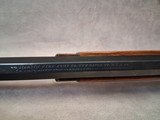
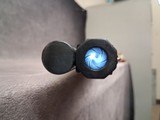
The rifle depicted is a Small Frame (3rd Model) chambered for the classic .38-55 round. According to oldguns, this Model 1881 was made in 1887. However, the site does point out that Marlin records are somewhat chaotic, as all the model numbers (1881, 1888, 1889, 1891, 1892, 1893, 1894, 1895, 1897) were numbered together in a single serial number range, with numbers often being duplicated. The dates recorded are also the shipping dates, not the date of manufacture. The wood furniture has been refinished. It appears that a repair was made on the right-hand side of the stock just before the edge of the receiver. Small dings are present on the stock, though none of these are deep. The buttplate appears to be original, though it has been refinished, along with the forend cap. The receiver itself and the barrel and magazine tube have been refinished though the markings on the barrel are still mostly visible. The rear sight appears to retain an original finish with wear at the edges of the corners and the bluing beginning to turn to a patina. Many of the receiver screws are in good shape with no serious wear with respect to the slots. The only possible exception is the rear tang screw which has a moderate level of wear on one side of the slot. Rust has been kept to a minimum with a small amount in front of the trigger, one spot on the left side of the receiver (front edge), and three small dots on the bottom of the magazine tube towards the front. The bore of the barrel is in fantastic shape for a rifle at the age of 139. There is some light pitting in one or two places, but the rifling is very well defined which will result in very good accuracy for the rifle. Obviously, only black powder or black powder substitute should be used in this rifle.
The .38-55 cartridge traces its origins back to a shorter cartridge introduced in 1876 as the .38-50 Ballard by the Ballard Rifle and Cartridge Co. (purchased by Marlin in 1881). It was reintroduced in its current configuration as the .38-55 Ballard in 1884, featuring a 1/10” longer case than the .38-50 cartridge. The .38-55 quickly built up a reputation for fine accuracy out to 200 yards and was popular for use on deer for many years. As mentioned previously, Winchester eventually gave the .38-55 the “Winchester” moniker and it became the Model 1894 rifle’s first chambering. Between the Model 1881 and its successor the Model 1893, Marlin had a 10-year start over Winchester on chambering the .38-55 in a lever action. Discontinued by Winchester in 1970, the .38-55 was again produced by that company in the early years of the 21st century due to its growing popularity in cowboy action shooting. Today, it is a handloading proposition though the components for it are not hard to find.
Despite mostly being forgotten, the Model 1881 served an important role in U.S. firearms history, showing that it was possible to manufacture a lever action rifle able to chamber, load, and fire the powerful .45-70 Gov’t. It also served as the basis for most of Marlin’s later lever action designs, whether it be the pistol caliber Models 1888, 1889, and 1894, or the rifle-caliber Models 1893 and the 1895 (original). The 1893 would evolve into the Model 36 in 1936, which itself was eventually improved upon by redesigning the rifle to use fully internal bolt, resulting in the famous Marlin 336 rifle. As for the original Model 1895, it was considered a companion to the Models 1893 and 1894, being chambered for the same big-bore cartridges found in the Winchester Model 1886. In other words, while the Marlin 1894 competed with the Winchester 1892 in the pistol caliber category, the Model 1893 competed with the later Winchester Model 1894 in the standard rifle caliber category, and the Model 1895 competed with the Winchester Model 1886 in the big-bore big-game-hunting category. The current Model 1895, however, is a modified Model 336 design and has no relation to the original.
Rifle Caliber: .38-55 Winchester
Manufacturer: Marlin Firearms Co.
Model: 1881 3rd Model
Serial Number: 15,755
Barrel Length: 28.0 inches (711.2 mm)
Bore Info: Ballard rifling, 6 grooves, 1:20 inches (1 in 508 mm) RH twist.
Ejectors: Manual ejection via lever operation
Condition: Used - Antique
Barrels: Carbon steel
Barrel Type: Octagonal
Action: Lever action, Burgess-patent, side loading, top ejecting.
Triggers: Standard
Stock: Walnut, straight grip, metal butt plate.
Fore End: Walnut with metal cap
Butt Pad: Metal plate - crescent
LOP: 13.25 inches (336.55 mm)
Finish: Blued
Weight: 7 lbs. 14.4 oz.
Sights: Buckhorn elevator rear, ivory bead blade front sight, sight radius 23.5 inches (596.9 mm).
Manufacture Date: 1887
Price: $1,600.00
Description:
Often forgotten due to the success of the Winchester Model 1886, the Marlin Model 1881 was the first Marlin lever action rifle and also the first lever action rifle to be chambered for the .45-70 Gov’t. Long desired by the gun-buying public was a repeater in the .45-70, usually only found in single-shots rifles like the Trapdoor Springfield, the Sharps rifle, and the Ballard rifle. The first repeater to chamber it, the 1878 Remington-Keene rifle was a tube-fed bolt-action design. It was only produced to the tune of 5,000 examples as the market wanted a lever gun not a bolt gun. Winchester could not meet this demand at the time because their latest rifle, the Model 1876 was too short an action to fit the .45-70 and the design did not provide sufficient strength, being based on the older 1873 rifle (the sideplates left the receiver weak compared to a solid receiver). To meet this demand, John Mahlon Marlin collaborated with Andrew Burgess who owned the patent rights to a design for an under-barrel tube-fed magazine lever action rifle. Curiously, the resulting rifle was not initially marketed as the “Model 1881,” instead being known only as the “Marlin Repeating Rifle” until 1888, when the current name was finally introduced. Production ran from 1881 to 1892 with over 20,000 produced, with some sources stating up to 21,716 were made. In addition to the .45-70 Gov’t, the 1881 was also available in .32-40 Ballard/WCF, .38-55 Ballard/WCF, .40-60 Marlin, and .45-85 Marlin. It should be noted that both the .32-40 and .38-55 started life with the Ballard name, Winchester chambering their rifles for the cartridges with the “Winchester” moniker replacing the original. This was not unusual in those days as the various manufacturers did not want to put another manufacturer’s name on their products. The .40-60 Marlin is a slightly different story. Winchester later copied the cartridge but changed the name and powder load creating the .40-65 Winchester. Both cartridges are actually interchangeable. However, the .40-60 Marlin should NOT be confused with the unrelated .40-60 Winchester. The final cartridge, the .45-85 Marlin, is essentially an Express loading of the .45-70 using a 285gr bullet propelled at a muzzle velocity of 1600 fps.
The Model 1881 was available usually with a 28-inch-long octagonal barrel, round barrels being fairly rare. However, custom ordered options were available, with barrel lengths of 20 to 34 inches in length; different barrel weights and contours; rifle, shotgun, or crescent buttplate; different-length magazine tubes; engraved receiver; nickel-plated finish; checkered wood furniture; straight or pistol grip; different types of sights; even an option for double set triggers! There were three variations in the receiver: heavy frame, lightweight frame, and small frame. The latter two were introduced in 1885. Whereas the heavy frame had the 28-inch barrel and weighed 9 to 11 lbs., the lightweight frame had a shorter 24-inch barrel and weighed 8 to 9 lbs. The small frame was made for the .32-40 and .38-55 chamberings and weighed in at 7 ¼ to 7 ½ lbs. The terms “1st Model,” “2nd Model,” and 3rd Model,” do not refer to the heavy, lightweight, or small frames, but instead refer to the style of markings on the barrel, the shape at the front of the receiver, and few other differences (1st Models have a ¾ inch rebate; the front magazine barrel stud is flush with the sides of the barrel, etc….). The receiver lever, hammer, and butt plate were usually color case hardened while the rest was blued. It is worth noting that like its Winchester counterparts the Model 1881 is a top-ejection design. Its pistol-caliber counterpart, the Model 1888 was also a top-ejection, but was only produced for one year before being replaced by the Model 1889 (also pistol caliber) which introduced the side-ejection method most familiar to Marlin owners and lever action fans. The direct descendant of the Model 1881 as far as rifle cartridges are concerned was the Model 1893 which used the same side-ejection method as the Model 1889.
The rifle depicted is a Small Frame (3rd Model) chambered for the classic .38-55 round. According to oldguns, this Model 1881 was made in 1887. However, the site does point out that Marlin records are somewhat chaotic, as all the model numbers (1881, 1888, 1889, 1891, 1892, 1893, 1894, 1895, 1897) were numbered together in a single serial number range, with numbers often being duplicated. The dates recorded are also the shipping dates, not the date of manufacture. The wood furniture has been refinished. It appears that a repair was made on the right-hand side of the stock just before the edge of the receiver. Small dings are present on the stock, though none of these are deep. The buttplate appears to be original, though it has been refinished, along with the forend cap. The receiver itself and the barrel and magazine tube have been refinished though the markings on the barrel are still mostly visible. The rear sight appears to retain an original finish with wear at the edges of the corners and the bluing beginning to turn to a patina. Many of the receiver screws are in good shape with no serious wear with respect to the slots. The only possible exception is the rear tang screw which has a moderate level of wear on one side of the slot. Rust has been kept to a minimum with a small amount in front of the trigger, one spot on the left side of the receiver (front edge), and three small dots on the bottom of the magazine tube towards the front. The bore of the barrel is in fantastic shape for a rifle at the age of 139. There is some light pitting in one or two places, but the rifling is very well defined which will result in very good accuracy for the rifle. Obviously, only black powder or black powder substitute should be used in this rifle.
The .38-55 cartridge traces its origins back to a shorter cartridge introduced in 1876 as the .38-50 Ballard by the Ballard Rifle and Cartridge Co. (purchased by Marlin in 1881). It was reintroduced in its current configuration as the .38-55 Ballard in 1884, featuring a 1/10” longer case than the .38-50 cartridge. The .38-55 quickly built up a reputation for fine accuracy out to 200 yards and was popular for use on deer for many years. As mentioned previously, Winchester eventually gave the .38-55 the “Winchester” moniker and it became the Model 1894 rifle’s first chambering. Between the Model 1881 and its successor the Model 1893, Marlin had a 10-year start over Winchester on chambering the .38-55 in a lever action. Discontinued by Winchester in 1970, the .38-55 was again produced by that company in the early years of the 21st century due to its growing popularity in cowboy action shooting. Today, it is a handloading proposition though the components for it are not hard to find.
Despite mostly being forgotten, the Model 1881 served an important role in U.S. firearms history, showing that it was possible to manufacture a lever action rifle able to chamber, load, and fire the powerful .45-70 Gov’t. It also served as the basis for most of Marlin’s later lever action designs, whether it be the pistol caliber Models 1888, 1889, and 1894, or the rifle-caliber Models 1893 and the 1895 (original). The 1893 would evolve into the Model 36 in 1936, which itself was eventually improved upon by redesigning the rifle to use fully internal bolt, resulting in the famous Marlin 336 rifle. As for the original Model 1895, it was considered a companion to the Models 1893 and 1894, being chambered for the same big-bore cartridges found in the Winchester Model 1886. In other words, while the Marlin 1894 competed with the Winchester 1892 in the pistol caliber category, the Model 1893 competed with the later Winchester Model 1894 in the standard rifle caliber category, and the Model 1895 competed with the Winchester Model 1886 in the big-bore big-game-hunting category. The current Model 1895, however, is a modified Model 336 design and has no relation to the original.
Rifle Caliber: .38-55 Winchester
Manufacturer: Marlin Firearms Co.
Model: 1881 3rd Model
Serial Number: 15,755
Barrel Length: 28.0 inches (711.2 mm)
Bore Info: Ballard rifling, 6 grooves, 1:20 inches (1 in 508 mm) RH twist.
Ejectors: Manual ejection via lever operation
Condition: Used - Antique
Barrels: Carbon steel
Barrel Type: Octagonal
Action: Lever action, Burgess-patent, side loading, top ejecting.
Triggers: Standard
Stock: Walnut, straight grip, metal butt plate.
Fore End: Walnut with metal cap
Butt Pad: Metal plate - crescent
LOP: 13.25 inches (336.55 mm)
Finish: Blued
Weight: 7 lbs. 14.4 oz.
Sights: Buckhorn elevator rear, ivory bead blade front sight, sight radius 23.5 inches (596.9 mm).
Manufacture Date: 1887
Price: $1,600.00
Guns International Advertising Policy
GunsInternational.com is the #1 Gun Classified website that brings gun buyers and gun brokers or sellers together through classified advertising of guns, gun related items and services for sale online. If you are looking to buy guns online or sell guns online, you have come to the right place. GunsInternational.com gun classifieds currently have over 200,000 guns for sale online by numerous dealers and collectors alike. Guns International makes no representation or warranty as to the accuracy of the information contained in the gun classifieds, gun parts or gun services classifieds listings. Buyers and sellers are required to know and comply with all applicable local, state, federal and international firearm laws.
GunsInternational.com is the #1 Gun Classified website that brings gun buyers and gun brokers or sellers together through classified advertising of guns, gun related items and services for sale online. If you are looking to buy guns online or sell guns online, you have come to the right place. GunsInternational.com gun classifieds currently have over 200,000 guns for sale online by numerous dealers and collectors alike. Guns International makes no representation or warranty as to the accuracy of the information contained in the gun classifieds, gun parts or gun services classifieds listings. Buyers and sellers are required to know and comply with all applicable local, state, federal and international firearm laws.

©2006 - 2026 all rights reserved. | Guns International.com | V4.1 ww3


Privacy Policy
User Agreement
FAQs
Contact Us
Careers
©2006 - 2026 all rights reserved.
Guns International.com | V4.1 ww3
Guns International.com | V4.1 ww3