 to Favorites
1 of 12
2 of 12
3 of 12
4 of 12
5 of 12
6 of 12
7 of 12
8 of 12
9 of 12
10 of 12
11 of 12
12 of 12
 The server has not detected any activity for the last 3 hours.
For your security, your session will expire in 2 minutes and you will be redirected to the Sign In page.
Would you like to stay signed in?
The server has not detected any activity for the last 3 hours.
For your security, your session will expire in 2 minutes and you will be redirected to the Sign In page.
Would you like to stay signed in?


Guns International #: 100396601
Seller's Inventory #: 678

If one rifle extols all the history of the true Wild West, it would have to be the Sharps rifle. In the world of Sharps rifles, it is the True Buffalo rifle that seems to have the stories of western history literally seeping from the old metal and wood. A true Bufffalo Rifle was a gun made for no other purpose with an oversize heavy octagon barrel in which the reciever is smaller at top than the barrel where they meet. By the mid 1880's, the era of the Buffalo was gone forever and many hunters took their old heavy barrel bison guns and had a more practical sporting barrel made for it . The heavy barrels held no other purpose in the west. Once obsolete , this behemouths were to heavy for standard hunting. Too heavy to carry or shoot off hand, they were of no use for other game in which the hunter had to pursue their prey. Buffalo rifles were set up with shooting teams, used lying or sitting on the ground and balancing the barrel in a wooden cross stick holder as the hunters sat above huge heards of the heavy beasts and blasted away until there barrels nearly melted. Often, a team would have two rifles and would alternate while the partner would cool the others hot barrels in buckets of water and clean. In the 1870's , the new Sharps Model 1874 rifles were extremely expensive often selling for premiums when they could be found for upwards of $100 at a time a good Winchester could be had for $25-40. The Sharps rifle company saw the need for a less expensive no frills gun. They turned to the thousands of left over Civil War Rifles and carbines, converting them at the Bridgeport Ct plant with the addition of new heavy barrels and the action converted from the old percussion systems to fire the new self contained cartridge. The majority of factory converted rifles and carbines were ,made in 1879-80 for their larger dealers. built from an old rifle or carbines. It is estmated that Sharps converted about 3500 of these in 1879-80..
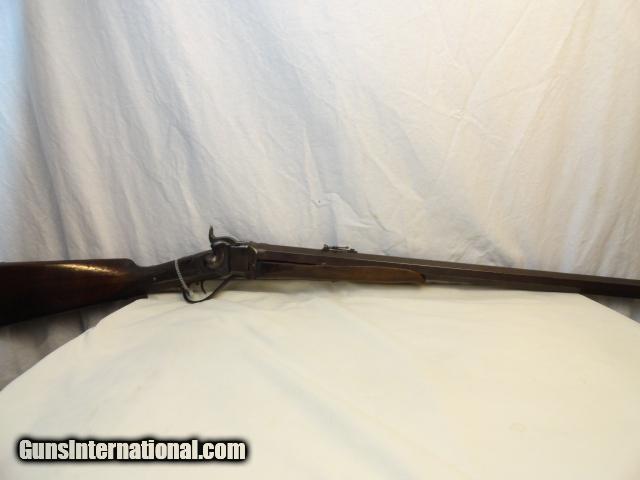
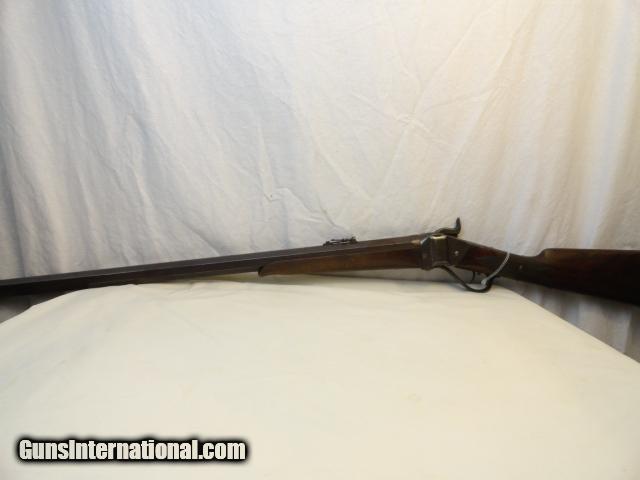
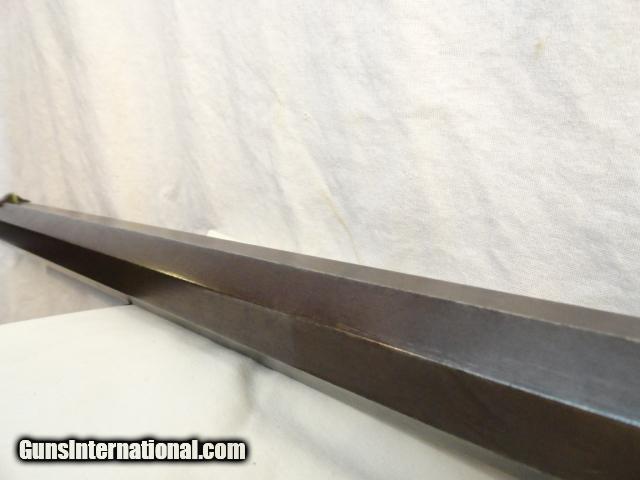
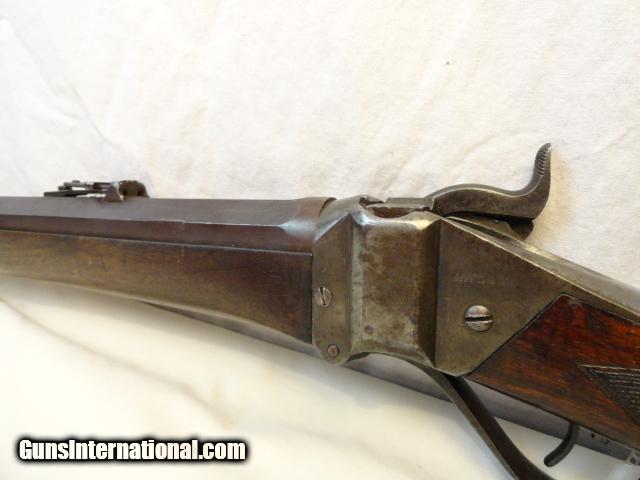
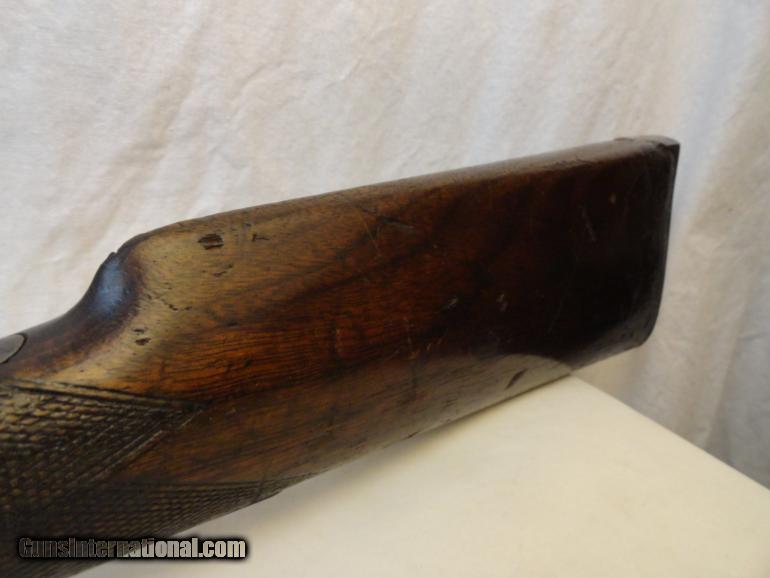
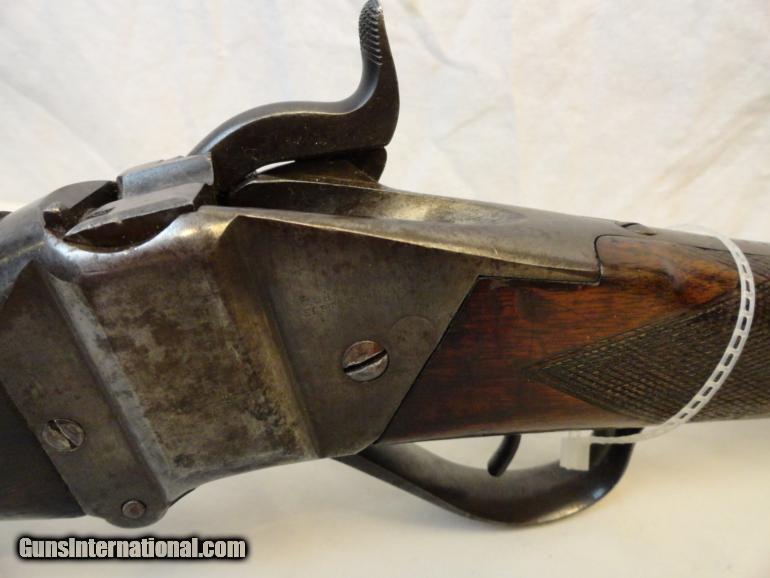
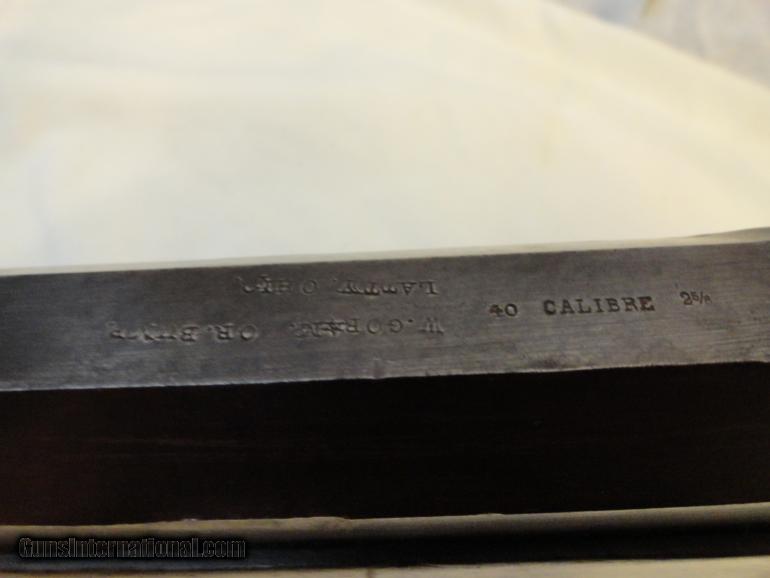
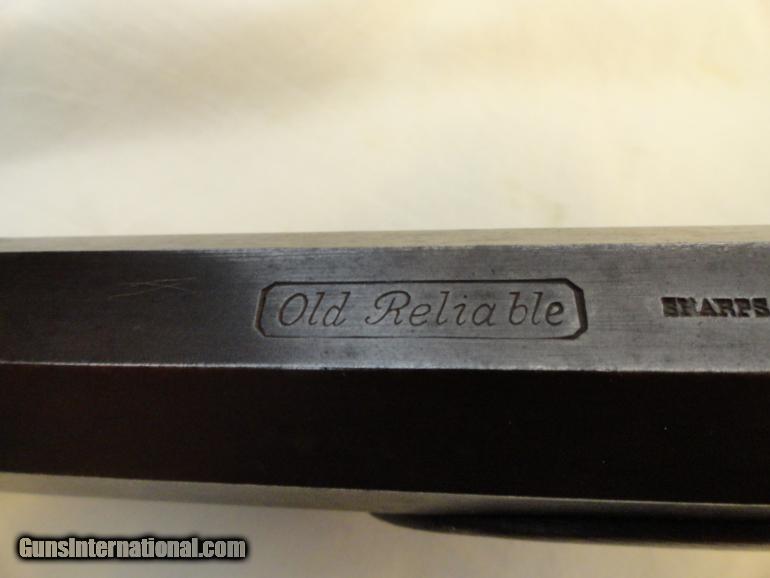
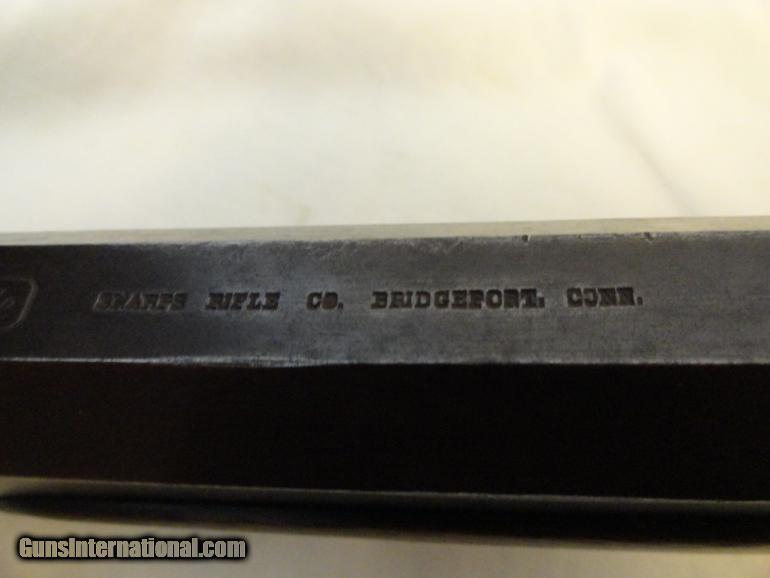
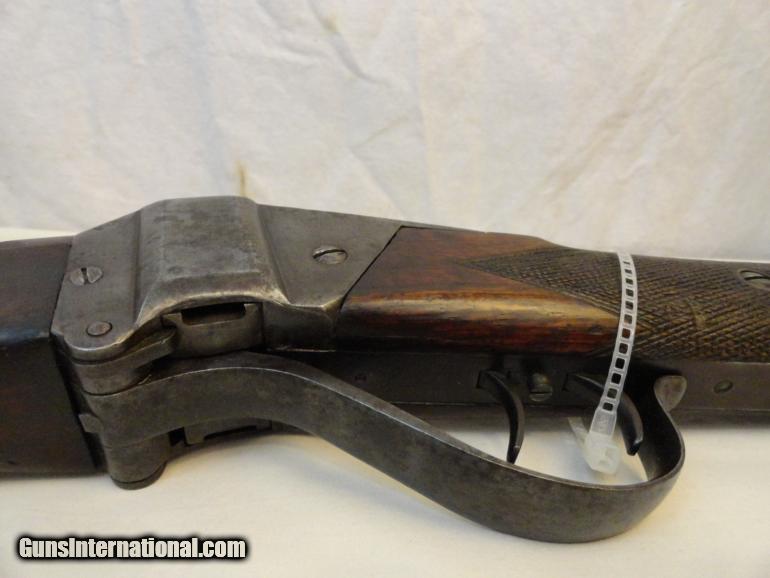
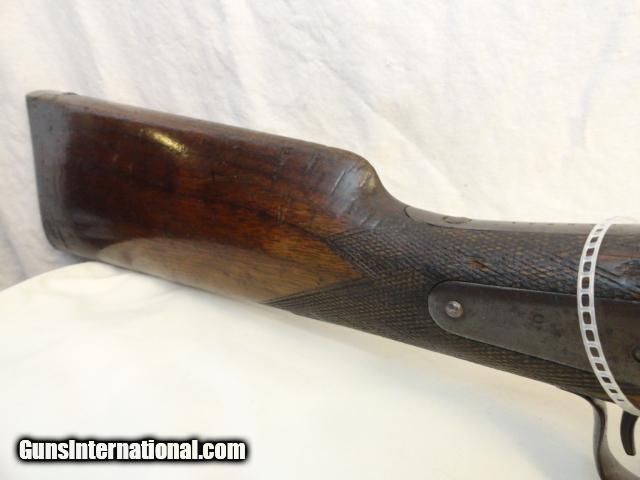
This rifle started life as an 1865 Model. carbine and the reason so few were converted was that the government kept the nicer examples as ones most readily fit for service, insteading choosing to keep the majority of the old war horses as military back up in armories around the country. To this gun, a heavy octagon barrel of 30" was added. The saddle ring base has been removed and the rear stock wrist has been checkered. The barrel has all the Sharps factory barrel stamps and at the Breech is stamped: 40 caliber 2 5/8 with W. Gorham OR Bump latty Ohio. ( Owner, retailer, ?). The flats measures 1 1/8 from flat to flat. The wrist was then checkered via the Meecham style. The barrel is larger than the receiver where they meet. Most of the blue on the barrel has blended with a smooth and blending patina while the receiver is basically shiny patina. The gun weighs 14 lbs. with an excellent strong bore . Receiver colors have long faded away. Wood is excellent but the forearm does have some chipping where it meets barrel on the right side of the receiver. Gun has remained untouched, both thru a war and then on the Indian plains as they headed westward with ex soldiers and market hunters. The Larger barrel than top of the receiver with heavy barrel being the most desireable of all Sharps Buffalo and Post War history. Un -restored or changed since 1880. If you are looking for a mint sporting rifle , forget this one. If you are looking for a REAL BEEN THERE BUFFALO RIFLE that remains in excellent shape (most of these have gone to seed), then you are the kind of collector that is really going to love this rifle. Bore is fine enough to shoot today and gun works like new. Gun is chambered for the 40-90 with a 370 grain bullet in the bottle neck case introduced in 1873 and one of the more popular Buffalo calibers amoungst western market hunters.
|
Click Photo to Enlarge
|
Guns International #: 100396601
Category - Sharps Rifles - Antique
- Antique Rifles - Cartridge
Seller's Information
When emailing or calling sellers direct,
please mention that you saw their listing on GunsInternational.com
Seller: AAURB
Company: Member Since: 2/18/11
First Name: Anthony
State:
Illinois
Country: United States
Phone:
(773) 255-4471
Active Listings: 0
Total Listings: 1476
Seller Type: Private Seller
Return Policy: 3 day inspection and return policy on used guns and accessories.
Payment Methods: Credit Card, Cashiers Check
Real
Description: If one rifle extols all the history of the true Wild West, it would have to be the Sharps rifle. In the world of Sharps rifles, it is the True Buffalo rifle that seems to have the stories of western history literally seeping from the old metal and wood. A true Bufffalo Rifle was a gun made for no other purpose with an oversize heavy octagon barrel in which the reciever is smaller at top than the barrel where they meet. By the mid 1880's, the era of the Buffalo was gone forever and many hunters took their old heavy barrel bison guns and had a more practical sporting barrel made for it . The heavy barrels held no other purpose in the west. Once obsolete , this behemouths were to heavy for standard hunting. Too heavy to carry or shoot off hand, they were of no use for other game in which the hunter had to pursue their prey. Buffalo rifles were set up with shooting teams, used lying or sitting on the ground and balancing the barrel in a wooden cross stick holder as the hunters sat above huge heards of the heavy beasts and blasted away until there barrels nearly melted. Often, a team would have two rifles and would alternate while the partner would cool the others hot barrels in buckets of water and clean. In the 1870's , the new Sharps Model 1874 rifles were extremely expensive often selling for premiums when they could be found for upwards of $100 at a time a good Winchester could be had for $25-40. The Sharps rifle company saw the need for a less expensive no frills gun. They turned to the thousands of left over Civil War Rifles and carbines, converting them at the Bridgeport Ct plant with the addition of new heavy barrels and the action converted from the old percussion systems to fire the new self contained cartridge. The majority of factory converted rifles and carbines were ,made in 1879-80 for their larger dealers. built from an old rifle or carbines. It is estmated that Sharps converted about 3500 of these in 1879-80.. This rifle started life as an 1865 Model. carbine and the reason so few were converted was that the government kept the nicer examples as ones most readily fit for service, insteading choosing to keep the majority of the old war horses as military back up in armories around the country. To this gun, a heavy octagon barrel of 30" was added. The saddle ring base has been removed and the rear stock wrist has been checkered. The barrel has all the Sharps factory barrel stamps and at the Breech is stamped: 40 caliber 2 5/8 with W. Gorham OR Bump latty Ohio. ( Owner, retailer, ?). The flats measures 1 1/8 from flat to flat. The wrist was then checkered via the Meecham style. The barrel is larger than the receiver where they meet. Most of the blue on the barrel has blended with a smooth and blending patina while the receiver is basically shiny patina. The gun weighs 14 lbs. with an excellent strong bore . Receiver colors have long faded away. Wood is excellent but the forearm does have some chipping where it meets barrel on the right side of the receiver. Gun has remained untouched, both thru a war and then on the Indian plains as they headed westward with ex soldiers and market hunters. The Larger barrel than top of the receiver with heavy barrel being the most desireable of all Sharps Buffalo and Post War history. Un -restored or changed since 1880. If you are looking for a mint sporting rifle , forget this one. If you are looking for a REAL BEEN THERE BUFFALO RIFLE that remains in excellent shape (most of these have gone to seed), then you are the kind of collector that is really going to love this rifle. Bore is fine enough to shoot today and gun works like new. Gun is chambered for the 40-90 with a 370 grain bullet in the bottle neck case introduced in 1873 and one of the more popular Buffalo calibers amoungst western market hunters. SOLD Antique: Yes Manufacturer: Sharps Bridgeport Model: 1865 Conversion Serial Number: C42731 Caliber Info: 40-90 Bore Condition: Exc Barrels: 30 Butt Pad: steel Finish: standard Manufacture Date: 1865 |
Guns International #: 100396601
Seller's Inventory #: 678
If one rifle extols all the history of the true Wild West, it would have to be the Sharps rifle. In the world of Sharps rifles, it is the True Buffalo rifle that seems to have the stories of western history literally seeping from the old metal and wood. A true Bufffalo Rifle was a gun made for no other purpose with an oversize heavy octagon barrel in which the reciever is smaller at top than the barrel where they meet. By the mid 1880's, the era of the Buffalo was gone forever and many hunters took their old heavy barrel bison guns and had a more practical sporting barrel made for it . The heavy barrels held no other purpose in the west. Once obsolete , this behemouths were to heavy for standard hunting. Too heavy to carry or shoot off hand, they were of no use for other game in which the hunter had to pursue their prey. Buffalo rifles were set up with shooting teams, used lying or sitting on the ground and balancing the barrel in a wooden cross stick holder as the hunters sat above huge heards of the heavy beasts and blasted away until there barrels nearly melted. Often, a team would have two rifles and would alternate while the partner would cool the others hot barrels in buckets of water and clean. In the 1870's , the new Sharps Model 1874 rifles were extremely expensive often selling for premiums when they could be found for upwards of $100 at a time a good Winchester could be had for $25-40. The Sharps rifle company saw the need for a less expensive no frills gun. They turned to the thousands of left over Civil War Rifles and carbines, converting them at the Bridgeport Ct plant with the addition of new heavy barrels and the action converted from the old percussion systems to fire the new self contained cartridge. The majority of factory converted rifles and carbines were ,made in 1879-80 for their larger dealers. built from an old rifle or carbines. It is estmated that Sharps converted about 3500 of these in 1879-80..
This rifle started life as an 1865 Model. carbine and the reason so few were converted was that the government kept the nicer examples as ones most readily fit for service, insteading choosing to keep the majority of the old war horses as military back up in armories around the country. To this gun, a heavy octagon barrel of 30" was added. The saddle ring base has been removed and the rear stock wrist has been checkered. The barrel has all the Sharps factory barrel stamps and at the Breech is stamped: 40 caliber 2 5/8 with W. Gorham OR Bump latty Ohio. ( Owner, retailer, ?). The flats measures 1 1/8 from flat to flat. The wrist was then checkered via the Meecham style. The barrel is larger than the receiver where they meet. Most of the blue on the barrel has blended with a smooth and blending patina while the receiver is basically shiny patina. The gun weighs 14 lbs. with an excellent strong bore . Receiver colors have long faded away. Wood is excellent but the forearm does have some chipping where it meets barrel on the right side of the receiver. Gun has remained untouched, both thru a war and then on the Indian plains as they headed westward with ex soldiers and market hunters. The Larger barrel than top of the receiver with heavy barrel being the most desireable of all Sharps Buffalo and Post War history. Un -restored or changed since 1880. If you are looking for a mint sporting rifle , forget this one. If you are looking for a REAL BEEN THERE BUFFALO RIFLE that remains in excellent shape (most of these have gone to seed), then you are the kind of collector that is really going to love this rifle. Bore is fine enough to shoot today and gun works like new. Gun is chambered for the 40-90 with a 370 grain bullet in the bottle neck case introduced in 1873 and one of the more popular Buffalo calibers amoungst western market hunters.
Guns International #: 100396601
Seller's Inventory #: 678


Guns International #: 100396601
Seller's Inventory #: 678
If one rifle extols all the history of the true Wild West, it would have to be the Sharps rifle. In the world of Sharps rifles, it is the True Buffalo rifle that seems to have the stories of western history literally seeping from the old metal and wood. A true Bufffalo Rifle was a gun made for no other purpose with an oversize heavy octagon barrel in which the reciever is smaller at top than the barrel where they meet. By the mid 1880's, the era of the Buffalo was gone forever and many hunters took their old heavy barrel bison guns and had a more practical sporting barrel made for it . The heavy barrels held no other purpose in the west. Once obsolete , this behemouths were to heavy for standard hunting. Too heavy to carry or shoot off hand, they were of no use for other game in which the hunter had to pursue their prey. Buffalo rifles were set up with shooting teams, used lying or sitting on the ground and balancing the barrel in a wooden cross stick holder as the hunters sat above huge heards of the heavy beasts and blasted away until there barrels nearly melted. Often, a team would have two rifles and would alternate while the partner would cool the others hot barrels in buckets of water and clean. In the 1870's , the new Sharps Model 1874 rifles were extremely expensive often selling for premiums when they could be found for upwards of $100 at a time a good Winchester could be had for $25-40. The Sharps rifle company saw the need for a less expensive no frills gun. They turned to the thousands of left over Civil War Rifles and carbines, converting them at the Bridgeport Ct plant with the addition of new heavy barrels and the action converted from the old percussion systems to fire the new self contained cartridge. The majority of factory converted rifles and carbines were ,made in 1879-80 for their larger dealers. built from an old rifle or carbines. It is estmated that Sharps converted about 3500 of these in 1879-80..
This rifle started life as an 1865 Model. carbine and the reason so few were converted was that the government kept the nicer examples as ones most readily fit for service, insteading choosing to keep the majority of the old war horses as military back up in armories around the country. To this gun, a heavy octagon barrel of 30" was added. The saddle ring base has been removed and the rear stock wrist has been checkered. The barrel has all the Sharps factory barrel stamps and at the Breech is stamped: 40 caliber 2 5/8 with W. Gorham OR Bump latty Ohio. ( Owner, retailer, ?). The flats measures 1 1/8 from flat to flat. The wrist was then checkered via the Meecham style. The barrel is larger than the receiver where they meet. Most of the blue on the barrel has blended with a smooth and blending patina while the receiver is basically shiny patina. The gun weighs 14 lbs. with an excellent strong bore . Receiver colors have long faded away. Wood is excellent but the forearm does have some chipping where it meets barrel on the right side of the receiver. Gun has remained untouched, both thru a war and then on the Indian plains as they headed westward with ex soldiers and market hunters. The Larger barrel than top of the receiver with heavy barrel being the most desireable of all Sharps Buffalo and Post War history. Un -restored or changed since 1880. If you are looking for a mint sporting rifle , forget this one. If you are looking for a REAL BEEN THERE BUFFALO RIFLE that remains in excellent shape (most of these have gone to seed), then you are the kind of collector that is really going to love this rifle. Bore is fine enough to shoot today and gun works like new. Gun is chambered for the 40-90 with a 370 grain bullet in the bottle neck case introduced in 1873 and one of the more popular Buffalo calibers amoungst western market hunters.


