 to Favorites
1 of 15
2 of 15
3 of 15
4 of 15
5 of 15
6 of 15
7 of 15
8 of 15
9 of 15
10 of 15
11 of 15
12 of 15
13 of 15
14 of 15
15 of 15
 The server has not detected any activity for the last 3 hours.
For your security, your session will expire in 2 minutes and you will be redirected to the Sign In page.
Would you like to stay signed in?
The server has not detected any activity for the last 3 hours.
For your security, your session will expire in 2 minutes and you will be redirected to the Sign In page.
Would you like to stay signed in?


Guns International #: 102795587
Seller's Inventory #: 24080088

|
Click Photo to Enlarge
|
Guns International #: 102795587
Category - Winchester Rifles - Model 1866
- Antique Rifles - Cartridge
Seller's Information
When emailing or calling sellers direct,
please mention that you saw their listing on GunsInternational.com
Seller: Shooter's Supply, LLC.
Member Since: 3/16/16
First Name: Patrick
Last Name: Brown
State:
Tennessee
Zip: 37343
Country: United States
Phone:
(423) 875-4868
Active Listings: 28
Total Listings: 1372
Seller Type: FFL Dealer
Return Policy: 3 day inspection and return policy on used guns and accessories. No returns on new firearms.
We normally ship USPS Priority Mail which should be 2-day ship. Shipping is actual cost with a minimum of $30.00 for pistols and $50.00 for rifles/shotguns to ship to most of the 48 contiguous states. Shipping to Alaska may require an extra fee. Shipping insurance is available upon request for an extra fee. We cannot do international sales. As of November 2019, we no longer ship guns to California and Hawaii. Payment Methods: Visa, Master Card, American Express, USPS Money Order. NO CREDIT CARD FEES!!!
About Us: We are a small family owned business located in Hixson, Tennessee. Do you have firearms at home collecting dust? We have a lively consignment business. Our fee is 20% with a $50 minimum. Firearms are consigned for a an average period of 180 days but the length of period is negotiable. We also do handgun carry permit classes for the state of Tennessee. We have a nice indoor shooting range with reasonable rates. Please check us out at shooterssupply.
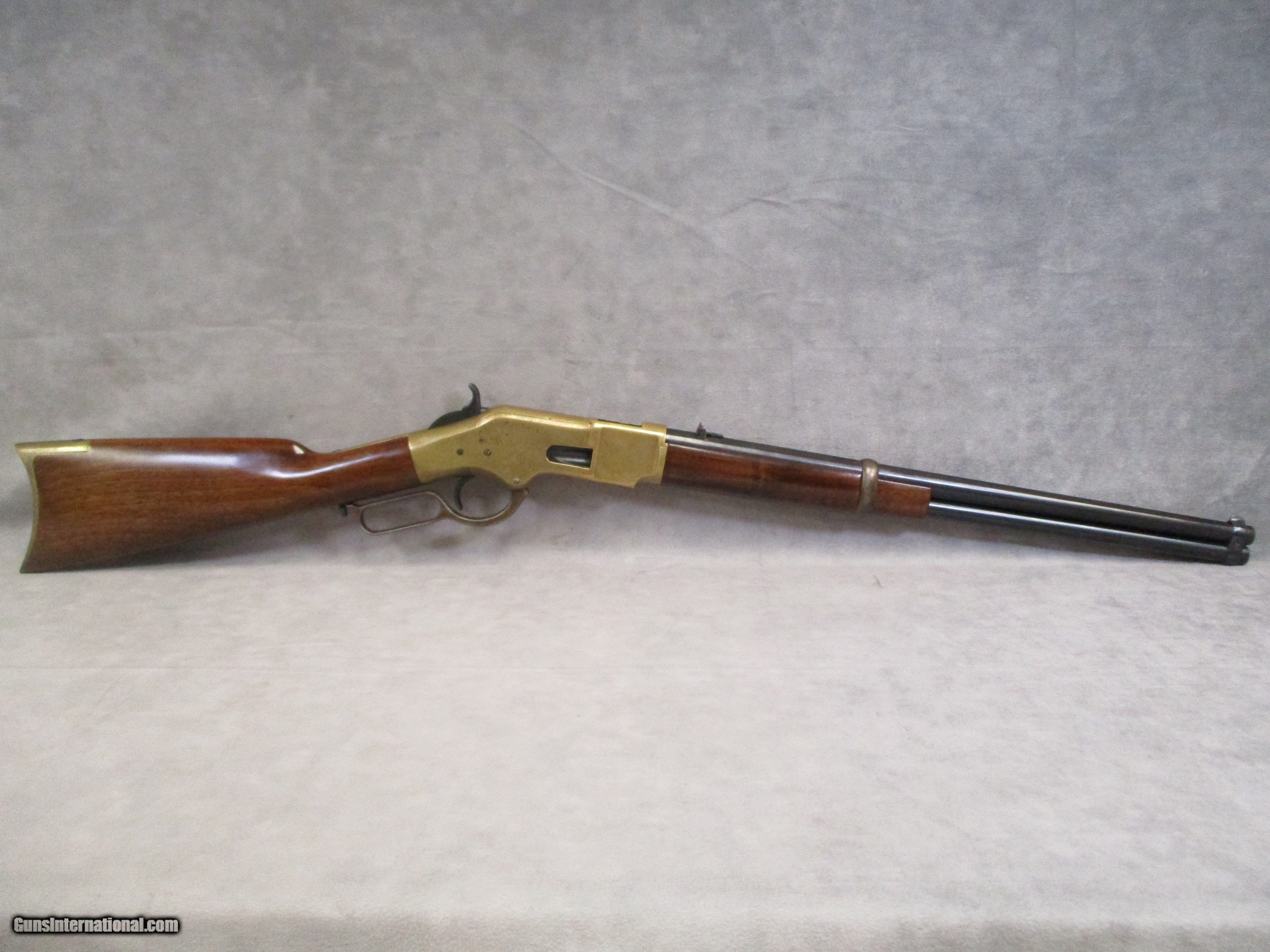
Winchester Model 1866 Yellowboy Third Model Carbine, Mfg. 1870
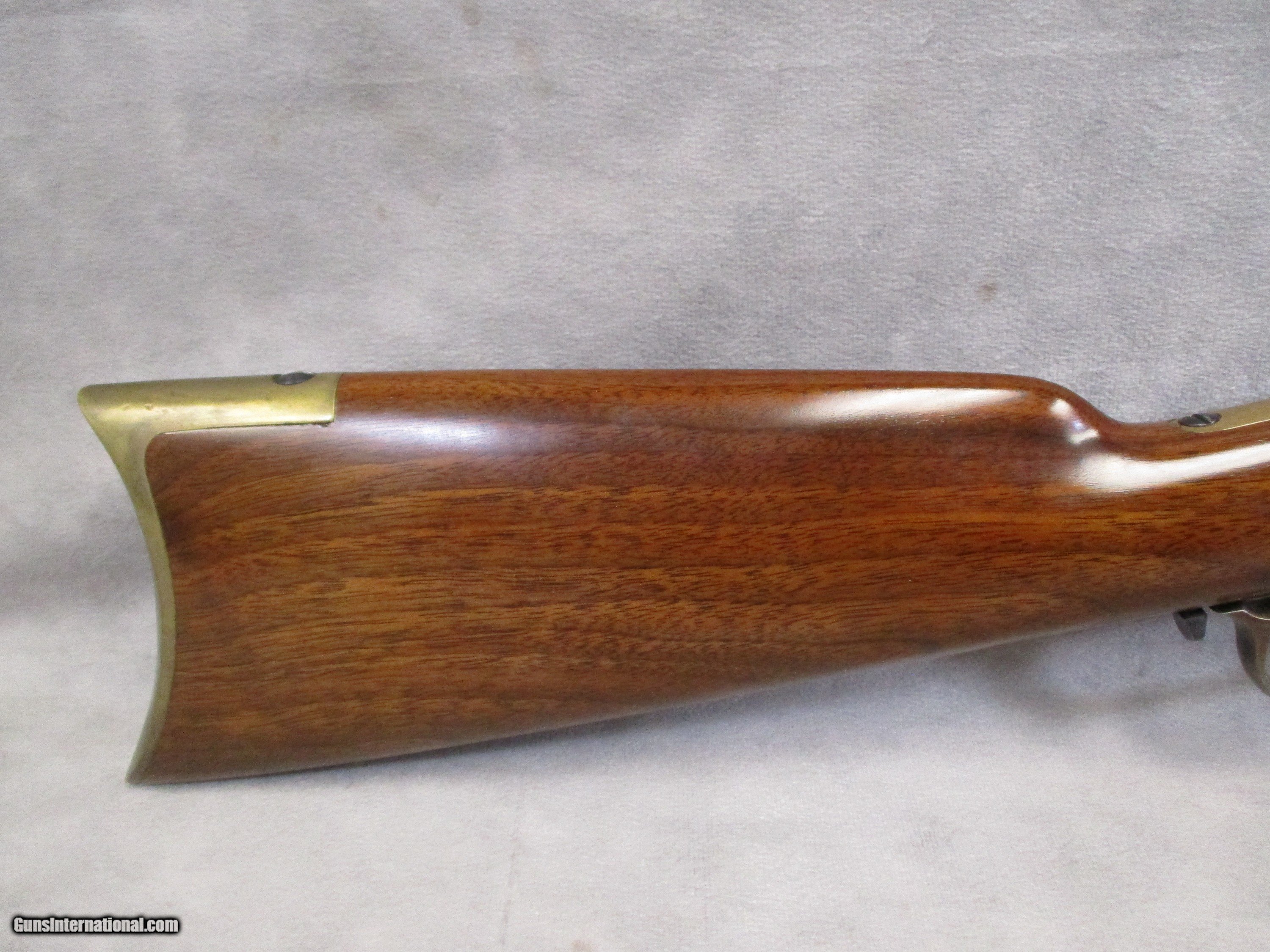
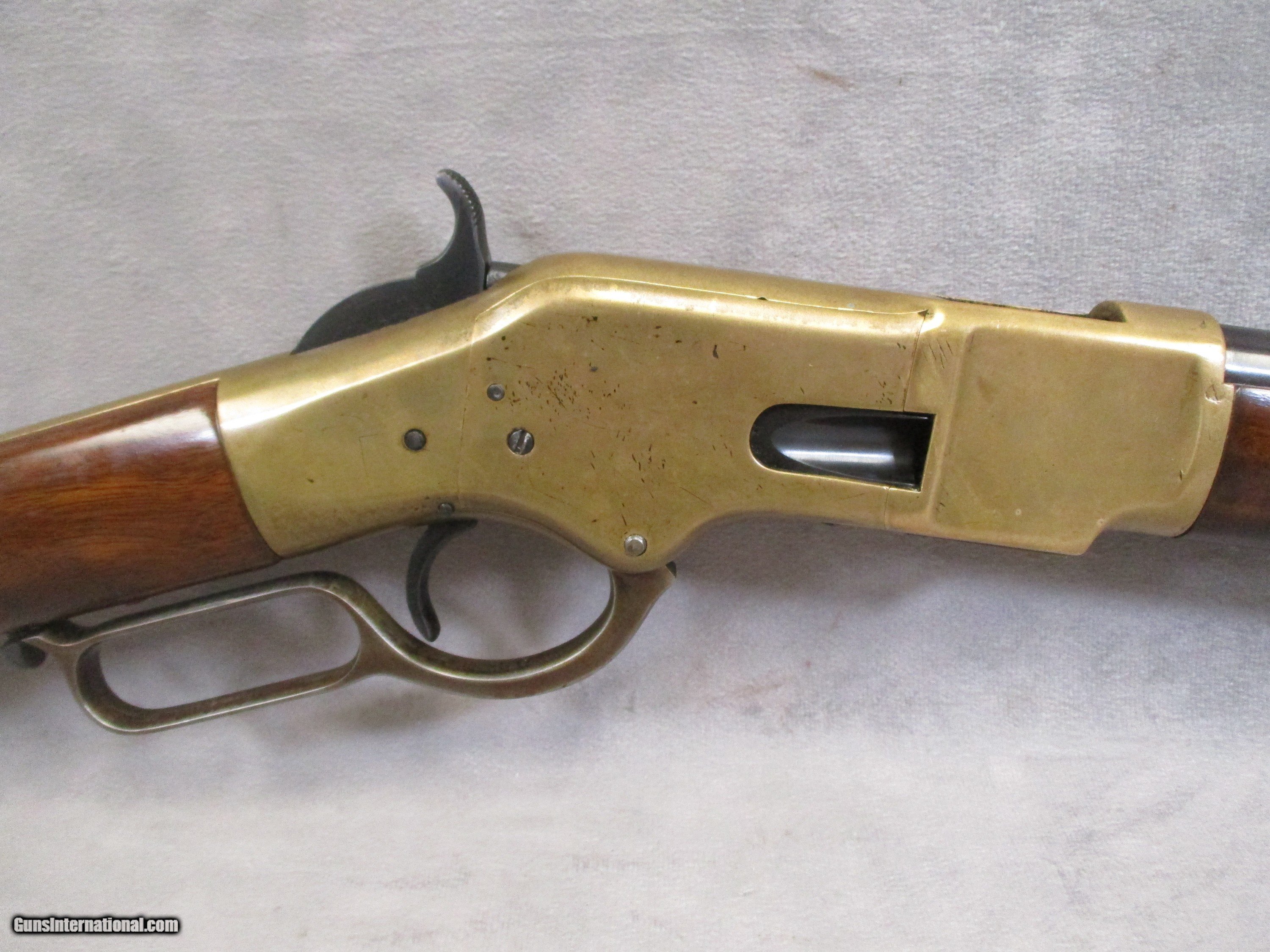
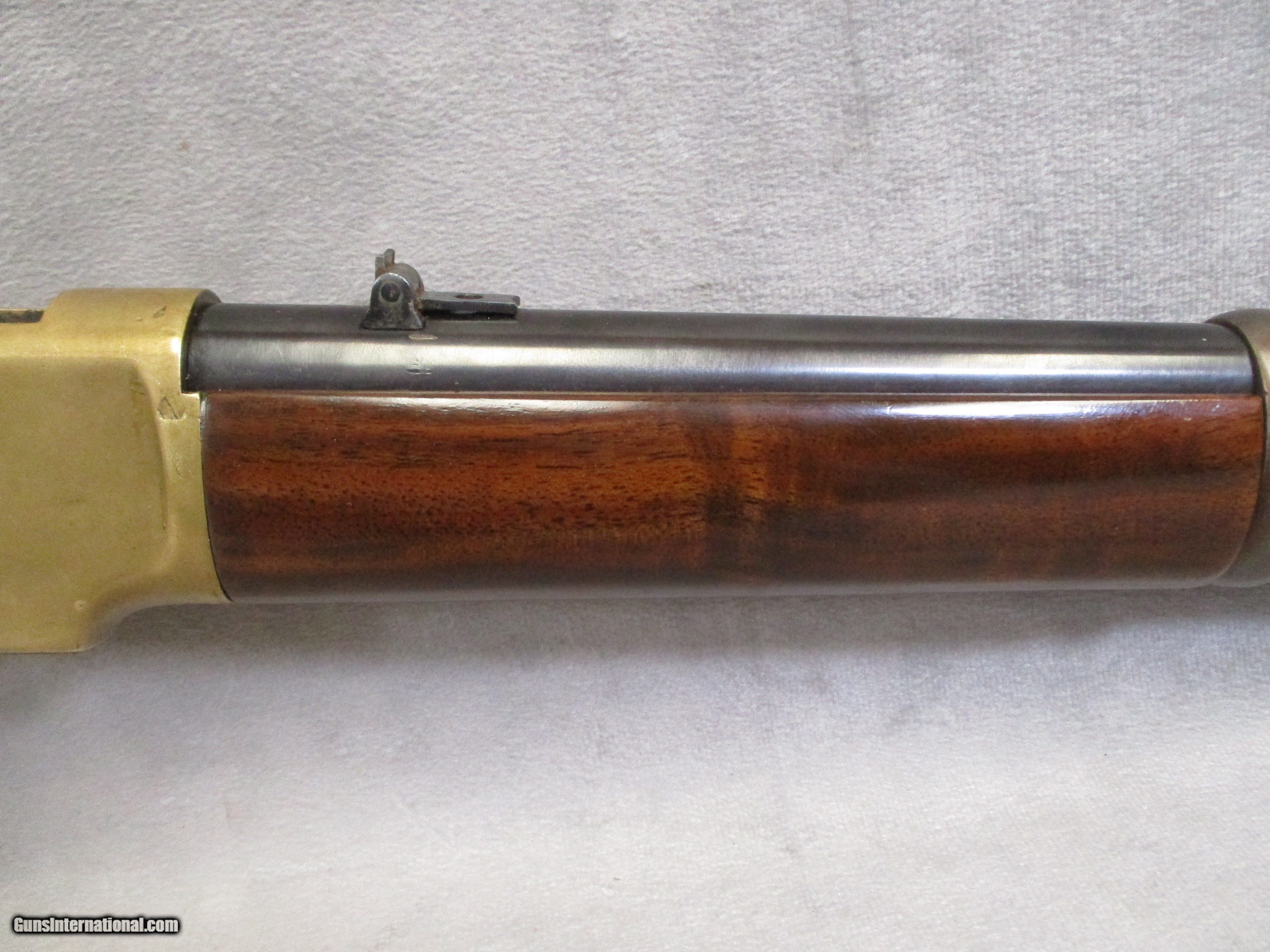
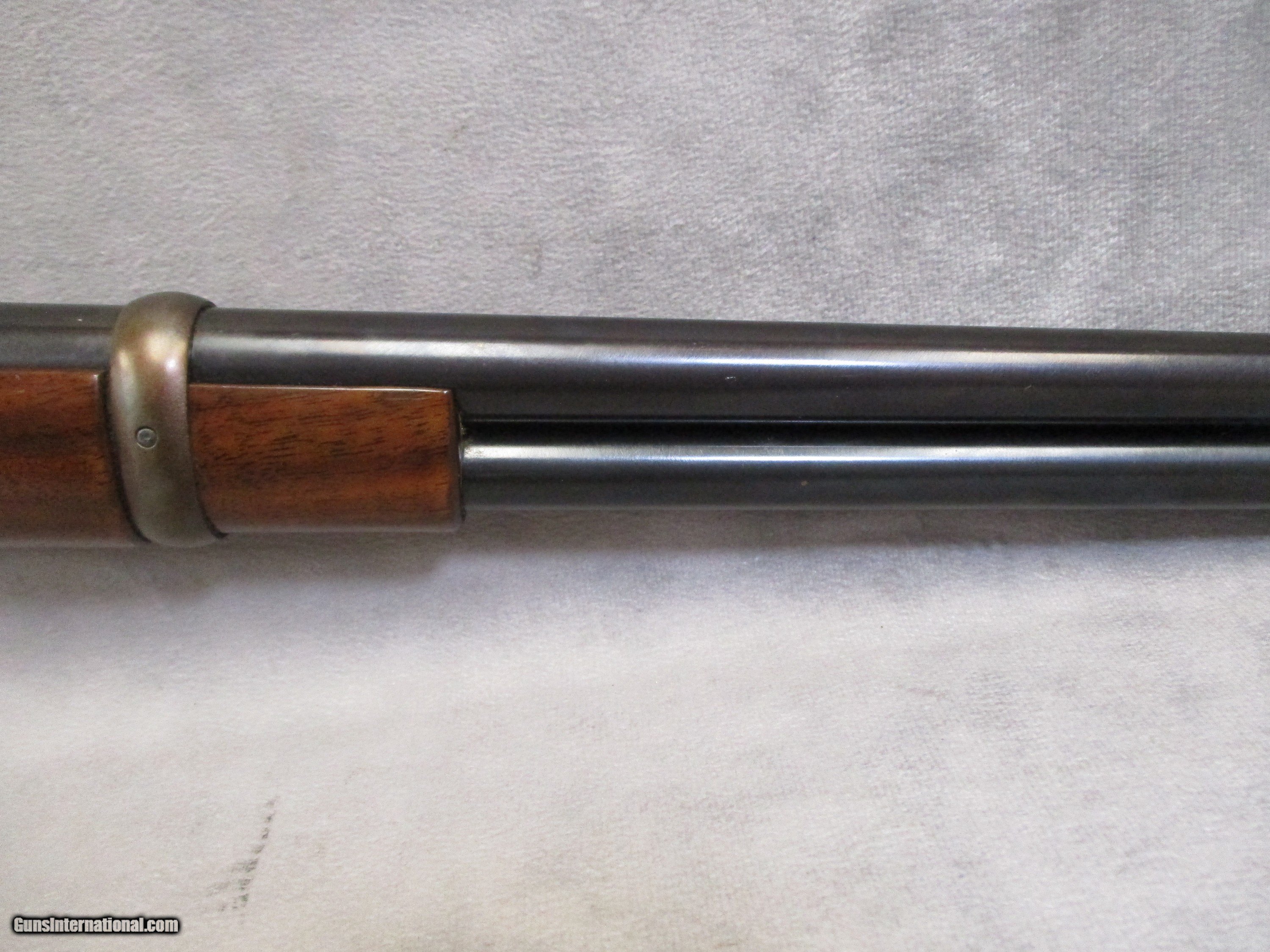
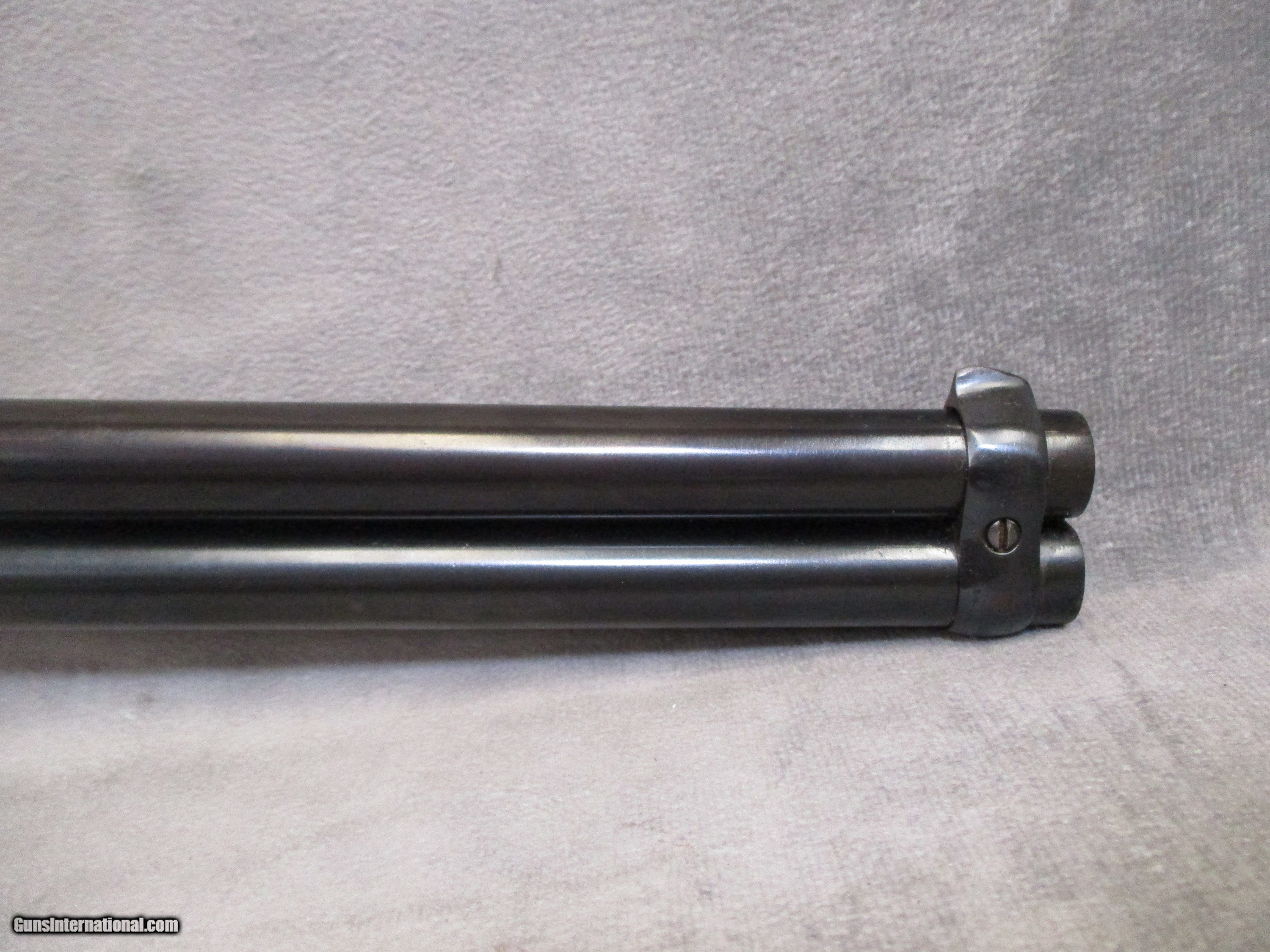
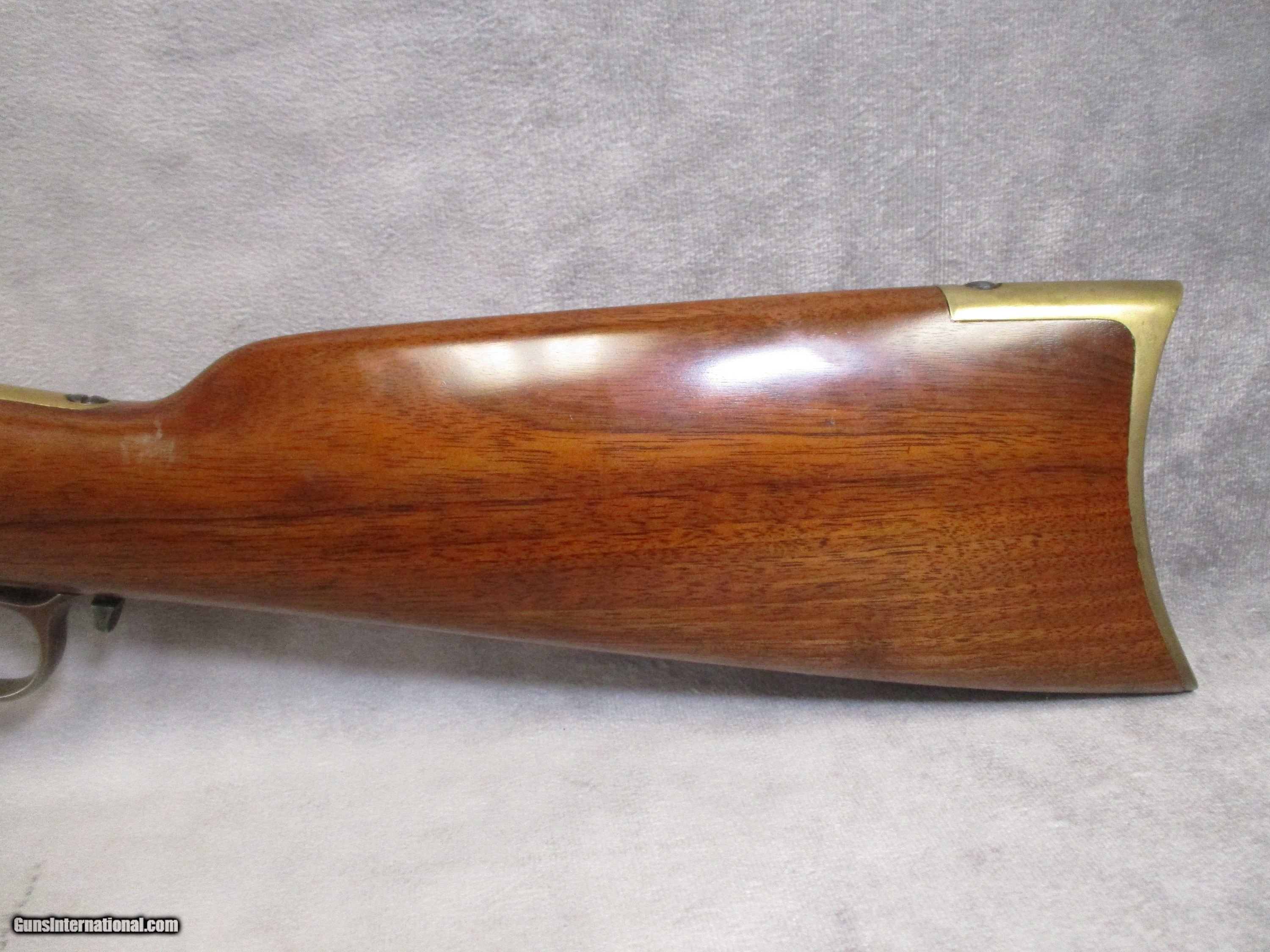
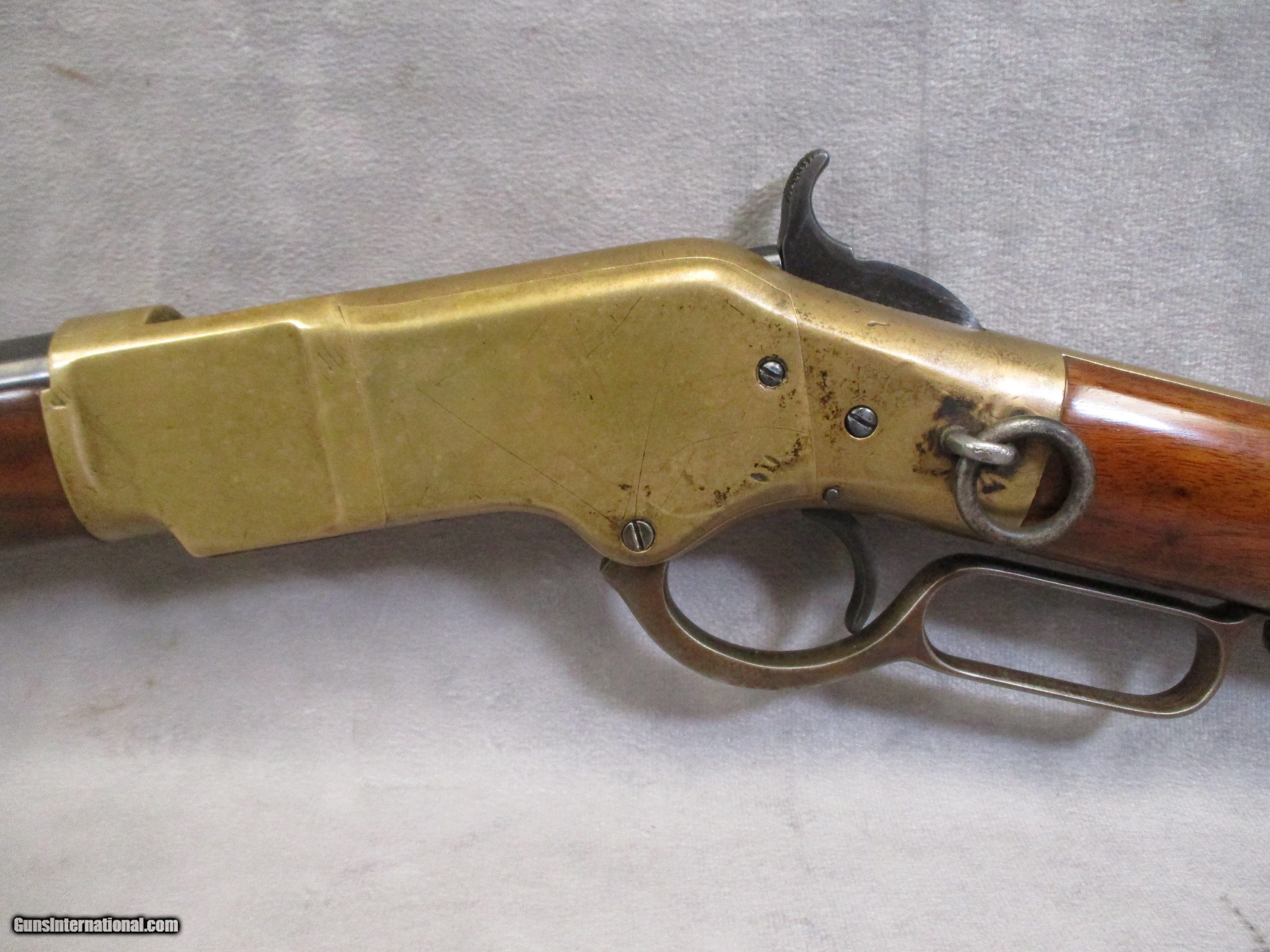
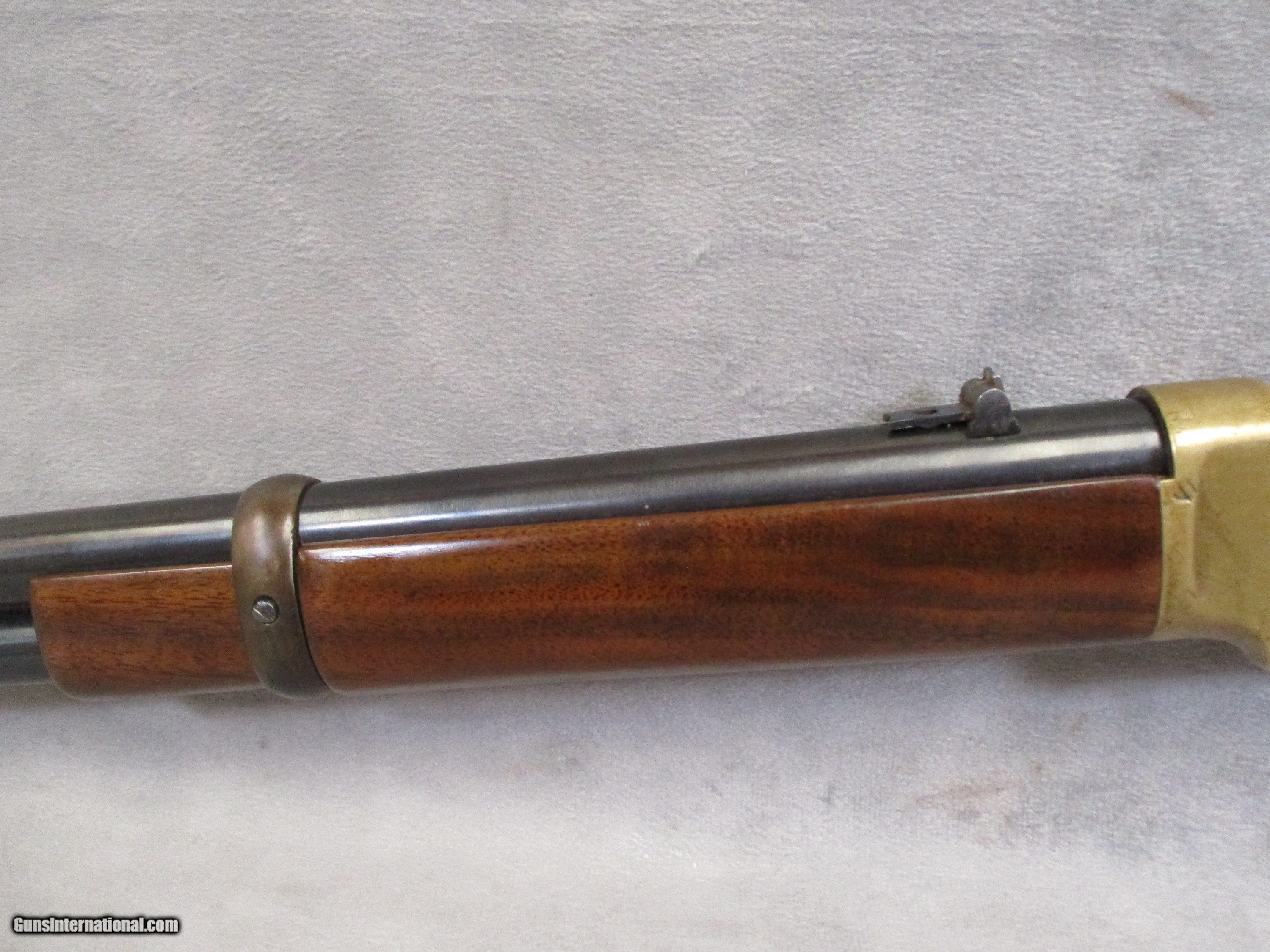
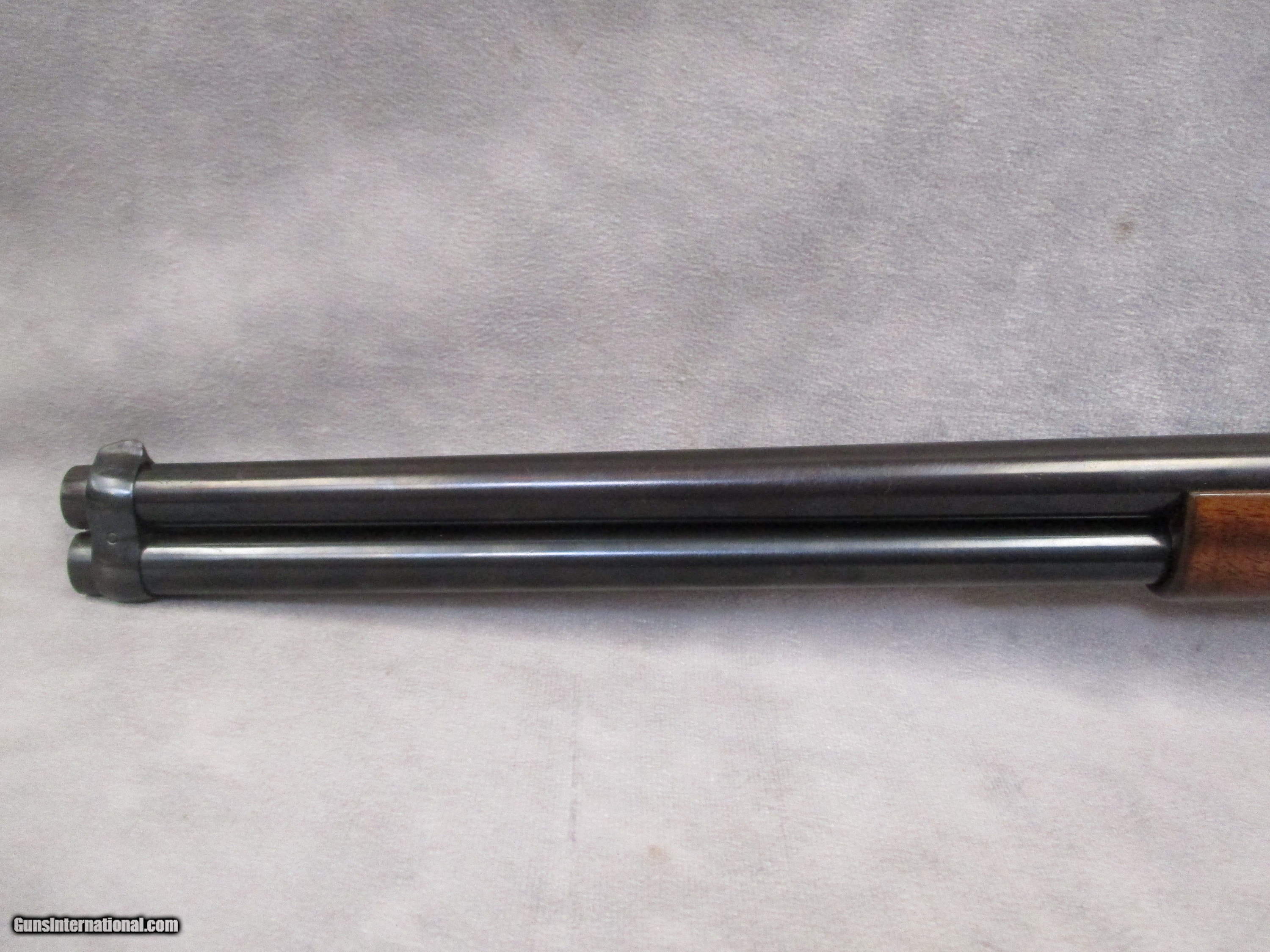
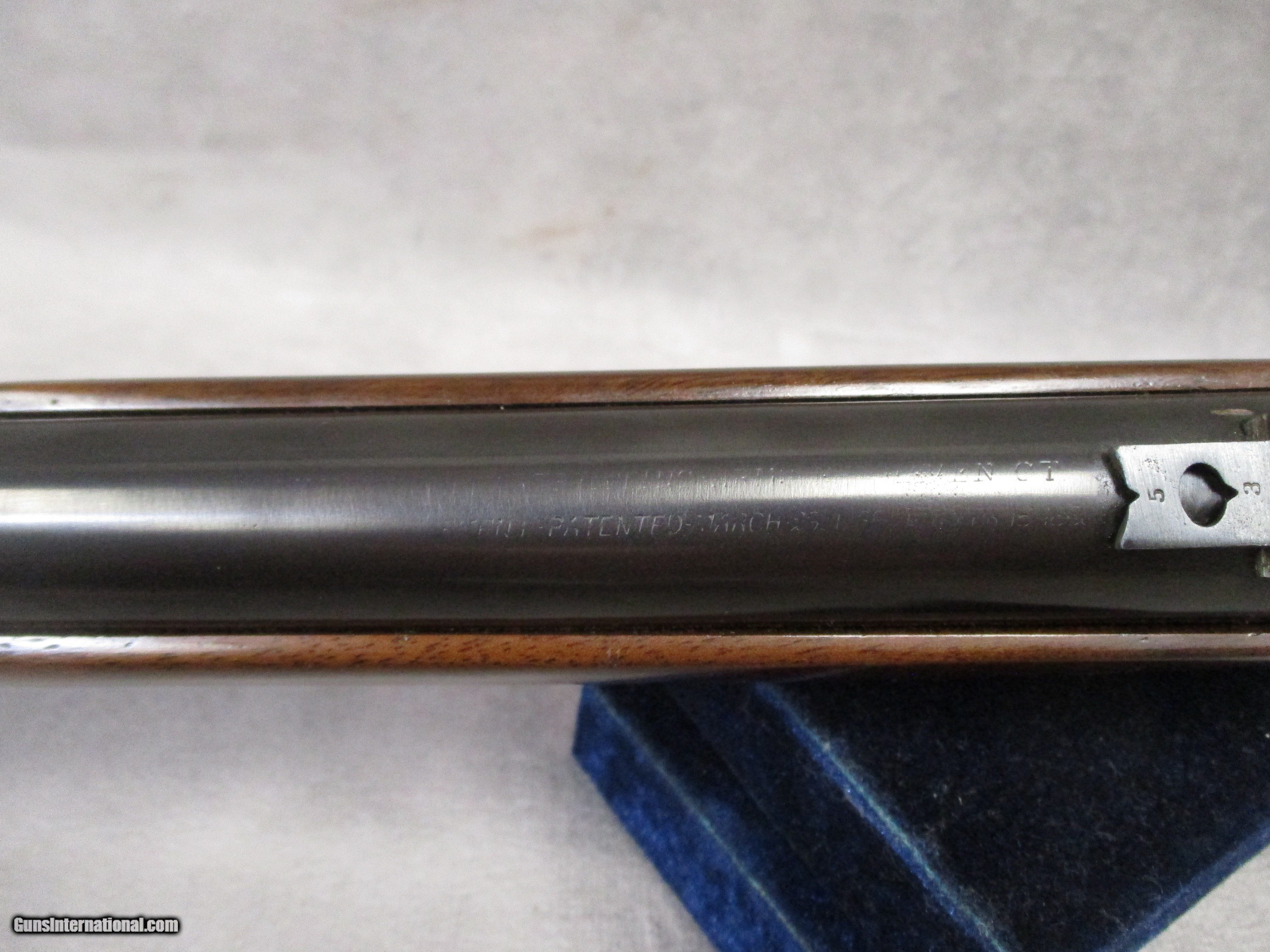
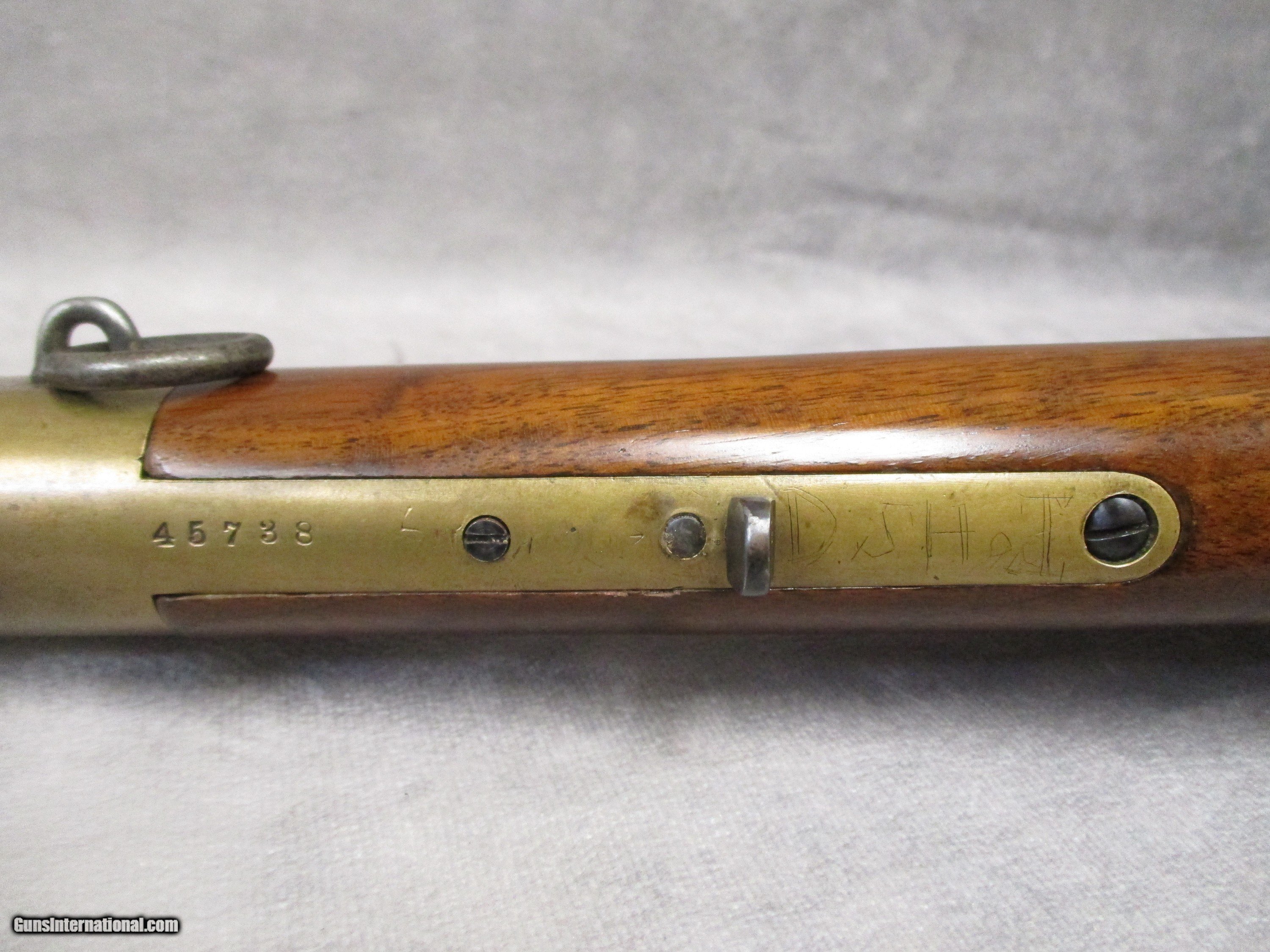
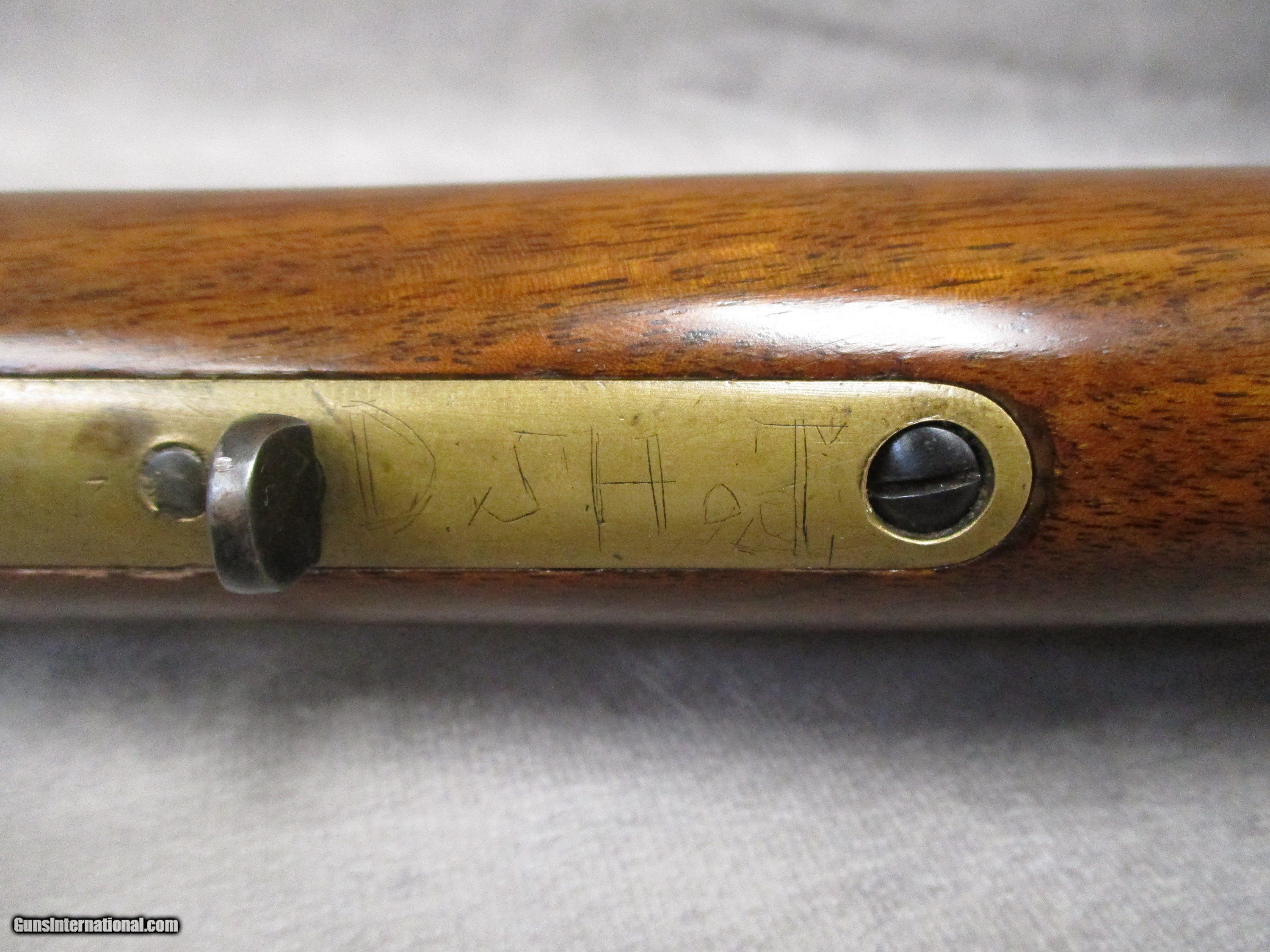
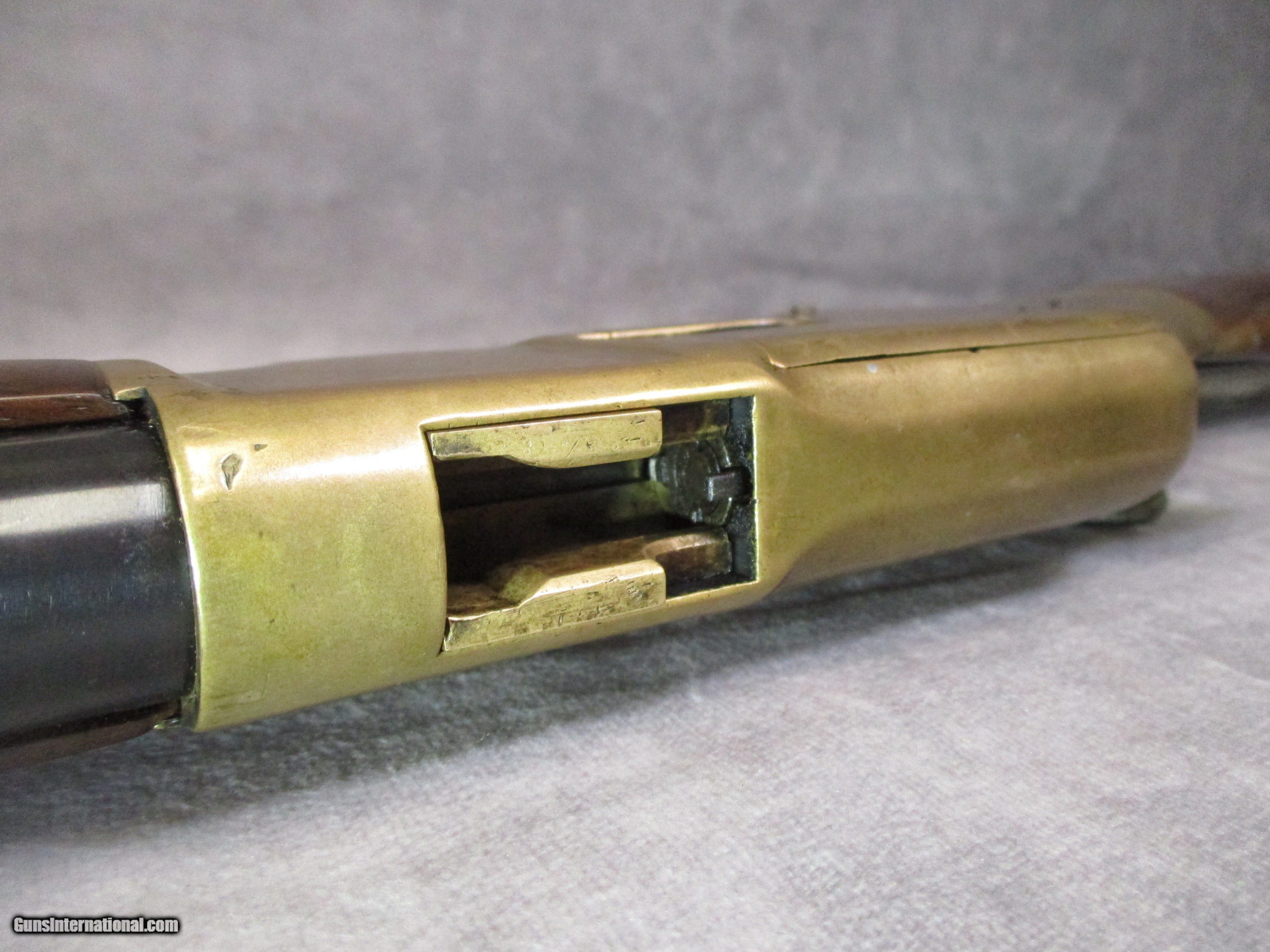
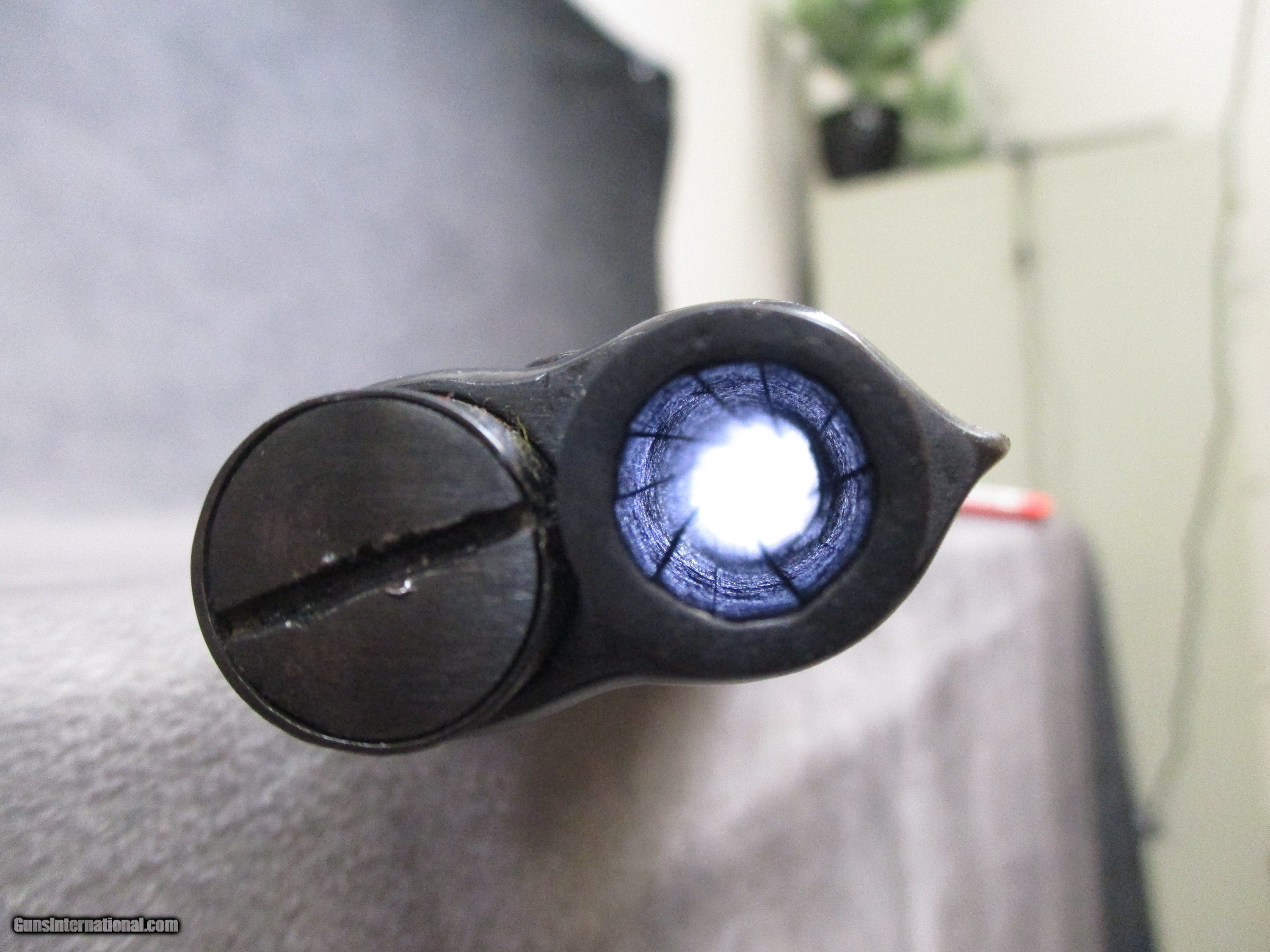
Description: The Model 1866 was the first rifle to be produced under the Winchester name, the company having only just changed its name from the New Haven Firearms Co. that year. The ’66 was a vast improvement over the original Henry Model 1860 rifle. It featured a new magazine tube designed by the Winchester plant’s superintendent, Nelson King. The original Henry magazine tube was slotted on the bottom along its length, which allowed the ingress of dirt or other matter to enter, as well as being a structural weakness in the tube itself. Another major change was the addition of a loading gate in the receiver eliminating the complex, load-from-the-front process of the Henry. Like the Henry, the frame of the ’66 was made from a brass/bronze alloy called “gunmetal”. The rifle was chambered for the same .44 Henry Rimfire cartridge. While the moniker “The Rifle that Won the West” is usually applied to the Model 1873 rifle, this name applies just as well to the ’66. The ‘66’s popularity, combined with its lower cost compared to the later steel-framed lever-action rifles, ensured that the Model 1866 was produced and sold until 1899. In addition to its popularity at home, the ’66 also saw some notable orders from customers overseas. About 6,000 rifles and 4.5 million rounds of ammunition were purchased by the French for use in the Franco-Prussian War (1870-71) while the Ottomans purchased 45,000 rifles and carbines during the same timeframe. They Ottomans put them to good use during the Russo-Turkish War (1877) where they able to outshoot their Russian opponents who were armed only with the single-shot Krnka and Berdan rifles. The Swiss initially picked the Model 1866 to replace their single-shot Milbank-Amsler rifles but internal political pressure to adopt a home-grown design resulted in the creation of the Vetterli Model 1867 which was a bolt-action rifle that used a copy of the ‘66’s magazine tube. At the time of its introduction, the Vetterli was the most advanced rifle in Europe thanks to the Winchester magazine tube which gave it a capacity of 11 rounds compared to the single-shot French Chassepot and German Dreyse needle-gun. The 1866 had a larger impact on weapon design than most people are aware, which is kind of sad given it is often overlooked in favor of the 1873 and 1892 rifles. Given the rarity of original Model ’66 rifles, this rifle was subjected to a more thorough inspection than most rifles that come through the store’s doors. The front sight being integral with the front barrel band is normally a feature found on reproductions of the 1873 and 1892 models for reasons of cost and eliminating the need to cut out part of the barrel for the front sight. However, in the case of a ’66 Third Model Carbine, this is exactly how they were produced back then. Barrel length is 19-5/8”, slightly less than the oft quoted 20”, but longer than modern reproductions which have a barrel length of 19 inches (i.e. 48 cm) and 16-1/8” (i.e. 41 cm). Much of the barrel’s original markings were wiped when the rifle underwent a refinish at some point. Since it was made sometime in 1870, and is therefore 154 years old at this point, the idea of it undergoing a refinish or even two refinishes is not all that surprising. The words “…Repeating Arms” and “…Haven, CT” can just be made out on the top line, while “Patented March 29…” is just visible on the second line. The lever and rear barrel band have worn to a patina of sorts. It’s possible that this is a refinish that itself has turned to a patina over time. The receiver and its side plates certainly have a worn look to the surface. Someone, perhaps the original owner, inscribed their initials into the lower tang which can be seen in the pictures. The serial number is in excellent shape. The wood furniture is almost certainly a replacement set; however, it has been superbly fitted to the receiver with little to no gap between the metal and the wood itself. Working the lever can sometimes loosen the retaining screw. It is probable that the threads are a bit worn. The original magazine spring has been replaced as it was in poor physical shape. Other than this, the rifle is mechanically in good shape. The bore exhibits the usual pitting common to a mid-late 19th century, black powder rimfire rifle. To its credit, the grooves are still visible and would likely provide a decent bit of accuracy. However, given the rifle’s age and the lack of the long-obsolete .44 Henry Rimfire cartridge, this rifle should not be fired. If only the rifle could talk, it would likely have quite a few stories to tell.The Model 1866 was the first rifle to be produced under the Winchester name, the company having only just changed its name from the New Haven Firearms Co. that year. The ’66 was a vast improvement over the original Henry Model 1860 rifle. It featured a new magazine tube designed by the Winchester plant’s superintendent, Nelson King. The original Henry magazine tube was slotted on the bottom along its length, which allowed the ingress of dirt or other matter to enter, as well as being a structural weakness in the tube itself. Another major change was the addition of a loading gate in the receiver eliminating the complex, load-from-the-front process of the Henry. Like the Henry, the frame of the ’66 was made from a brass/bronze alloy called “gunmetal”. The rifle was chambered for the same .44 Henry Rimfire cartridge. While the moniker “The Rifle that Won the West” is usually applied to the Model 1873 rifle, this name applies just as well to the ’66. The ‘66’s popularity, combined with its lower cost compared to the later steel-framed lever-action rifles, ensured that the Model 1866 was produced and sold until 1899. In addition to its popularity at home, the ’66 also saw some notable orders from customers overseas. About 6,000 rifles and 4.5 million rounds of ammunition were purchased by the French for use in the Franco-Prussian War (1870-71) while the Ottomans purchased 45,000 rifles and carbines during the same timeframe. They Ottomans put them to good use during the Russo-Turkish War (1877) where they able to outshoot their Russian opponents who were armed only with the single-shot Krnka and Berdan rifles. The Swiss initially picked the Model 1866 to replace their single-shot Milbank-Amsler rifles but internal political pressure to adopt a home-grown design resulted in the creation of the Vetterli Model 1867 which was a bolt-action rifle that used a copy of the ‘66’s magazine tube. At the time of its introduction, the Vetterli was the most advanced rifle in Europe thanks to the Winchester magazine tube which gave it a capacity of 11 rounds compared to the single-shot French Chassepot and German Dreyse needle-gun. The 1866 had a larger impact on weapon design than most people are aware, which is kind of sad given it is often overlooked in favor of the 1873 and 1892 rifles. Given the rarity of original Model ’66 rifles, this rifle was subjected to a more thorough inspection than most rifles that come through the store’s doors. The front sight being integral with the front barrel band is normally a feature found on reproductions of the 1873 and 1892 models for reasons of cost and eliminating the need to cut out part of the barrel for the front sight. However, in the case of a ’66 Third Model Carbine, this is exactly how they were produced back then. Barrel length is 19-5/8”, slightly less than the oft quoted 20”, but longer than modern reproductions which have a barrel length of 19 inches (i.e. 48 cm) and 16-1/8” (i.e. 41 cm). Much of the barrel’s original markings were wiped when the rifle underwent a refinish at some point. Since it was made sometime in 1870, and is therefore 154 years old at this point, the idea of it undergoing a refinish or even two refinishes is not all that surprising. The words “…Repeating Arms” and “…Haven, CT” can just be made out on the top line, while “Patented March 29…” is just visible on the second line. The lever and rear barrel band have worn to a patina of sorts. It’s possible that this is a refinish that itself has turned to a patina over time. The receiver and its side plates certainly have a worn look to the surface. Someone, perhaps the original owner, inscribed their initials into the lower tang which can be seen in the pictures. The serial number is in excellent shape. The wood furniture is almost certainly a replacement set; however, it has been superbly fitted to the receiver with little to no gap between the metal and the wood itself. Working the lever can sometimes loosen the retaining screw. It is probable that the threads are a bit worn. The original magazine spring has been replaced as it was in poor physical shape. Other than this, the rifle is mechanically in good shape. The bore exhibits the usual pitting common to a mid-late 19th century, black powder rimfire rifle. To its credit, the grooves are still visible and would likely provide a decent bit of accuracy. However, given the rifle’s age and the lack of the long-obsolete .44 Henry Rimfire cartridge, this rifle should not be fired. If only the rifle could talk, it would likely have quite a few stories to tell.The Model 1866 was the first rifle to be produced under the Winchester name, the company having only just changed its name from the New Haven Firearms Co. that year. The ’66 was a vast improvement over the original Henry Model 1860 rifle. It featured a new magazine tube designed by the Winchester plant’s superintendent, Nelson King. The original Henry magazine tube was slotted on the bottom along its length, which allowed the ingress of dirt or other matter to enter, as well as being a structural weakness in the tube itself. Another major change was the addition of a loading gate in the receiver eliminating the complex, load-from-the-front process of the Henry. Like the Henry, the frame of the ’66 was made from a brass/bronze alloy called “gunmetal”. The rifle was chambered for the same .44 Henry Rimfire cartridge. While the moniker “The Rifle that Won the West” is usually applied to the Model 1873 rifle, this name applies just as well to the ’66. The ‘66’s popularity, combined with its lower cost compared to the later steel-framed lever-action rifles, ensured that the Model 1866 was produced and sold until 1899. In addition to its popularity at home, the ’66 also saw some notable orders from customers overseas. About 6,000 rifles and 4.5 million rounds of ammunition were purchased by the French for use in the Franco-Prussian War (1870-71) while the Ottomans purchased 45,000 rifles and carbines during the same timeframe. They Ottomans put them to good use during the Russo-Turkish War (1877) where they able to outshoot their Russian opponents who were armed only with the single-shot Krnka and Berdan rifles. The Swiss initially picked the Model 1866 to replace their single-shot Milbank-Amsler rifles but internal political pressure to adopt a home-grown design resulted in the creation of the Vetterli Model 1867 which was a bolt-action rifle that used a copy of the ‘66’s magazine tube. At the time of its introduction, the Vetterli was the most advanced rifle in Europe thanks to the Winchester magazine tube which gave it a capacity of 11 rounds compared to the single-shot French Chassepot and German Dreyse needle-gun. The 1866 had a larger impact on weapon design than most people are aware, which is kind of sad given it is often overlooked in favor of the 1873 and 1892 rifles. Given the rarity of original Model ’66 rifles, this rifle was subjected to a more thorough inspection than most rifles that come through the store’s doors. The front sight being integral with the front barrel band is normally a feature found on reproductions of the 1873 and 1892 models for reasons of cost and eliminating the need to cut out part of the barrel for the front sight. However, in the case of a ’66 Third Model Carbine, this is exactly how they were produced back then. Barrel length is 19-5/8”, slightly less than the oft quoted 20”, but longer than modern reproductions which have a barrel length of 19 inches (i.e. 48 cm) and 16-1/8” (i.e. 41 cm). Much of the barrel’s original markings were wiped when the rifle underwent a refinish at some point. Since it was made sometime in 1870, and is therefore 154 years old at this point, the idea of it undergoing a refinish or even two refinishes is not all that surprising. The words “…Repeating Arms” and “…Haven, CT” can just be made out on the top line, while “Patented March 29…” is just visible on the second line. The lever and rear barrel band have worn to a patina of sorts. It’s possible that this is a refinish that itself has turned to a patina over time. The receiver and its side plates certainly have a worn look to the surface. Someone, perhaps the original owner, inscribed their initials into the lower tang which can be seen in the pictures. The serial number is in excellent shape. The wood furniture is almost certainly a replacement set; however, it has been superbly fitted to the receiver with little to no gap between the metal and the wood itself. Working the lever can sometimes loosen the retaining screw. It is probable that the threads are a bit worn. The original magazine spring has been replaced as it was in poor physical shape. Other than this, the rifle is mechanically in good shape. The bore exhibits the usual pitting common to a mid-late 19th century, black powder rimfire rifle. To its credit, the grooves are still visible and would likely provide a decent bit of accuracy. However, given the rifle’s age and the lack of the long-obsolete .44 Henry Rimfire cartridge, this rifle should not be fired. If only the rifle could talk, it would likely have quite a few stories to tell.The Model 1866 was the first rifle to be produced under the Winchester name, the company having only just changed its name from the New Haven Firearms Co. that year. The ’66 was a vast improvement over the original Henry Model 1860 rifle. It featured a new magazine tube designed by the Winchester plant’s superintendent, Nelson King. The original Henry magazine tube was slotted on the bottom along its length, which allowed the ingress of dirt or other matter to enter, as well as being a structural weakness in the tube itself. Another major change was the addition of a loading gate in the receiver eliminating the complex, load-from-the-front process of the Henry. Like the Henry, the frame of the ’66 was made from a brass/bronze alloy called “gunmetal”. The rifle was chambered for the same .44 Henry Rimfire cartridge. While the moniker “The Rifle that Won the West” is usually applied to the Model 1873 rifle, this name applies just as well to the ’66. The ‘66’s popularity, combined with its lower cost compared to the later steel-framed lever-action rifles, ensured that the Model 1866 was produced and sold until 1899. In addition to its popularity at home, the ’66 also saw some notable orders from customers overseas. About 6,000 rifles and 4.5 million rounds of ammunition were purchased by the French for use in the Franco-Prussian War (1870-71) while the Ottomans purchased 45,000 rifles and carbines during the same timeframe. They Ottomans put them to good use during the Russo-Turkish War (1877) where they able to outshoot their Russian opponents who were armed only with the single-shot Krnka and Berdan rifles. The Swiss initially picked the Model 1866 to replace their single-shot Milbank-Amsler rifles but internal political pressure to adopt a home-grown design resulted in the creation of the Vetterli Model 1867 which was a bolt-action rifle that used a copy of the ‘66’s magazine tube. At the time of its introduction, the Vetterli was the most advanced rifle in Europe thanks to the Winchester magazine tube which gave it a capacity of 11 rounds compared to the single-shot French Chassepot and German Dreyse needle-gun. The 1866 had a larger impact on weapon design than most people are aware, which is kind of sad given it is often overlooked in favor of the 1873 and 1892 rifles. Given the rarity of original Model ’66 rifles, this rifle was subjected to a more thorough inspection than most rifles that come through the store’s doors. The front sight being integral with the front barrel band is normally a feature found on reproductions of the 1873 and 1892 models for reasons of cost and eliminating the need to cut out part of the barrel for the front sight. However, in the case of a ’66 Third Model Carbine, this is exactly how they were produced back then. Barrel length is 19-5/8”, slightly less than the oft quoted 20”, but longer than modern reproductions which have a barrel length of 19 inches (i.e. 48 cm) and 16-1/8” (i.e. 41 cm). Much of the barrel’s original markings were wiped when the rifle underwent a refinish at some point. Since it was made sometime in 1870, and is therefore 154 years old at this point, the idea of it undergoing a refinish or even two refinishes is not all that surprising. The words “…Repeating Arms” and “…Haven, CT” can just be made out on the top line, while “Patented March 29…” is just visible on the second line. The lever and rear barrel band have worn to a patina of sorts. It’s possible that this is a refinish that itself has turned to a patina over time. The receiver and its side plates certainly have a worn look to the surface. Someone, perhaps the original owner, inscribed their initials into the lower tang which can be seen in the pictures. The serial number is in excellent shape. The wood furniture is almost certainly a replacement set; however, it has been superbly fitted to the receiver with little to no gap between the metal and the wood itself. Working the lever can sometimes loosen the retaining screw. It is probable that the threads are a bit worn. The original magazine spring has been replaced as it was in poor physical shape. Other than this, the rifle is mechanically in good shape. The bore exhibits the usual pitting common to a mid-late 19th century, black powder rimfire rifle. To its credit, the grooves are still visible and would likely provide a decent bit of accuracy. However, given the rifle’s age and the lack of the long-obsolete .44 Henry Rimfire cartridge, this rifle should not be fired. If only the rifle could talk, it would likely have quite a few stories to tell.The Model 1866 was the first rifle to be produced under the Winchester name, the company having only just changed its name from the New Haven Firearms Co. that year. The ’66 was a vast improvement over the original Henry Model 1860 rifle. It featured a new magazine tube designed by the Winchester plant’s superintendent, Nelson King. The original Henry magazine tube was slotted on the bottom along its length, which allowed the ingress of dirt or other matter to enter, as well as being a structural weakness in the tube itself. Another major change was the addition of a loading gate in the receiver eliminating the complex, load-from-the-front process of the Henry. Like the Henry, the frame of the ’66 was made from a brass/bronze alloy called “gunmetal”. The rifle was chambered for the same .44 Henry Rimfire cartridge. While the moniker “The Rifle that Won the West” is usually applied to the Model 1873 rifle, this name applies just as well to the ’66. The ‘66’s popularity, combined with its lower cost compared to the later steel-framed lever-action rifles, ensured that the Model 1866 was produced and sold until 1899. In addition to its popularity at home, the ’66 also saw some notable orders from customers overseas. About 6,000 rifles and 4.5 million rounds of ammunition were purchased by the French for use in the Franco-Prussian War (1870-71) while the Ottomans purchased 45,000 rifles and carbines during the same timeframe. They Ottomans put them to good use during the Russo-Turkish War (1877) where they able to outshoot their Russian opponents who were armed only with the single-shot Krnka and Berdan rifles. The Swiss initially picked the Model 1866 to replace their single-shot Milbank-Amsler rifles but internal political pressure to adopt a home-grown design resulted in the creation of the Vetterli Model 1867 which was a bolt-action rifle that used a copy of the ‘66’s magazine tube. At the time of its introduction, the Vetterli was the most advanced rifle in Europe thanks to the Winchester magazine tube which gave it a capacity of 11 rounds compared to the single-shot French Chassepot and German Dreyse needle-gun. The 1866 had a larger impact on weapon design than most people are aware, which is kind of sad given it is often overlooked in favor of the 1873 and 1892 rifles. Given the rarity of original Model ’66 rifles, this rifle was subjected to a more thorough inspection than most rifles that come through the store’s doors. The front sight being integral with the front barrel band is normally a feature found on reproductions of the 1873 and 1892 models for reasons of cost and eliminating the need to cut out part of the barrel for the front sight. However, in the case of a ’66 Third Model Carbine, this is exactly how they were produced back then. Barrel length is 19-5/8”, slightly less than the oft quoted 20”, but longer than modern reproductions which have a barrel length of 19 inches (i.e. 48 cm) and 16-1/8” (i.e. 41 cm). Much of the barrel’s original markings were wiped when the rifle underwent a refinish at some point. Since it was made sometime in 1870, and is therefore 154 years old at this point, the idea of it undergoing a refinish or even two refinishes is not all that surprising. The words “…Repeating Arms” and “…Haven, CT” can just be made out on the top line, while “Patented March 29…” is just visible on the second line. The lever and rear barrel band have worn to a patina of sorts. It’s possible that this is a refinish that itself has turned to a patina over time. The receiver and its side plates certainly have a worn look to the surface. Someone, perhaps the original owner, inscribed their initials into the lower tang which can be seen in the pictures. The serial number is in excellent shape. The wood furniture is almost certainly a replacement set; however, it has been superbly fitted to the receiver with little to no gap between the metal and the wood itself. Working the lever can sometimes loosen the retaining screw. It is probable that the threads are a bit worn. To prevent the screw from walking out, red Loctite was used on the screw threads. The original magazine spring has been replaced as it was in poor physical shape. Other than this, the rifle is mechanically in good shape. The bore exhibits the usual pitting common to a mid-late 19th century, black powder rimfire rifle. To its credit, the grooves are still visible and would likely provide a decent bit of accuracy. However, given the rifle’s age and the lack of the long-obsolete .44 Henry Rimfire cartridge, this rifle should not be fired. If only the rifle could talk, it would likely have quite a few stories to tell. SOLD Rifle Caliber: .44 Henry Manufacturer: Winchester Repeating Arms Model: Model 1866 3rd Model Carbine Serial Number: 45738 Bore: Rifled, 5 grooves, 1:32 inches (812.8 mm) RH Ejectors: Manual, ejection via lever operation Condition: Used - Antique Barrel Type: Round Action: Lever-action rifle Triggers: Single trigger Stock: Wood, glossy finish Fore End: Wood, glossy finish Butt Pad: Brass plate LOP: 13.25 inches (336.55 mm) Finish: Blued/Patina Weight: 8 lbs. 5.3 oz. Sights: Rear v-notch flip sight, blade front sight, sight radius 17.25 inches (438.15 mm) Manufacture Date: 1870 |
Guns International #: 102795587
Seller's Inventory #: 24080088
Guns International #: 102795587
Seller's Inventory #: 24080088


Guns International #: 102795587
Seller's Inventory #: 24080088


